Hey minister, leave that gas trigger alone – it may fire up a fight with foreign investors
- Written by: Umair Ghori, Associate Professor, Bond University
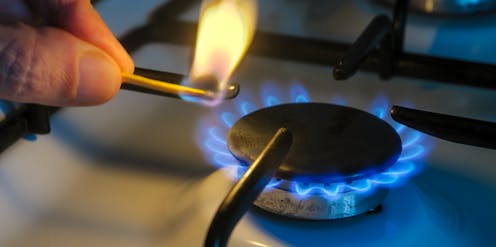
With the Australian Energy Market Operator (AEMO) warning consumers of huge price hikes ahead, further calls for the federal government to pull its so-called “gas trigger” seem inevitable.
But that could be a very big mistake – leading to the type of trade dispute Australia fought for years against Big Tobacco[1] over plain packaging laws.
The gas trigger (officially the Australian Domestic Gas Security Mechanism[2]) was created by the Turnbull government in 2017 when there were fears of a gas shortage in eastern Australia.
It allows the federal resources minister to direct gas exporters to limit their gas exports or find new sources of gas to meet domestic demand instead of exporting gas overseas.
Read more: Why did gas prices go from $10 a gigajoule to $800 a gigajoule? An expert on the energy crisis engulfing Australia[3]
To trigger the mechanism, however, requires predictions of insufficient supply, not just higher prices. It is therefore useless for dealing with the sort of short-term issues besetting eastern Australian gas markets, and has never been triggered.
The mechanism had been due to expire at the end of 2022. It was meant to be a temporary measure, not a permanent crutch in lieu of more sustainable solutions. But the government is keen to keep it. Resources Minister Madeleine King said it will be extended to 2030.
But should it?
There’s no doubt the trigger gives the government some leverage over the gas industry, in much the same way that pointing a gun at someone gets their attention.
Actually pulling the trigger, however, is a different matter. It may have serious unintended consequences, potentially breaching Australia’s commitments under various trade and investment treaties.
How the gas trigger works
An example of the extra regulatory leverage the gas trigger has given the federal government is its 2021 agreement[4] with three major east-coast liquefied natural gas (LNG) plants: Australia Pacific LNG, Gladstone LNG and Queensland Curtis LNG.
Under this deal, the suppliers promised not to sell uncontracted gas internationally without first offering equivalent volumes to the domestic market.
What would happen if the gas trigger was actually pulled?
Then the mechanism becomes an export control measure, compelling gas companies to limit their exports or find new sources of gas to offset the shortfall.
In that circumstance, foreign-owned gas companies could use free-trade agreements to take Australia to a notoriously expensive “investor-state dispute settlement” process to claim compensation for what is known as indirect expropriation.
What is indirect expropriation?
Simply put, expropriation is any interference by governments with the rights and properties of foreign investors.
It can be direct, such as outright seizure of investors’ properties, or indirect, through enactment of laws or regulations that interfere with investors’ capacity to generate revenue or do business.
Australia has signed several investment treaties and free-trade agreements that contain investor-state dispute settlement provisions. If the government pulls the gas trigger, a foreign-owned gas company could seek compensation for interference with the company’s right to export gas to its overseas buyers.
That is a concern, given Australia’s LNG sector is 95.7% owned by foreign investors according to the Australia Institute[5].
For example, Malaysia’s Petronas and Korea’s KOGAS are major shareholders in Gladstone LNG.
These foreign companies have rights under international trade and investment rules, multilateral agreements such as the ASEAN-Australia-New Zealand free trade agreement[6], and bilateral free-trade agreements signed with Malaysia[7] and Korea[8].
The results won’t be pleasant
Disputes involving indirect expropriation are expensive and time-consuming.
The classic example is Australia’s six-year defence of its tobacco plain-packaging laws against the global tobacco giant Philip Morris.
Read more: When even winning is losing. The surprising cost of defeating Philip Morris over plain packaging[9]
Among other things, Philip Morris claimed[10] the labelling regulations indirectly expropriated its brand assets, intellectual property and goodwill associated with its products. Australia eventually won the dispute, but at a reported A$24 million cost[11] along with internal expenditures.
The risk of foreign gas investors making indirect expropriation claims is quite real. They have invested in extracting Australian gas to meet demand in markets such as South Korea and Malaysia.
For example, Santos, the lead developer of the Gladstone LNG project, signed a 20-year agreement[12] with KOGAS in 2010 to supply 3.5 million tonnes a year of LNG. This amounts to 11% of Korea’s domestic LNG supply.
Electricity generators have already lodged claims for compensation[13] over AEMO interventions in the energy market. We shouldn’t expect gas suppliers to do less.
So what now?
We need a better solution to provide affordable gas and electricity prices along with reliable supply.
Some experts have advocated[14] for a Western Australian-style gas reservation model to be implemented nationally. This model requires gas producers to reserve supplies for the local market before other transactions.
It will take time to introduce the model nationally without also inviting expropriation claims. Existing supply contracts will need to be exempt – and these, such as the Gladstone LNG contract to supply Korea, are often decades long.
But as new contracts are signed, the reservation model can eventually provide the benefits it now gives to West Australian consumers.
It’s not the short-term solution we’d all like. But it is a better solution than extending the gas trigger. The work to introduce it should begin now.
Read more: 3 key measures in the suite of new reforms to deal with Australia's energy crisis[15]
References
- ^ Big Tobacco (theconversation.com)
- ^ Australian Domestic Gas Security Mechanism (consult.industry.gov.au)
- ^ Why did gas prices go from $10 a gigajoule to $800 a gigajoule? An expert on the energy crisis engulfing Australia (theconversation.com)
- ^ 2021 agreement (www.industry.gov.au)
- ^ according to the Australia Institute (australiainstitute.org.au)
- ^ ASEAN-Australia-New Zealand free trade agreement (www.dfat.gov.au)
- ^ Malaysia (www.austrade.gov.au)
- ^ Korea (www.austrade.gov.au)
- ^ When even winning is losing. The surprising cost of defeating Philip Morris over plain packaging (theconversation.com)
- ^ claimed (classic.austlii.edu.au)
- ^ reported A$24 million cost (theconversation.com)
- ^ 20-year agreement (www.hydrocarbons-technology.com)
- ^ claims for compensation (www.abc.net.au)
- ^ advocated (theconversation.com)
- ^ 3 key measures in the suite of new reforms to deal with Australia's energy crisis (theconversation.com)
Authors: Umair Ghori, Associate Professor, Bond University