Finding the Right Disability Housing: What Perth Families Need to Know
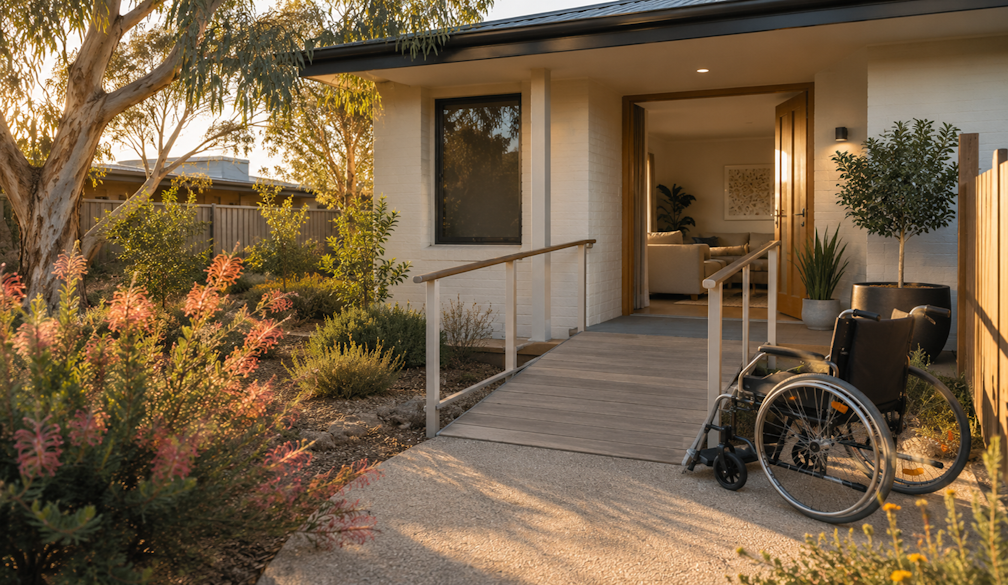
More than four million Australians live with disability, and for a growing number of them, the biggest question isn't about services or funding it's about where they'll actually live. Disability housing has quietly become one of the most searched, and most misunderstood, corners of the NDIS system. Ask ten families what "disability housing" means and you'll likely get ten different answers, ranging from shared group homes to purpose-built apartments with overhead hoists and wide doorways.
That confusion is understandable. The disability housing landscape in Australia is layered, with different accommodation types designed for different levels of need, funded through different NDIS supports, and delivered by a patchwork of providers across the country. For families in Western Australia trying to plan ahead whether for a young adult moving out of home for the first time or an older participant whose needs have changed getting a clear picture of the options is often the hardest part of the whole process.
This article breaks down what disability housing actually involves, the main pathways available, and what to look for when comparing accommodation options in Perth and beyond.
What Does Disability Housing Actually Cover?
"Disability housing" is a broad umbrella term, and it helps to separate it into a few distinct categories before going any further.
At one end sits Specialist Disability Accommodation (SDA) — purpose-built housing designed for people with extreme functional impairment or very high support needs. These homes often include features like ceiling hoists, wider corridors, reinforced walls for hoist tracking, and smart home technology. SDA is funded separately in an eligible participant's NDIS plan and is reserved for a relatively small cohort with significant support requirements.
Sitting alongside SDA is Supported Independent Living (SIL) — not a type of building, but a type of support delivered within a home, typically a shared house where several participants live together with rostered support workers on hand around the clock or at agreed times. SIL funding pays for the support itself, while the housing might be SDA-registered or an ordinary rental property, depending on the participant's needs.
Then there's Individualised Living Options (ILO), a newer and more flexible approach that lets participants design a living arrangement around their own goals rather than fitting into an existing group home model. An ILO might mean living with a host family, sharing with a flatmate of the participant's choosing, or living alone with tailored support drop-ins.
Understanding which category applies is usually the first real hurdle families face, and it's worth raising directly with a support coordinator or planner early on.
Why the Housing Search Feels So Overwhelming
For most families, the disability housing search starts at a stressful moment: a young person finishing school and wanting independence, ageing parents no longer able to provide full-time care, or a sudden change in support needs following an accident or diagnosis. Add to that a national shortage of appropriate housing stock, particularly in the SDA space, and it's easy to see why so many people describe the process as daunting.
A few recurring pain points come up again and again:
- Limited vacancy visibility — many providers don't publish real-time availability, so families are left cold-calling multiple organisations
- Uncertainty about funding eligibility and how SDA or SIL funding actually gets approved
- Long waitlists for well-located or newly built properties
- Difficulty comparing providers on quality, safety record, and staff consistency rather than just glossy brochures
Working through these obstacles usually goes faster with support. Speaking with an experienced housing and accommodation team early in the process, even before a plan is finalised, can help families understand realistic timeframes and what documentation an NDIS planner will want to see.
Location Matters More Than People Expect
One detail that often gets overlooked is just how much location shapes the right housing decision. Proximity to family, access to public transport, distance to allied health appointments, and the layout of the local community all affect day-to-day quality of life far more than the property's finishes or fit-out.
In a spread-out metro area like Perth, this becomes especially relevant. A beautifully designed SDA property in one part of the city might be a poor fit if it's an hour from a participant's therapy team, their existing social network, or family who provide informal support on weekends. Families searching for disability housing Perth options are often better served by starting with a map of what matters most: family proximity, transport links, familiar suburbs before narrowing down by dwelling type.
It's also worth asking any prospective provider how they handle compatibility between housemates in shared living arrangements. Good matching processes consider personality, daily routines, support needs, and even shared interests, not just funding category. Poor matching is one of the most common reasons SIL arrangements break down within the first year.
What Good Disability Housing Actually Looks Like
Beyond ramps and grab rails, quality disability housing tends to share a few common traits that are worth checking for during any property visit or provider conversation:
- Genuine choice and control — participants (or their guardians) should have real input into who they live with, how their home is furnished, and how their routine is structured
- Consistency of support staff — high turnover of support workers is disruptive and can undermine trust; ask how a provider manages rostering and continuity
- Transparent vacancy information — reputable providers should be able to give a clear, current answer on availability rather than vague timelines
- Safeguarding practices — clear incident reporting processes, staff screening (including NDIS worker checks), and a visible complaints pathway
- Community connection — proximity to shops, recreation, and social opportunities, not just clinical adequacy
None of these shows up on a floor plan, which is why a phone conversation or site visit tends to reveal far more than a brochure ever will.
Navigating Funding Without Getting Lost
Funding is where most families hit a wall. SDA funding is only available to participants who meet specific eligibility criteria assessed by the National Disability Insurance Agency, and it's allocated based on an occupational therapist's functional capacity assessment. SIL funding, by contrast, is based on the level of support hours required and is negotiated as part of a participant's overall plan.
A few practical tips make this process smoother:
-
Start conversations with a support coordinator well before a housing move is urgent; funding approvals can take months, not weeks
-
Request a written breakdown from any provider of what's covered under SDA versus SIL versus everyday living costs like rent and groceries
-
Keep copies of all OT reports and functional assessments, as these often need to be resubmitted or referenced multiple times through the planning process
-
Ask direct questions about what happens if support needs change will the housing arrangement flex with them?
Providers who are upfront about these distinctions, rather than glossing over them, are generally easier to work with long-term.
Making the Move: Practical Next Steps
Once a family has a general sense of what type of housing and support suits their situation, the practical steps usually follow a similar pattern: confirming eligibility with a planner or Local Area Coordinator, getting an updated functional capacity assessment if needed, shortlisting properties or providers, arranging trial visits or short stays where possible, and finally working through the paperwork for a formal tenancy or SIL agreement.
It's rarely a fast process, and rushing it tends to backfire a poorly matched living arrangement often costs more time and stress in the long run than a few extra weeks spent getting it right. Families who take the time to visit multiple properties, ask hard questions about staffing and safeguarding, and involve the participant directly in decisions tend to report far higher satisfaction with the eventual outcome.
The Bottom Line
Disability housing sits at the intersection of some genuinely complex systems funding rules, property availability, personal preference, and family circumstance all pulling in different directions at once. There's no single "right" answer that applies to every participant, which is exactly why the search benefits from patience, good information, and a willingness to ask uncomfortable questions before signing anything.
For families beginning this journey, the most useful first step is usually simple: talk to people who navigate this system every day, ask about real vacancies rather than general capability statements, and take the time to understand which type of accommodation actually matches the level of support required. Get that foundation right, and everything that follows the paperwork, the move, the settling-in period tends to go a great deal more smoothly.