‘Facebook probably knows I sell drugs’ – how young people’s digital footprints can threaten their future prospects
- Written by: Robin van der Sanden, Postdoctoral Fellow, Public Health, SHORE & Whāriki Research Centre, Massey University
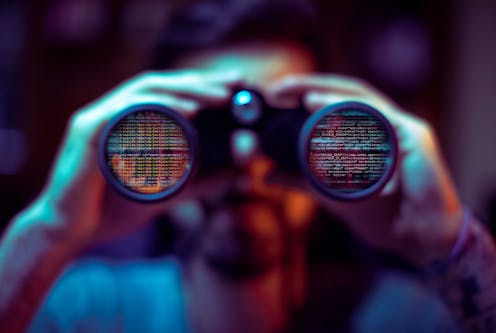
Social media and messaging apps such as Facebook, Instagram, Snapchat and Messenger are increasingly used to buy and sell drugs[1] in many countries. New Zealand is no exception.
This trend is particularly popular among young people[2], who are often involved in trading recreational drugs such as cannabis and MDMA. These deals are generally small scale, which means people believe the risks of getting caught and facing legal action are low.
But our new research[3] shows how drug-linked “digital trace data” may lead to unexpected consequences in the future. Young people could see their data sold and used against them by job recruiters, insurance companies and others for decades to come.
Data harvesting is the new normal
Social media companies such as Meta[4] are among the largest and most aggressive harvesters of user data.
These companies collect data on users beyond the confines of their platforms, generating profiles on individuals they can use to target advertising[5] or sell to third-parties[6].
We interviewed 33 people as part of our study of social media drug trading in New Zealand. Participants had varying experiences buying and selling drugs via apps.
A core question we were interested in was how our interviewees navigated security and digital trace data as part of their drug trading.
Many participants were aware of and concerned about the impact a potential criminal record could have on their lives.
They also felt the collection of their digital trace data by social media companies could become another potential source of exposure to police, who can request their data[7] from these companies. As one participant said:
Facebook probably knows I sell drugs.
But concerns went beyond just law enforcement. Some participants accepted their digital trace data could be used by other groups:
my data has been bought and sold 1,000 times by now, I don’t care what company has it anymore.
Some of our interviewees also reported receiving targeted adverts related to drug use on Meta platforms, ranging from cannabis edibles to rehab clinics.
This raises questions around how drug-linked digital trace data may influence different areas of people’s lives as it’s absorbed into the global data trade[8].
Increasingly, a person’s digital trace data is being accessed by different groups, from recruitment[9] and insurance[10] companies to law enforcement[11] agencies.
Data may become the new criminal record
Criminal records have long had an impact[13] on employment, housing access, insurance, loans and travel opportunities – also known as “collateral consequences[14]”.
The 2004 Criminal Records Act[15] included the clean slate scheme which allows eligible[16] New Zealanders to request their criminal records be concealed from employers and third parties.
The scheme is meant to give hope to people grappling with the consequences of criminal records for minor offences, often committed in their youth. But critics have argued[17] it doesn’t really work as intended in the digital age.
Today, archived digital content, such as media reports of an offence, often remain easily searched and accessible after official records have been removed.
But the rise of big data and the use of algorithms to analyse digital trace data sets and predict consumer behaviour[18] further complicates this picture. Big data analytics are spreading beyond advertising into other private sectors such as insurance. This means the collateral consequences of criminal records – and any illegal behaviour – are expanding.
Collateral consequences in the age of big data
The fact our research participants viewed themselves as having a low risk of being caught by police is unsurprising, given the small scale of their drug trading.
But the collection and sale of digital trace data as part of social media drug deals means we need to broaden the understanding of collateral consequences beyond criminal records.
The spread of big data and predictive algorithms shows how criminal convictions could become just one of many sources of collateral consequences for individuals.
The targeted advertising of drug-related products and services to some participants in our research highlights how labels such as “drug consumer” may be applied to people based on their digital trace data. There is a high likelihood this classification will feed into other data sets as they are sold on to third parties.
And given the long-term storage of data by many public and private groups, it may well be that data gathered about an individual when they were 18 continues to affect them[19] when they are 35.
These data sets may end up causing collateral consequences similar to criminal records, regardless of whether or not there was a criminal conviction.
The global data trade is likely to affect all of us in some form. But it may have a particularly harsh impact on people whose digital trace data links them to behaviours such as drug use or minor offending such as small-scale drug trading.
References
- ^ buy and sell drugs (theconversation.com)
- ^ young people (www.sciencedirect.com)
- ^ new research (www.tandfonline.com)
- ^ Meta (edition.cnn.com)
- ^ target advertising (www.theguardian.com)
- ^ third-parties (www.theguardian.com)
- ^ request their data (transparency.meta.com)
- ^ global data trade (books-google-co-nz.ezproxy.massey.ac.nz)
- ^ recruitment (hbr.org)
- ^ insurance (www.sydney.edu.au)
- ^ law enforcement (www.theguardian.com)
- ^ metamorworks/Getty Images (www.gettyimages.com.au)
- ^ impact (www.odt.co.nz)
- ^ collateral consequences (journals.sagepub.com)
- ^ Criminal Records Act (nzpri.aut.ac.nz)
- ^ eligible (www.justice.govt.nz)
- ^ critics have argued (www.nzlii.org)
- ^ predict consumer behaviour (www.rnz.co.nz)
- ^ continues to affect them (www.thetimes.co.uk)
Authors: Robin van der Sanden, Postdoctoral Fellow, Public Health, SHORE & Whāriki Research Centre, Massey University