Google AI

Weekend Times


The Times

Business News

The certainty of ever-growing living standards we grew up with under Queen Elizabeth is at an end

  • Written by: Peter Martin, Visiting Fellow, Crawford School of Public Policy, Australian National University
The certainty of ever-growing living standards we grew up with under Queen Elizabeth is at an end

Much has been written about how, with the passing of the Queen, we have lost one of our last continuing links to the second world war.

We have, but we have also lost something even more profound – the link she gave us back to when the kind of world we know began.

On Tuesday last week Queen Elizabeth appointed a new prime minister of Britain, Liz Truss, who was born in 1975.

Seven decades earlier, Elizabeth II ascended to the role alongside Prime Minister Winston Churchill, who was born in 1874.

That her first and last prime ministers were born a century apart is remarkable enough. But it is particularly significant that the thread of her reign extended all the way back, through Churchill, to the 1870s. That’s when, according to a new economic book, the expectations we all grew up first began.
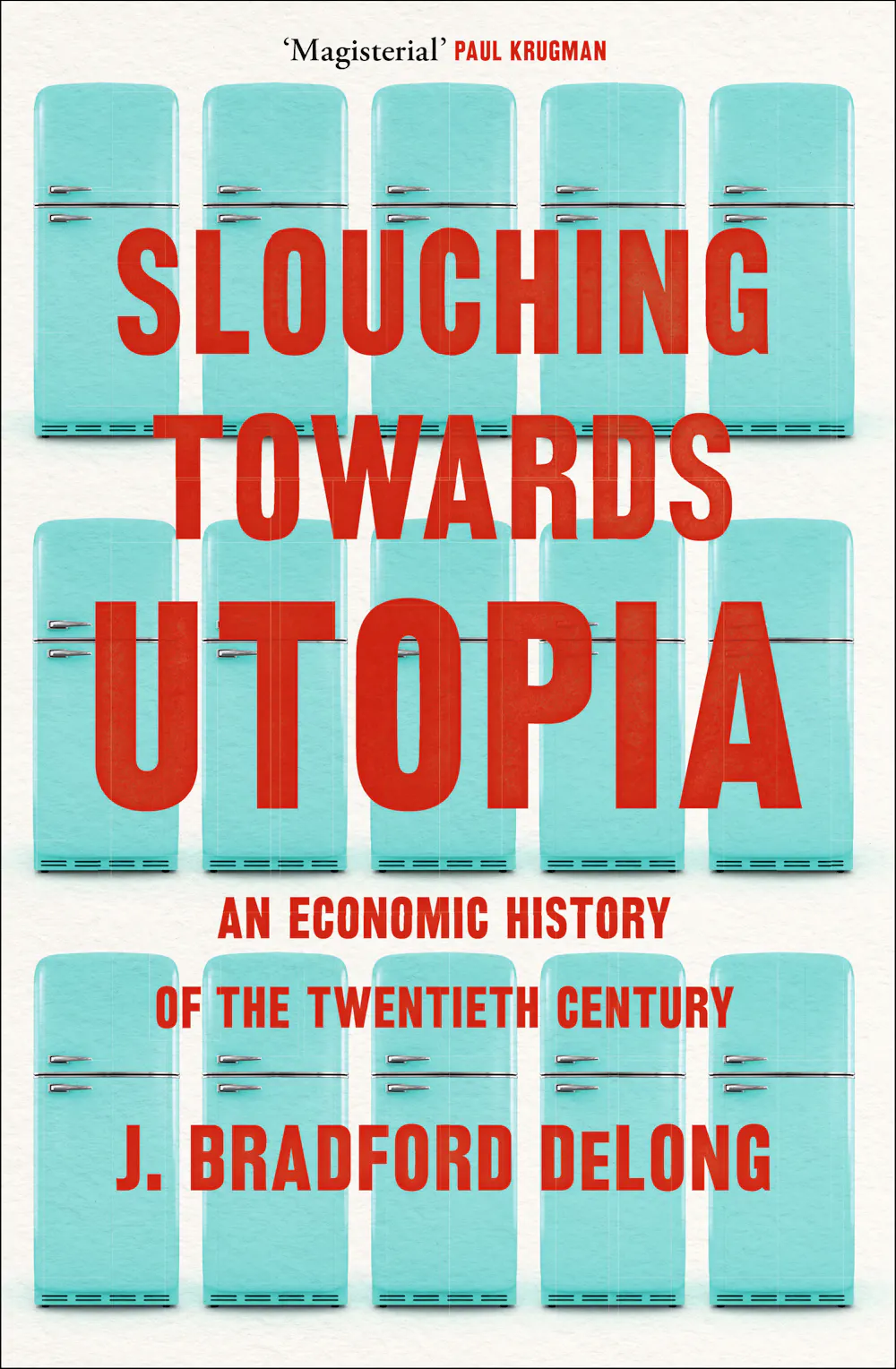
Slouching Towards Utopia[1] As the new UK Prime Minister was sworn in last week, University of California, Berkeley economist Bradford DeLong published his long-awaited Slouching Towards Utopia[2]. It’s an account of what he calls “the long 20th century”[3], a century he says began in 1870. Why 1870, and not 1901, or even a century earlier at the start of the industrial revolution? Because, DeLong says, right up until the 1870s living standards hadn’t changed much. More importantly, living standards hadn’t changed much since the dawn of recorded time. Until 1870, we weren’t much better off In the millennia leading up to the birth of agriculture, what humans were able to produce barely increased at all. In the 10,000-odd years between the year minus-8000 and the industrial revolution in 1500, our ability to produce food and other things increased tenfold, still not enough to be noticed over our (short) lifetimes. Our ability to produce more than doubled again between 1500 and the 1870. But so did population, which kept most people desperately short of calories – and in near continual childbirth in an attempt to produce surviving sons – while necessitating smaller farm sizes that blunted the benefits of mechanisation. From the 1870s, life got a lot better – fast Then, from the decade of Churchill’s birth, things went spectacularly right. Delong writes that in 1870 the daily wages of an unskilled male worker in London, the city then at the forefront of economic growth, would buy him and his family about 5,000 calories worth of bread. In 1600 it had been 3,000 calories. He says today the daily wages of such an unskilled worker would buy 2,400,000 calories worth of bread: nearly 500 times as much. The population grew, but our ability to produce things grew far faster. It grew to the point where, even in our lifetimes, we could see things getting better. In the words of Billy Joel[4], every child had “a pretty good shot to get at least as far as their old man got”. Unimaginable change in one lifetime From the 1870s on, continual improvements in living standards became a birthright – not for everyone, but for humanity as a whole. As did the development of once unimaginable products. The motor car, the radio, the television and the computer became ubiquitous during Queen Elizabeth’s life. With more to go around, it became easier to share rather than take things. Democracies grew to the point where they became natural. Economically, DeLong credits the development of research labs, modern corporations and cheap ocean transport that “destroyed distance as a cost factor”. From the 1870s onwards, people were able to get what they wanted from where it was made, and were able to seek better lives by travelling to where they were needed. University of California, Berkeley Professor Bradford DeLong’s economics lecture on ‘Slouching toward Utopia’.Most economists didn’t see it coming The market economy was necessary for this explosion in living standards, but not sufficient. People had bought and sold things for prices for millennia, but the prices had little to work with. Almost no one saw such an extraordinary change coming. The leading economist of the 1870s, John Stuart Mill, wrote it was “questionable if all the mechanical inventions yet made have lightened the day’s toil of any human being”. They had merely “enabled a greater population to live the same life of drudgery and imprisonment”. Mill wanted population control. He wanted the expanding “pie” to be split among the people we had, rather than the hordes that would grow to cut each slice back to size. Read more: GDP is like a heart rate monitor: it tells us about life, but not our lives[5] The fathers of communism, Karl Marx and Frederick Engels, saw things more clearly. They expected technology and the taming of nature to produce so much wealth that there would one day be more than enough to go around, making the problem one of how to make sure it went around. DeLong sees the long 20th century that began in 1870 as an ever-shifting battle between those who wanted the market to determine the distribution of wealth (believing it was the best way to grow the pie), against those who believed such unfairness wasn’t what they signed up for. The end of certainty How long did that “long 20th century” last? DeLong thinks it ended in 2010, making it a long century of 140 years. Since the global financial crisis, we have been unable to return economic growth to anything like the pace of those 140 glorious years. Today, DeLong says material wealth remains “criminally” unevenly distributed. And even for those who have enough, it doesn’t seem to make us happy – at least “not in a world where politicians and others prosper mightily from finding new ways to make and keep people unhappy”. DeLong sees “large system-destabilizing waves of political and cultural anger from masses of citizens, all upset in different ways at the failure of the system of the twentieth century to work for them as they thought that it should.” Read more: Beyond GDP: changing how we measure progress is key to tackling a world in crisis – three leading experts[6] Not only are we not near the end of the Utopian rainbow, Delong says the end of the rainbow is “no longer visible, even if we had previously thought that it was”. King Charles III inherits a future with no guarantee of ever-increasing living standards, no guarantee human ingenuity will prevail over global warming, and no guarantee democracy will prevail. It’s almost impossible to predict what the rest of this century has in store. But that’s how it was in the 1870s too – when even the brightest minds of the time couldn’t imagine what was to come. References^ Slouching Towards Utopia (www.hachette.com.au)^ Slouching Towards Utopia (www.hachette.com.au)^ “the long 20th century” (youtu.be)^ Billy Joel (www.youtube.com)^ GDP is like a heart rate monitor: it tells us about life, but not our lives (theconversation.com)^ Beyond GDP: changing how we measure progress is key to tackling a world in crisis – three leading experts (theconversation.com)Authors: Peter Martin, Visiting Fellow, Crawford School of Public Policy, Australian National University

Read more https://theconversation.com/the-certainty-of-ever-growing-living-standards-we-grew-up-with-under-queen-elizabeth-is-at-an-end-190425

The Weekend Times Magazine

Out of 500 Nominations, My Guardian Breaks into Top 3 at Australia’s Prestigious 2025 ACE Awards

Sydney, 22 July 2025 – From humble beginnings to national recognition, My Guardian is celebrating a milestone achievement - being selected as one of the top three finalists in the...

Why Choosing The Right Sleep Apnea Mask Can Improve Your Daily Life

Sleep is the body’s reset button, but for individuals dealing with interrupted breathing, nights can feel restless and incomplete. This is where a sleep apnea mask becomes an essential part of...

How Retractable Awnings Enhance Comfort, Outdoor Living, and Sun Protection

Outdoor areas are valuable parts of any home or commercial property, offering space for relaxation, dining, and entertainment. However, harsh sunlight, UV exposure, rain, and fluctuating temperatures can make outdoor...

This City of Museums is Deserve to be Put on Your Wishlist, Especially if You Are a First-Timer to Australia

Sydney is a multicultural city that has a lot of art in it. You can find street art on the city's outskirts and world-class art galleries. Sydney museum are countless...

Discover the Benefits of Lifestyle Awnings for Your Home

Image by evening_tao on Freepik Adding shade and style to your outdoor space is easier than ever with Lifestyle Awnings. Whether you want to enjoy your backyard comfortably, protect your...

5 Top-Rated Tourist Attractions in Australia

Australia is an interesting country that has a spectacular beauty in the form of ancient rainforests, vibrant cities, sand islands, and turquoise beaches. Moreover, the people there are friendly and...

Rodent Control: Effective Strategies to Protect Your Home and Health

Rodent control is an essential part of maintaining a safe and healthy environment in both residential and commercial properties. Rodents, including rats and mice, are not only a nuisance but...

The Importance of Quality Paint Protection for Brisbane Drivers

Shielding Your Vehicle with the Right Protection Every car owner appreciates that fresh showroom finish—the gleam of the paintwork, the smoothness of brand new panels. But once you drive out of...

Effective Pest Control Solutions in Ballarat: What You Need to Know

Living in Ballarat means enjoying a beautiful regional lifestyle, but it also comes with its share of challenges—one of which is managing pests. From termites threatening your home’s structure to...