Regulating Islamic education can strengthen trust and authority, if religious scholars lead the way
- Written by: Milad Milani, Associate Professor of Religious Studies, Western Sydney University
Former Prime Minister Scott Morrison has called[1] for greater regulation of Islamic preachers in Australia in the aftermath of the Bondi terror attack. His comments triggered an immediate backlash.
Many Muslim leaders and commentators heard the remarks as another episode in a long history of government suspicion toward Islam, or as a thinly veiled attempt to crack down on a religious community already under pressure.
That reaction is understandable. Public debates about Islam in Australia are often freighted with[2] fear, moral panic and political opportunism.
Morrison’s comments also came at a tense moment for the country, which helps explain their bluntness and the intensity of the reaction they provoked. It is entirely understandable that Muslim communities would be angered by[3] any conflation with acts of violence committed in Islam’s name.
But focusing only on whether Morrison’s comments were offensive or ill-judged risks missing a deeper issue that has been quietly unresolved for decades.
The real question raised by this controversy is not Islamophobia or security. It is the role of religious authority and accountability in Islamic teaching in a modern, pluralist society.
Why frameworks are important
Every secular democracy regulates institutions that play a role in shaping moral and civic life. Schools are accredited. Childcare and aged-care providers operate under public standards and oversight. Charities and community organisations are subject to transparency requirements.
These arrangements are not expressions of hostility. They are the mechanisms that build trust between institutions and the wider public.
Religion should not, in principle, be exempt from this framework.
Treating religion as untouchable when it comes to government regulation does not protect it. It leaves it vulnerable to crude political interventions, moral panic and collective blame when something goes wrong.
This tension is not unique to Islam. All religious traditions must contend with the fact that religious authority can be claimed and religious teachings distorted by divergent actors. This makes questions of public accountability more pressing, not less.
If done carefully and respectfully, with parameters established in partnership with religious communities, this sort of regulation would not infringe on religious freedom. In fact, such regulation often protects religious freedom by clarifying who speaks with authority and on what basis.
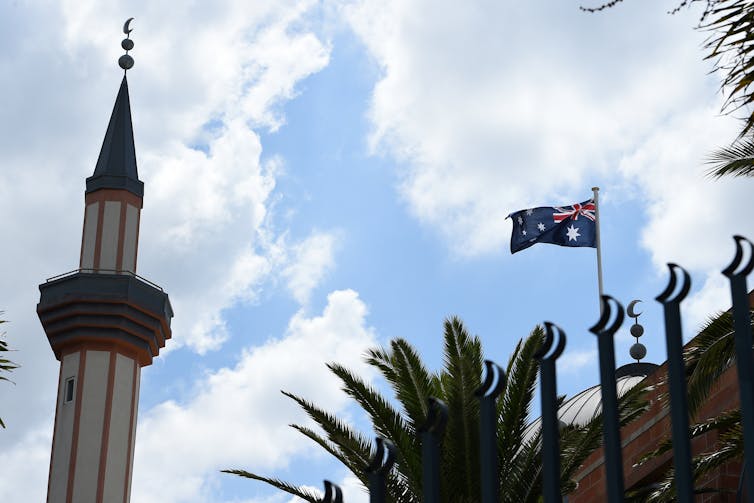
The importance of training local imams
Representative bodies such as the Australian National Imams Council and the Australian Federation of Islamic Councils play important advisory and coordinating roles in Islamic education in Australia. However, there is no agreed national standard or framework for Islamic education. Nor is there a common system for training or accrediting imams.
Many imams in Australia are trained overseas[4]. This reflects both the relatively recent development of Islamic institutions in Australia and the longstanding authority of established education centres in the Middle East.
As a result, this religious education takes place in countries with very different political and theological debates.
In addition, mosque governance in Australia is often localised, fragmented and dependent on volunteer leadership. These arrangements are not inherently problematic. However, they do create a structural ambiguity about religious authority in the faith.
That ambiguity affects everyone. For Muslim communities, it leads to uncertainty about:
who represents Islam publicly
who is responsible for religious guidance
how theological disagreements are resolved.
For the wider society, it can produce anxiety about what is being taught, by whom, and under what norms. In the absence of a coherent public framework, suspicion fills the gap.
What can be done?
There is a more productive approach. The first step is recognising that religious authority does not exist in a vacuum.
In a pluralist society, religious leaders shape ethical outlooks, social norms and public behaviour. This comes with great responsibility – not because Islam is suspect, but because it matters.
Governments do not need to strengthen their surveillance or impose heavy-handed controls in response. Rather, religious institutions need to operate with greater transparency, public engagement and institutional maturity.
For starters, governments can play a supporting role in developing pathways[5] for Islamic education grounded in Australian civic life, rather than imposing direct state control. This includes through partnerships with universities, community institutions and established overseas centres.
Religious literacy should be encouraged, both within Muslim communities and beyond.
And, importantly, governments must work with Muslim scholars, educators and community leaders on developing regulatory frameworks or public standards.
These leaders are already grappling with the challenges posed by imported religious authority, fragmented governance and the pressures of representing Islam in a secular society. Their more careful voices are often lost in the noisy, polarised debate.
Islam is not alone here. Similar tensions can be found across many other religious traditions as they adapt to modern pluralist societies, even if they surface differently.
If there is a lesson in the Morrison controversy, it is this: Australia has not yet worked out how Islamic authority fits into its public institutions. Until it does, debates about Islam will continue to oscillate between denial and suspicion, neither of which serves anyone well.
The question is not whether Islam belongs in Australia. It already does belong, deeply and permanently. The question is how religious authority is situated in a society that values freedom, accountability and civic trust. That is a conversation worth having calmly, seriously and without fear.
References
- ^ called (www.theguardian.com)
- ^ freighted with (www.reuters.com)
- ^ be angered by (www.smh.com.au)
- ^ trained overseas (amf.net.au)
- ^ pathways (www.newageislam.com)
Authors: Milad Milani, Associate Professor of Religious Studies, Western Sydney University