Not yet time for a Plan B. Australia must stick with AUKUS – for better or worse
- Written by: Alice Nason, Research Associate, Foreign Policy and Defence, United States Studies Centre, University of Sydney
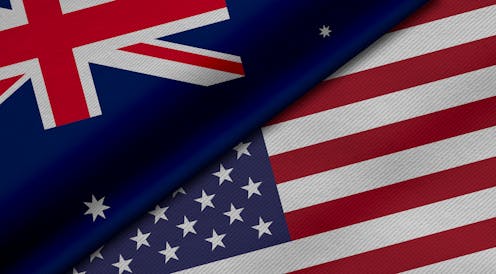
Following the recent imposition of steel and aluminium tariffs[1], the Australian government is coming to terms with the reality of engaging with a US ally that is increasingly transactional.
The Trump administration’s approach may signal some inclement weather ahead for the AUKUS nuclear-powered submarine project. But it’s far from game over.
A flurry of opinion pieces, including one penned by a former chief of the Defence Force[2], has questioned US capacity to deliver on its commitments under the security pact. AUKUS sceptics are calling for a “Plan B”.
Policymakers should always reassess their foreign policy decisions as new information comes to light. However, at present, there is little conclusive evidence that AUKUS is veering off course.
Worrying about what may or may not happen to AUKUS under Trump is insufficient reason to take a wrecking ball to three years of unprecedented, generational investment in Australia’s most important defence partnership.
The ‘Plan B’ problem
Certainly, AUKUS deserves scrutiny. But clutching for alternatives, including the resurrection of the long defunct French deal, is counterproductive for several reasons.
First, it disregards the enormous investment and political will the partners have sunk into AUKUS since it was announced[3] in September 2021. No convincing evidence has been produced to show alternative sub deals could be delivered significantly cheaper or faster. Nor would they be politically viable.
Secondly, it would destabilise[4] an initiative that helps tether the United States to the Indo-Pacific. Australia’s defence strategy[5] is predicated on the United States remaining essential to a favourable regional balance of power.
AUKUS has become central to Australia’s deterrence strategy, in a way that alternatives would struggle to replicate after a sudden change in course. Steadfast continuity with AUKUS seems most likely to inspire ongoing commitment to the region from the Trump administration.
Thirdly, calls to abandon AUKUS overlook the broader benefits this cooperation unlocks for Australia in the US alliance. The political momentum generated by AUKUS has created new opportunities for Australian businesses in US supply chains. Australia’s efforts in advanced technologies and guided weapons have also been empowered.
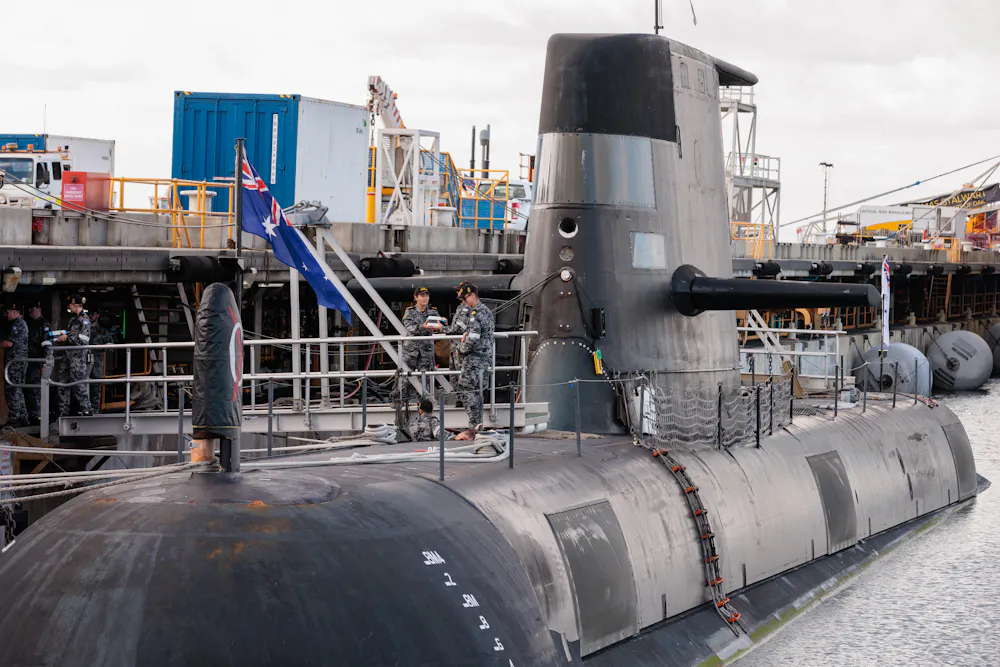
AUKUS is bigger than a single arms agreement. The broad implications of revising, or even dumping, the deal must be understood accordingly.
Trump’s AUKUS
President Donald Trump’s apparent confusion[7] about AUKUS, and his treatment of European allies, has understandably fomented hand-wringing about the future of the deal. Still, an undertaking this central to Australia’s long-term defence merits a pragmatic approach, rather than alarm.
There is cause to feel cautiously optimistic about AUKUS under Trump. Key personnel across the administration – including Defence Secretary Pete Hegseth[8] and Secretary of State Marco Rubio[9] – have expressed their support.
Trump has promised renewed focus on growing the US industrial base by establishing a new White House shipbuilding office[10] and a maritime action plan[11]. These could set the United States on a firmer footing to meet the production targets tied to the Australian submarine sales.
US Studies Centre analysis[12] reinforces the willingness of key figures in Congress to reform export controls and acquisition policy to see AUKUS succeed, pending improvements to US industrial capacity.
The effectiveness of recent investment[13] cycles in the US submarine base is still to be determined. But Canberra has agency here. Washington is looking, in part, to Australia for answers to prevailing challenges.
Numerous components for US submarines are currently sourced from a single supplier. Achieving supply chain resilience will depend on seeking out alternate manufacturers, including from Australian industry, for valves, pumps, steel and beyond.

From the Australian government’s recently announced A$800 million investment[15] in the US industrial base to the 129 Australian shipbuilders undergoing specialised training[16] in Pearl Harbour, AUKUS will benefit the US in ways that have perhaps been understated.
Australia’s AUKUS challenge
At present, there is little evidence to suggest the Trump administration will tear up the pact. Nonetheless, Australia must remain alert to obstacles that may arise in the partnership.
Trump may seek to elicit additional financial contributions from Australia by trying to cut a better deal than his predecessor.
Unanticipated costs could be absorbed by an existing contingency fund[17]. However, greater investment in AUKUS would risk crowding out competing programs in the Australian defence budget.
In addition, any potential breach between the collaborative spirit of AUKUS and the administration’s transactional instincts could create headaches for Australian stakeholders.
Perceptions AUKUS could be leveraged in strategic competition with China may buoy support for the pact in Congress. But Australian policymakers must communicate a broader strategic rationale for AUKUS that resonates more strongly here at home.
The Australian government will need to adapt its approach to AUKUS cooperation to weather the new political climate. To minimise risks, Australia should continue to strengthen other defence partnerships and embrace greater defence self-reliance, as the “Plan B” commentators suggest.
AUKUS isn’t perfect. But it will endure and continue to be Australia’s best bet.
References
- ^ steel and aluminium tariffs (www.pm.gov.au)
- ^ a former chief of the Defence Force (www.smh.com.au)
- ^ announced (www.minister.defence.gov.au)
- ^ destabilise (www.lowyinstitute.org)
- ^ defence strategy (www.defence.gov.au)
- ^ Richard Wainwright/AAP (photos.aap.com.au)
- ^ confusion (www.smh.com.au)
- ^ Pete Hegseth (news.usni.org)
- ^ Marco Rubio (www.abc.net.au)
- ^ shipbuilding office (breakingdefense.com)
- ^ maritime action plan (news.usni.org)
- ^ US Studies Centre analysis (www.ussc.edu.au)
- ^ investment (www.asa.gov.au)
- ^ Jacquelyn Martin/AAP (photos.aap.com.au)
- ^ A$800 million investment (www.afr.com)
- ^ specialised training (www.asa.gov.au)
- ^ contingency fund (www.abc.net.au)
Authors: Alice Nason, Research Associate, Foreign Policy and Defence, United States Studies Centre, University of Sydney