Do parties win elections because of their leaders, or in spite of them? History shows it’s a bit of both
- Written by: Pandanus Petter, Postdoctoral Research Fellow, School of Politics and International Relations, Australian National University
The upcoming federal election will see the incumbent Labor prime minister, Anthony Albanese, face off against Liberal opposition leader, Peter Dutton. We’ll likely see a strong focus on the personal qualities and performance of the two leaders.
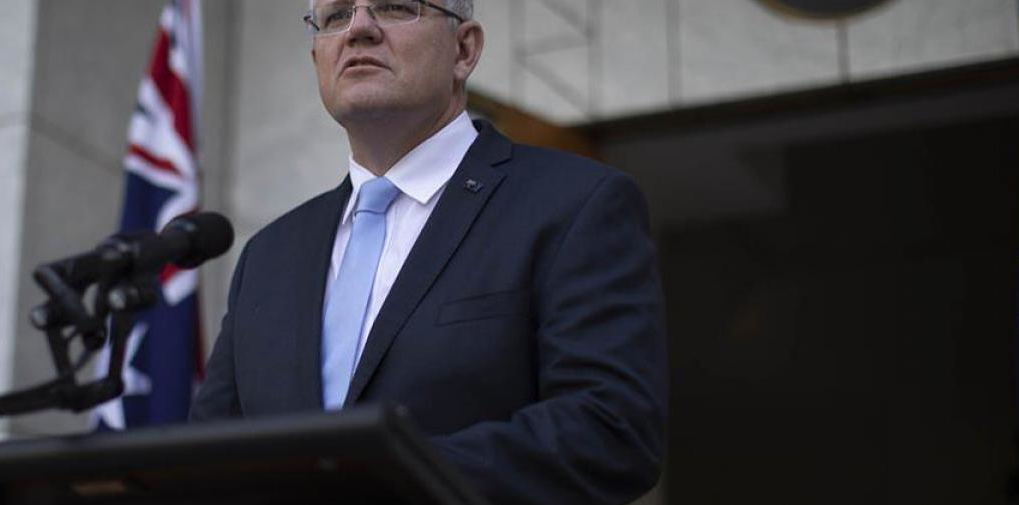
We tend to think a popular leader can win an election for their party while an unpopular one can lose it. Much of the commentary[1] on the Coalition’s 2022 election loss, for example, centred on the widespread dislike of Scott Morrison.
But how much do party leaders actually affect their party’s vote share, and ultimately, the outcome of an election? We looked at 40 years of opinion polling to find out.
Our research
Opinion polls in Australia have been conducted since the 1940s, but it was not until the 1980s that they began to regularly ask questions about leader satisfaction and voting intention. In recent decades, the proliferation of polls has seen a greater consistency in question wording and protocols.
We have been analysing[2] the polling data on government popularity and responsiveness in Australia. This enables us to track and compare leaders over an extended period.
We’ve crunched the numbers on voter intention and leader satisfaction from September 1985 until December 2024.
We can cross-reference these statistics to show which prime ministers and opposition leaders were a net benefit to their party (more popular than their party overall) and which were a net drag (less popular than their party).
Prime ministers: who helped and who hindered?
By this measure, the prime minister who provided the most electoral benefit to their party was Kevin Rudd between 2007 and 2010.
Rudd achieved some of the highest levels of voter satisfaction recorded since the early Bob Hawke years, averaging 60% satisfaction, a 14-point net benefit for his party.
His popularity declined considerably just before his replacement by Julia Gillard in 2010, and never fully recovered when he became prime minister again in 2013.
John Howard ranks second, with Morrison and Albanese (so far) sharing third place in terms of satisfaction. However, there’s a larger difference between Albanese’s personal popularity and his party’s vote intention.
Morrison’s tenure in office was skewed by the COVID pandemic, which saw a “rally around the flag” effect, seeing a spike in voters’ trust in government[3].
Paul Keating comes at the bottom of the list. His personal popularity trailed his party’s by eight percentage points on average, with an upset victory in 1993 not enough to win over the public to defeat a resurgent Howard in 1996.
Similiarly, Tony Abbott, although party leader when the Coalition returned to power after the Rudd-Gillard-Rudd years, was consistently less popular than his party – by seven points in opposition and four as prime minister.
What about opposition leaders?
Among opposition leaders, Rudd again tops the list. He was more popular than Labor overall in the year prior to winning the election in December 2007, peaking at 65.5% satisfaction.
Mark Latham comes in second, perhaps surprisingly. This is due, at least in part, to the unpopularity of the Coalition government[4] at the time.
The opposition leader who represents the greatest drag on their party was Andrew Peacock[5] in the late 1980s, in what was his second incarnation as Liberal leader.
Overall, prime ministers have a greater impact on their party’s fortunes than opposition leaders. This is expected as incumbency has advantages, with prime ministers usually given more opportunity for media attention, greater recognition with the public, and hopefully a record of achievements in government to point to.
Prime ministers register a net gain to their party of about four percentage points, compared with minus three points for opposition leaders.
Labor leaders show a net gain to their party of two points, compared to minus four points for their Liberal counterparts.
The personalisation of politics
Since at least the 1970s, political leaders have attracted increasing attention in democratic elections around the world.
This trend has not been restricted to countries with presidential systems, such as the United States. It’s also[6] playing out in parliamentary systems such as Australia’s and the United Kingdom’s. This is despite the fact voters elect local members to parliament, rather than voting for the prime minister directly.
Read more: Strong political leaders are electoral gold – but the trick is in them knowing when to stand down[7]
This profound shift in democratic politics has been based on several social changes.
First, the rise of television, and more recently social media, has provided the visual images that direct voters’ attention towards the leader.
While television’s heyday has passed – in both the 2019 and 2022 elections, the Australian Election Study[8] surveys show more people followed the election on the internet than on television – visual images of the leaders dominate the media, both traditional and social.
Second, party de-alignment has seen voters moving away from their traditional party loyalties, with the personalities of the leaders filling this gap.
In the 1960s, around one in ten voters said they did not identify with a party, compared with one in four in the 2022 election[9].
Third, the unprecedented expansion in university education has produced critical voters[10] who are more volatile in their voting than any groups in the past.
One factor that can sway their vote[11] is policies, but another is the leader they find most competent.
What does this mean for the next election?
For Australian voters, leaders matter, rightly or wrongly, for evaluating the performance of a government and choosing which party to vote for.
As we close in on an election in 2025, voters will be looking to Albanese and Dutton. In the chart below, we can see that while on average Dutton has been only marginally beneficial for his party compared with Albanese, this gap has narrowed in the latter half of 2024.
Although Albanese started at a historically very strong position, it appears his popularity began to decline in May 2023. The defeat of the Voice to Parliament Referendum[12] in November sped up the decline.
Dutton received a short-term boost after the result, after which his popularity declined and then has steadily built over time. Current projections indicate the next election will likely be close-run.
It also appears the two current leaders, whatever their other merits, have fallen short of the levels reached by the most popular prime ministers and opposition leaders of the past.
Albanese’s early popularity has waned, while the Coalition and Dutton’s fortunes rise in step with one another.
This reflects a return to a normal vote share for the party after their loss in 2022[13]. While it may prove problematic for the government, it doesn’t necessarily indicate a meteoric increase in Dutton’s personal popularity.
References
- ^ commentary (www.theguardian.com)
- ^ analysing (cass.anu.edu.au)
- ^ trust in government (theconversation.com)
- ^ unpopularity of the Coalition government (theconversation.com)
- ^ Andrew Peacock (theconversation.com)
- ^ also (www.oxfordbibliographies.com)
- ^ Strong political leaders are electoral gold – but the trick is in them knowing when to stand down (theconversation.com)
- ^ Australian Election Study (australianelectionstudy.org)
- ^ 2022 election (australianelectionstudy.org)
- ^ critical voters (www.cambridge.org)
- ^ sway their vote (unsw.press)
- ^ Voice to Parliament Referendum (theconversation.com)
- ^ in 2022 (theconversation.com)
Authors: Pandanus Petter, Postdoctoral Research Fellow, School of Politics and International Relations, Australian National University