The policing of LGBTQ+ people casts a long, dark shadow. Marching at Mardi Gras must be backed up with real change
- Written by: Justin Ellis, Lecturer in Criminology at the University of Newcastle, University of Newcastle
Public trust and confidence in NSW Police has been sorely tested in the past two weeks. The charging of a police officer with the murders of a Sydney gay couple, Jesse Baird and Luke Davies, has seen shock turn to grief and then anger[1].
NSW Police Commissioner Karen Webb’s framing of the case as a “crime of passion” downplayed the alleged culpability of the accused, and overlooked the murders as possible domestic violence[2]. The commissioner’s gratitude to the accused for leading police to the location of the remains of the deceased drew further ire.
Yet the most heated debate has been about the appropriateness of the police force’s presence in the 2024 Sydney Gay and Lesbian Mardi Gras parade. This focus has brought to the surface a spectrum of viewpoints on diversity and inclusion. Much of this focus has ignored the reasons why there is growing dissatisfaction with NSW police among many LGBTQ+ people. This is amid ten-year lows[3] of public perceptions of police integrity nationally. Emotions have been running high.
But these recent events are part of a long and complicated history of the policing of LGBTQ+ people, and of Mardi Gras in particular.
Read more: LGBTQ+ people are facing increasing persecution globally, but refugee status is still extremely hard to get[4]
The ongoing stigma of criminalisation
The first Mardi Gras in 1978 was a protest that ended with violence[5] between the police and protesters, and the beating of many of the 53 arrestees while in police custody. The damage was exacerbated by the publication in The Sydney Morning Herald of the names, addresses and professions of those arrested.
The first Mardi Gras was held six years before the decriminalisation of homosexuality in NSW in 1984. That was a time when public attitudes were becoming more accepting of homosexuality. But coming out could still lead to you losing your job, and still can[6]. Acting on your same-sex desire could also get you killed[7].
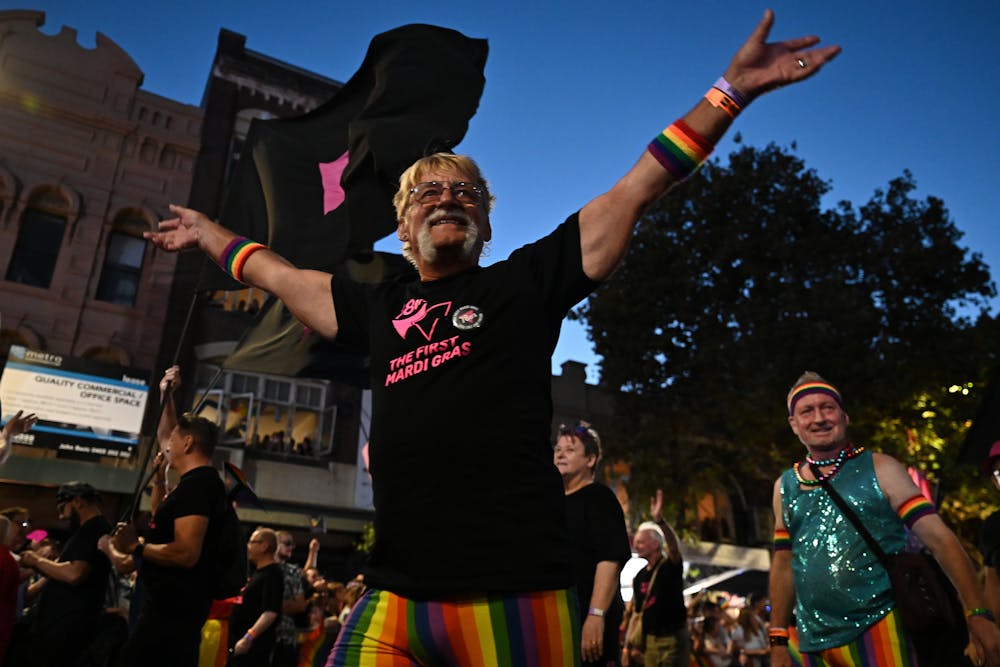
The deeper background to the policing of homosexuality in the 1970s was the expansion of laws and penalties against homosexuality amid increased vilification and discrimination against gays and lesbians after the second world war. The legacy of criminalisation continues through stigma that targets gay men, drag queens and transgender women[8] as “child groomers”.
It continues through so-called “conversion” therapies that seek to “correct” same-sex desire, often with catastrophic consequences[9].
Community responses to the policing of Mardi Gras
A viral video of police’s excessive force at the 2013 Mardi Gras parade resulted in LGBTQ+ community action[10], and a 2014 memorandum of understanding[11] between Mardi Gras and NSW Police.
Central to that agreement was that Mardi Gras should be policed in a way that is safe and welcoming for all participants and spectators.
The issues with drug detection dogs were documented comprehensively[12] by the NSW Ombudsman in 2006, yet NSW Police continues to use them at Mardi Gras and other festivals.
Read more: There's a growing gap between countries advancing LGBTQ+ rights, and those going backwards[13]
This is despite the NSW coroner in 2019 recommending stopping the use[14] of drug detection dogs at music festivals in NSW. This is because, among other things, the presence of the dogs can cause panic ingestion of drugs by party-goers.
NSW Law Enforcement Conduct Commission investigations into strip searches conducted by NSW police officers found that many of the searches were unlawful[15].
Apologies only go so far
There have been apologies to the LGBTQ+ community over the years from politicians, police and the media, mainly about the treatment of the “78ers” who marched in the first Mardi Gras.
The most recent apology has come from the NSW police commissioner. The commissioner has apologised to the families of gay hate crime victims whose deaths were not properly investigated by NSW police over four decades from 1970 to 2010.
That apology was foregrounded by Justice John Sackar, who led the NSW Special Commission of Inquiry into LGBTIQ+ hate crimes in NSW. It handed down its findings in late 2023.
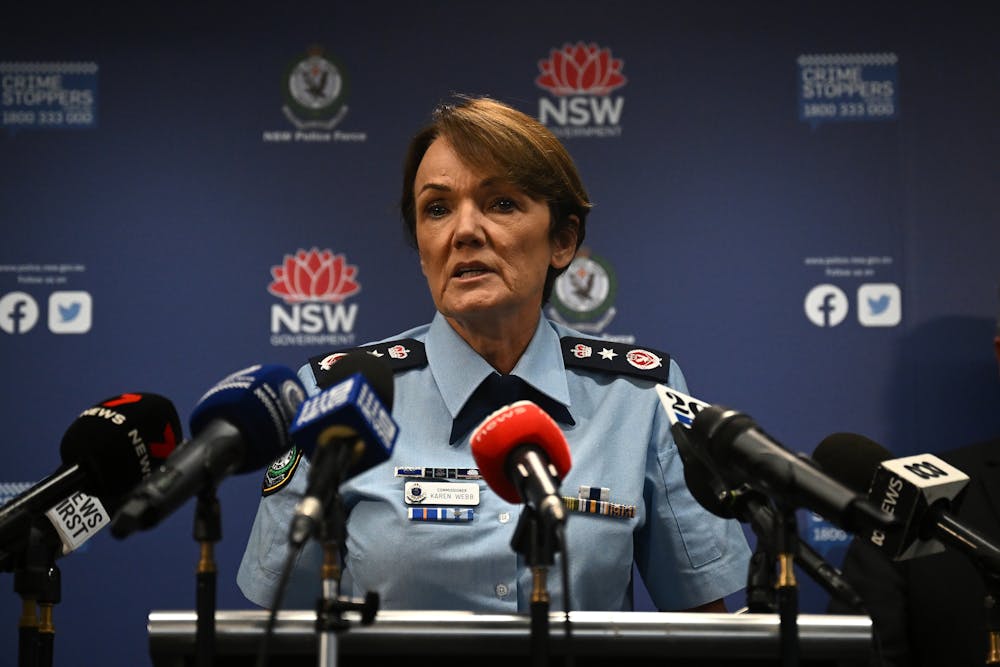 NSW Police Commissioner Karen Webb has been criticised for her handling of the deaths of Jesse Baird and Luke Davies.
Dan Himbrechts/AAP
NSW Police Commissioner Karen Webb has been criticised for her handling of the deaths of Jesse Baird and Luke Davies.
Dan Himbrechts/AAP
The police commissioner has come under fire for the time and placement of the apology, which was issued as an exclusive to The Sunday Telegraph as the search for Baird and Davies continued. Further, NSW police has not officially responded[16] to the special commission’s recommendations.
Justice Sackar’s overall impression[17] was that “in significant respects”, NSW Police’s engagement with the inquiry was “adversarial or unnecessarily defensive”. The judge noted that police strike forces Macnamir (2013), Parrabell (2015) and Neiwand (2015) failed in their assessment of hate as a motivator in historical homicides of gay men.
Two of these inquiries occurred after the Mardi Gras and NSW Police Force memorandum was established. In 2023, about two-thirds of the Mardi Gras membership voted to withdraw from it.
Community taking back ownership
Mardi Gras is a member-based organisation that champions LGBTQ+ social issues through leveraging the power of arts, culture, partnerships and celebration.
NSW police-branded pride paraphernalia at the festival sits in stark contrast with its invasive and harmful drug detection dog operations, aggressive policing, and ambivalence about addressing historic wrongs.
For many viewers of the Mardi Gras parade, the presence of the police in uniform may suggest the relationship between the LGBTQ+ community and NSW Police is a positive one. This is partly true.
Read more: LGBTIQ+ people are being ignored in the census again. Not only is this discriminatory, it's bad public policy[18]
The force’s negative reaction to Mardi Gras’ request not to march in the 2024 parade illustrates the symbolic significance to police of marching in the parade, and its public relations value.
Mardi Gras members, and the Mardi Gras board, have decided that police force participation in the event is conditional[19]. Police will now march, but out of uniform.
It remains to be seen whether NSW Police will deliver on greater transparency and accountability. If it decides to do so, the benefits will be realised well beyond LGBTQ+ communities.
References
- ^ and then anger (www.theguardian.com)
- ^ domestic violence (www.sbs.com.au)
- ^ ten-year lows (www.pc.gov.au)
- ^ LGBTQ+ people are facing increasing persecution globally, but refugee status is still extremely hard to get (theconversation.com)
- ^ ended with violence (www.mardigras.org.au)
- ^ still can (www.sbs.com.au)
- ^ killed (www.nsw.gov.au)
- ^ transgender women (theconversation.com)
- ^ catastrophic consequences (ilga.org)
- ^ LGBTQ+ community action (www.acon.org.au)
- ^ memorandum of understanding (www.starobserver.com.au)
- ^ comprehensively (www.ombo.nsw.gov.au)
- ^ There's a growing gap between countries advancing LGBTQ+ rights, and those going backwards (theconversation.com)
- ^ stopping the use (coroners.nsw.gov.au)
- ^ were unlawful (www.lecc.nsw.gov.au)
- ^ not officially responded (www.smh.com.au)
- ^ overall impression (www.nsw.gov.au)
- ^ LGBTIQ+ people are being ignored in the census again. Not only is this discriminatory, it's bad public policy (theconversation.com)
- ^ conditional (www.abc.net.au)
Authors: Justin Ellis, Lecturer in Criminology at the University of Newcastle, University of Newcastle