We talked to dozens of people about their experience of grief. Here’s what we learned (and how it’s different from what you might think)
- Written by: Michelle Peterie, Research Fellow, Sydney Centre for Healthy Societies, University of Sydney

Have you ever felt a sudden pang of sadness? A bird seems to stop and look you in the eye. A photo drops out of a messy drawer from long ago, in the mundanity of a weekend spring clean.
Your day is immediately derailed, unsettled. You are pulled into something you thought was past. And yet, in being pulled back, you are grateful, reconnected, and grief-stricken all over again.
“You’ll get over it”. “Give it time”. “You need time to move on”. These are common cultural refrains in the face of loss. But what if grief doesn’t play by the rules? What if grief is a different thing altogether?
We talked to 95 people about their experiences of grief surrounding the loss of a loved one, and their stories[1] provided a fundamentally different account of grief to the one often presented to us culturally.
Read more: Not all mourning happens after bereavement – for some, grief can start years before the death of a loved one[2]
Disordered grief?
Grief is often imagined as a time-bound period in which one processes the pain of loss – that is, adjusts to absence and works toward “moving on”. The bereaved are expected to process their pain within the confines of what society deems “normal”.
The DSM-5 psychiatric manual[3] says if grief drags on too long, in fact, it becomes a pathology (a condition with a medical diagnosis). “Prolonged grief disorder” is the name given to “persistent difficulties associated with bereavement that exceeded expected social, cultural, or religious expectations”.
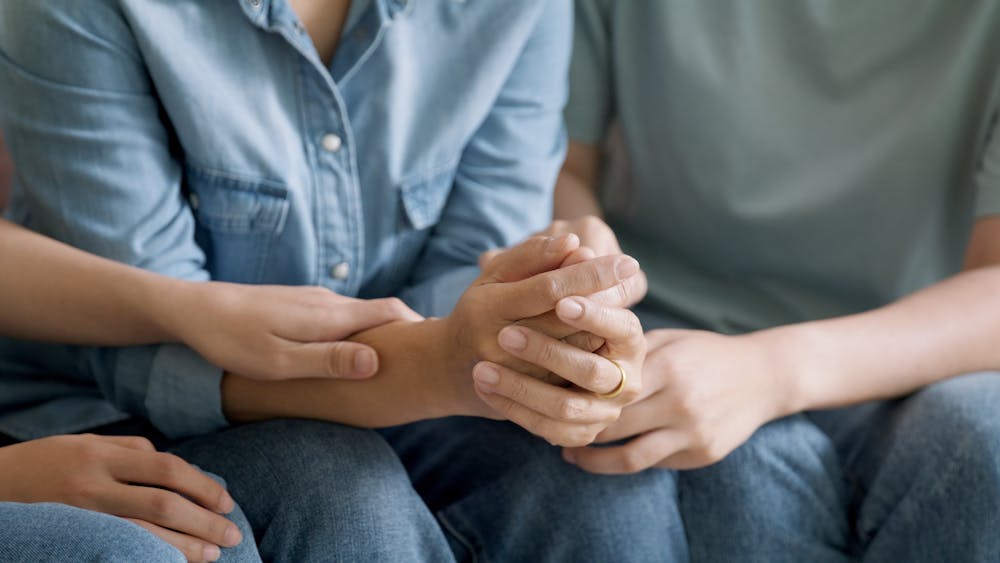
While there can be value[5] in clinical diagnostic categories such as this, the danger is they put artificial boundaries around emotions. The pathologisation of grief can be deeply alienating to those experiencing it, for whom the pressure to “move on” can be hurtful and counterproductive.
The stories we gathered in our research were raw, complex and often fraught. They did not sit comfortably with commonsense understandings of how grief “should” progress. As bereaved daughter Barbara told us:
Grief is not in the little box, it doesn’t even come close to a little box.
Grief starts early
The tendency is to think of grief as something that happens post death. The person we love dies, we have a funeral, and the grief sets in. Then it slowly subsides with the steady march of time.
In fact, grief often begins earlier, often in a clinical consultation where the words “terminal” or “nothing more we can do” are used. Or when a loved one is told “go home and get your life in order”. Grief can begin months or even years before bereavement.
Read more: Friday essay: homesick for ourselves – the hidden grief of ageing[6]
As the people we interviewed experienced it, loss was also cumulative. The gradual deterioration of a loved one’s health in the years or months before their death imposed other painful losses: the loss of chosen lifestyles, the loss of longstanding relational rhythms, the loss of shared hopes and anticipated futures.
Many participants felt their loved ones – and, indeed, the lives they shared with them – slipping away long before their physical deaths.
Living with the dead
Yet the dead do not simply leave us. They remain with us, in memories, rituals and cultural events. From Mexico’s Dia de los Muertos[7] to Japan’s Opon[8], festivals of the dead play a key role in cultures around the world. In that way, remembering the dead remains a critical aspect of living. So too does the ongoing experience of grief[9].
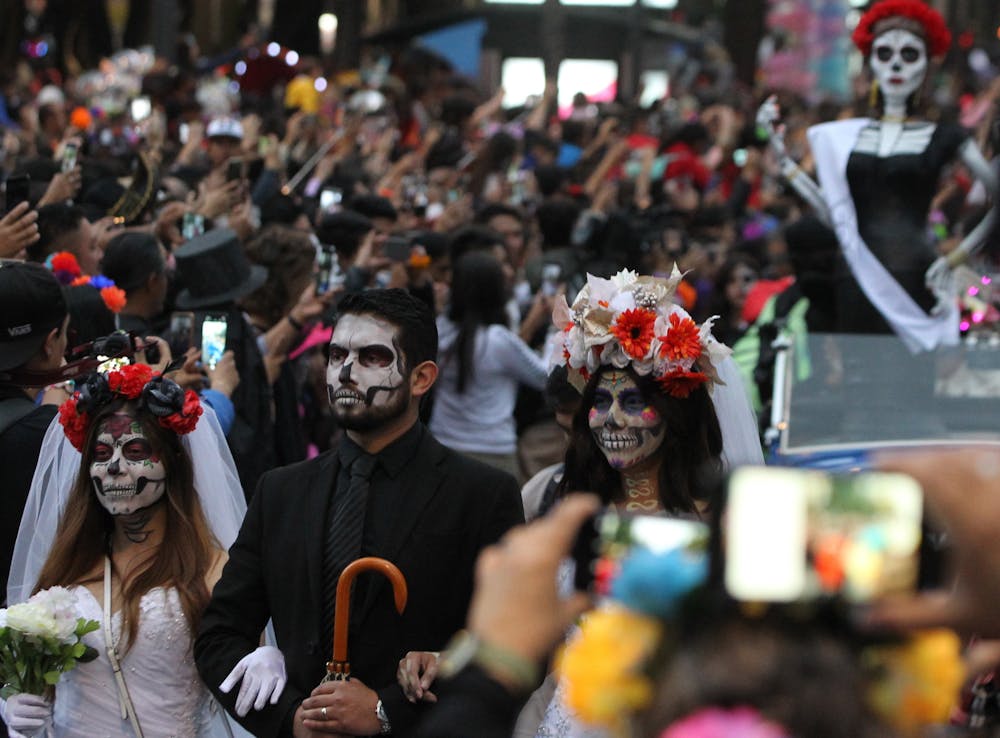 Mexico’s Dia de los Muertos festival honours death.
Mario Guzman/EPA
Mexico’s Dia de los Muertos festival honours death.
Mario Guzman/EPA
Events of this kind are not merely celebratory. They are critical forms through which life and death, joy and grief, are brought together and integrated. The absence of remembering can hold its own trouble, as our participants’ accounts revealed. As bereaved wife Anna explained:
I just find it really frustrating and I do get quite angry and upset sometimes. I know that life goes on. I’d be talking to girlfriends and stuff like that and it’s like they’ve forgotten that I’ve lost my husband. They haven’t, but nothing really changed in their life. But for me, and my family, it has.
Part of the problem, here, is the ambivalent role grief plays in advanced industrialised societies like ours. Many of our participants felt pressure to perform resilience or (in clinical terms) to “recover” quickly after loss[10].
But whose interests does a swift recovery serve? An employer’s? Friends who just want to get on with a death-free life? And, even more importantly, mightn’t ongoing connections with the dead enable better living? Might bringing the dead along with us actually make for better deaths and better lives?
Many of our participants felt their loved ones remained with them, and experienced their “absent presence” as a source of comfort. Grieving, in this context, involved spending time “with” the dead. Anna described her practice as follows:
I had a diary, so I just write stuff in it about how I’m feeling or something happened and I’ll say to [my deceased husband], it’s all to [my deceased husband], “Do you remember, blah, blah, blah.” I’ll just talk about that memory that I have of that particular time and I find that that helps.
Read more: 'Why did he Leve Me?' 5 things grieving children want to know about the death of a loved one[11]
Caring for those who grieve
Grief does not begin at death, but neither do relationships end there.
To rush the bereaved through grief – to usher them towards “recovery” and the more comfortable territories of happiness and productivity – is to do them a disservice.
And, perhaps more critically, ridding our lives of the dead and grief may, in the end, make for more limited and muted emotional lives.
References
- ^ their stories (journals.sagepub.com)
- ^ Not all mourning happens after bereavement – for some, grief can start years before the death of a loved one (theconversation.com)
- ^ DSM-5 psychiatric manual (theconversation.com)
- ^ Shutterstock (www.shutterstock.com)
- ^ value (theconversation.com)
- ^ Friday essay: homesick for ourselves – the hidden grief of ageing (theconversation.com)
- ^ Mexico’s Dia de los Muertos (theconversation.com)
- ^ Japan’s Opon (theconversation.com)
- ^ the ongoing experience of grief (theconversation.com)
- ^ “recover” quickly after loss (journals.sagepub.com)
- ^ 'Why did he Leve Me?' 5 things grieving children want to know about the death of a loved one (theconversation.com)
Authors: Michelle Peterie, Research Fellow, Sydney Centre for Healthy Societies, University of Sydney
&media=https://weekendtimes.com.au/https://images.theconversation.com/files/577495/original/file-20240222-26-pcdtt5.jpg?ixlib=rb-1.1.0&rect=7%2C7%2C4899%2C3258&q=45&auto=format&w=496&fit=clip&description=We%20talked%20to%20dozens%20of%20people%20about%20their%20experience%20of%20grief.%20Here’s%20what%20we%20learned%20(and%20how%20it’s%20different%20from%20what%20you%20might%20think) "Pin It")