Magazines were supposed to die in the digital age. Why haven't they?
- Written by: Julian Novitz, Senior Lecturer, Writing, Department of Media and Communication, Swinburne University of Technology
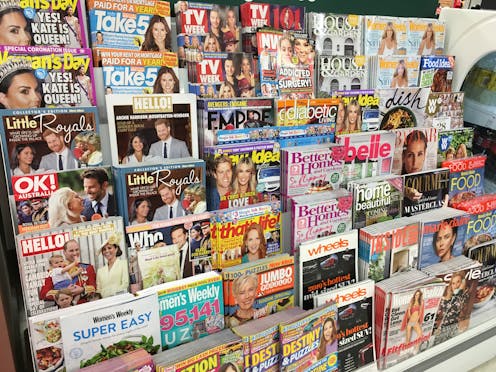
In the classic comedy Ghostbusters (1984), newly hired secretary Janice raises the subject of reading, while idly flipping through the pages of a magazine. The scientist Egon Spengler responds with a brusque dismissal: “print is dead[1].”
Egon’s words now seem prescient. The prevailing assumption of the past couple of decades is that print media is being slowly throttled by the rise of digital. Print magazines, in particular, are often perceived as being under threat.
While not nearly as popular as they once were, magazines haven’t died. New ones have started since the dire predictions began, while others continue to attract loyal readerships.
So what’s the enduring appeal of the print magazine? Why didn’t it die, as so many predicted?
Read more: Substack newsletters are a literary trend. What's the appeal – and what should you read?[2]
Printed words in an online world
The word “magazine” derives from the term for a warehouse or storehouse[3]. In its essence, it is any publication that collects different types of writing for readers. Each instalment includes a range of voices, subjects and perspectives.
Print magazine culture has certainly seen a decline since its heyday in the 20th century. Once-popular print magazines have moved entirely online[4] or are largely sustained by growing digital subscriptions[5].
Elsewhere, internet media sites, of the type pioneered by Buzzfeed[6] and its imitators, increasingly fulfil the need for diverse and distracting short-form writing.
The explosion of social media has also cut into the advertising market on which print magazines have traditionally depended.
Online audiences have come to expect new content daily or even hourly. Casual readers are less willing to wait for a weekly or monthly print magazine to arrive in the post or on a newsstand. The ready availability of free, or significantly cheaper, digital content may deter them from purchasing print subscriptions or individual issues.
Turning from screens to the page
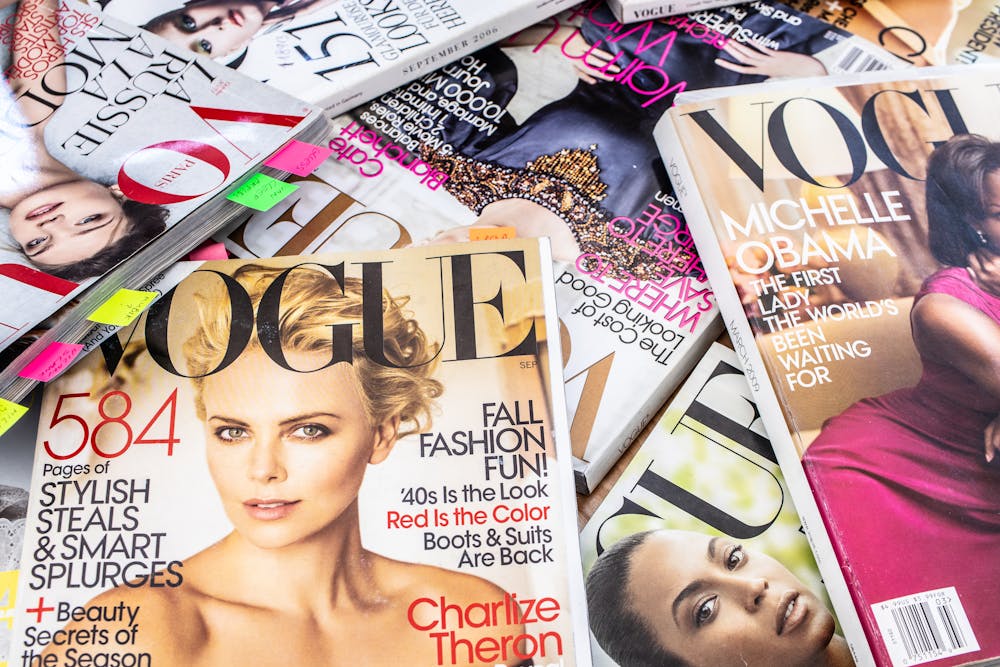
And yet print magazines refuse to die. Established periodicals, such as the New Yorker[8] and Vogue[9], stubbornly cling to a global readership in both print and digital formats.
New titles are emerging as well – 2021 saw the launch of 122 new print magazines[10] in the United States alone. The number is smaller than some previous years, and this perhaps reflects the generally shrinking market for print media.
But given the accepted wisdom, it is remarkable there are any new periodicals at all.
In Australia, print magazines sales have risen 4.1% in 2023[11] and previously axed publications – such as Girlfriend – are now receiving one-off, nostalgic returns to print[12].
Read more: 'Equal Social Rights For SEXES': in the 1930s, the Australian Women's Weekly was a political forum[13]
The market for print magazines isn’t exactly thriving. But they haven’t vanished as quickly as anticipated.
Some commentators have attributed the enduring appeal of print magazines to the physical experience of reading. We absorb information differently from the page than from the screen, perhaps in a less frantic and distractable way.
“Digital fatigue[14]” from the years of the pandemic has arguably resulted in a small pivot back to print media. The revived interest in print magazines has also been attributed to the “analog” preferences[15] of Gen Z readers.
As the writer Hope Corrigan has noted[16], there is also something appealing about the aesthetics of print magazines. The care taken with layout, images and copy can’t always be replicated on as screen. Indeed, magazines with a significant focus on photography and visual design – such as fashion and travel magazines – are enduring in print.
Magazine expert Samir Husni has observed[17] that emerging independent print magazines are more focused on targeting a niche readership. Advances in printing technology have made smaller print runs more cost-effective. This allows new magazines to focus on quality over quantity.
The new wave of print magazines tend to have a higher cover price and standard of production. They are also published less frequently, with quarterly or biannual schedules becoming more common[18].
Read more: The magazine that inspired Rolling Stone[19]
What was old is cool again?
This trend moves away from the idea of magazines as cheap and disposable. Rather, it reframes them as a luxury product.
Print magazines cannot compete with digital media in providing constantly up-to-date content to a mass audience. But they can potentially maintain a dedicated readership with a meaningful and aesthetically pleasing publication.
This means print magazines may be spared some of the turbulence suffered by media websites that are solely dependent on digital advertising revenue. The past few years have seen staffing upheavals, mass resignations and shutdowns at popular magazine-style websites such as Deadspin[20], the Onion AV Club[21], the Escapist[22] and Jezebel[23] (although the latter has since returned[24]). The original vision and standards for these sites have arguably suffered from the constant drive to increase daily traffic and reduce costs.
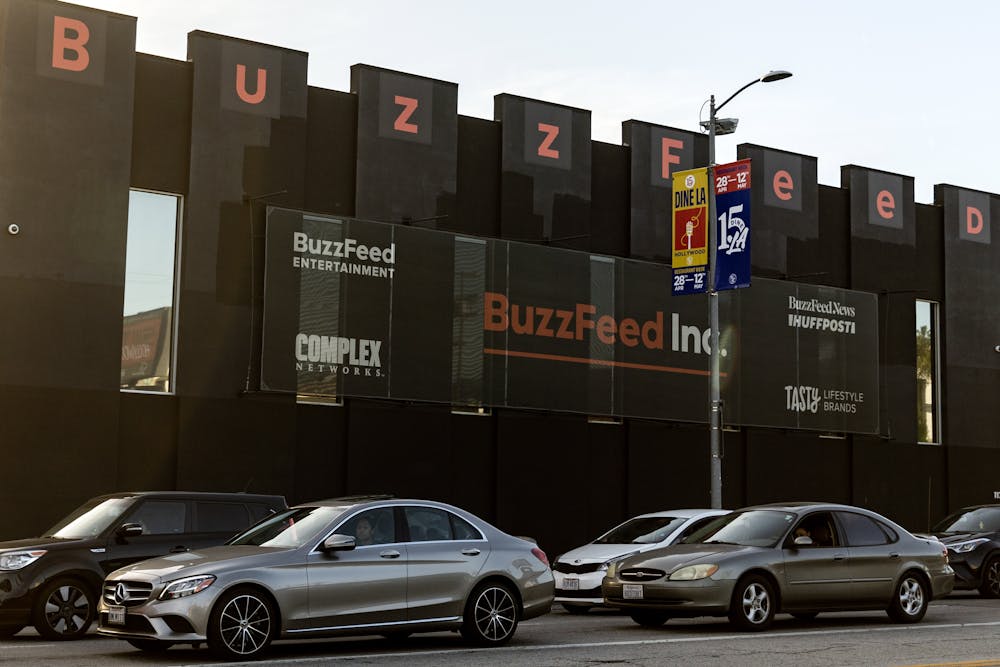 Buzzfeed laid off 15% of its staff in April 2023 and closed its news division.
Etienne Laurent/EPA
Buzzfeed laid off 15% of its staff in April 2023 and closed its news division.
Etienne Laurent/EPA
Print magazines may also be seeing a revived interest from advertisers. Recent research[25] indicates a strong preference for print advertising among consumers. Readers are far more likely[26] to pay attention to a print advertisement and trust its content. By contrast, online advertising is more likely[27] to be ignored or dismissed.
In a 2021 profile[28] of magazine collector Steven Lomazow, Nathan Heller writes:
[…] what made magazines appealing in 1720 is the same thing that made them appealing in 1920 and in 2020: a blend of iconoclasm and authority, novelty and continuity, marketability and creativity, social engagement and personal voice.
While the circulation and influence of print magazines may have reduced, they are not necessarily dead or even dying. They can be seen as moving into a smaller, but sustainable, place in the media landscape.
References
- ^ print is dead (www.youtube.com)
- ^ Substack newsletters are a literary trend. What's the appeal – and what should you read? (theconversation.com)
- ^ term for a warehouse or storehouse (www.etymonline.com)
- ^ entirely online (www.forbes.com)
- ^ growing digital subscriptions (pressgazette.co.uk)
- ^ Buzzfeed (www.buzzfeed.com)
- ^ Grzegorz Czapski/Shutterstock (www.shutterstock.com)
- ^ the New Yorker (www.newyorker.com)
- ^ Vogue (www.vogue.com.au)
- ^ 122 new print magazines (www.mediapost.com)
- ^ risen 4.1% in 2023 (www.afr.com)
- ^ returns to print (www.beautydirectory.com.au)
- ^ 'Equal Social Rights For SEXES': in the 1930s, the Australian Women's Weekly was a political forum (theconversation.com)
- ^ Digital fatigue (fortune.com)
- ^ “analog” preferences (www.afr.com)
- ^ Hope Corrigan has noted (catapult.co)
- ^ has observed (www.fipp.com)
- ^ more common (www.sappipapers.com)
- ^ The magazine that inspired Rolling Stone (theconversation.com)
- ^ Deadspin (www.npr.org)
- ^ Onion AV Club (www.pajiba.com)
- ^ Escapist (wolfsgamingblog.com)
- ^ Jezebel (www.theguardian.com)
- ^ returned (www.nytimes.com)
- ^ Recent research (mgmagazine.com)
- ^ are far more likely (www.walsworth.com)
- ^ more likely (perfectcommunications.com)
- ^ 2021 profile (www.newyorker.com)
Authors: Julian Novitz, Senior Lecturer, Writing, Department of Media and Communication, Swinburne University of Technology
Read more https://theconversation.com/magazines-were-supposed-to-die-in-the-digital-age-why-havent-they-217371