Australian MPs walk a difficult line on Israel-Hamas conflict
- Written by: Andy Marks, Pro Vice-Chancellor, Strategy, Government and Alliances, Western Sydney University
The failure of the Voice referendum[1] appeared to confirm Australians broadly reject propositions they believe to be characterised by divisiveness. There are few geopolitical circumstances more polarising than the drastic flaring of conflict between Israel and Hamas militants in Gaza.
These moments resist the fast rhythm of modern political rhetoric. There is no doorstop interview, social media post or snappy campaign slogan that can convey the depth of suffering of Palestinians or Israelis. This deviation in political tempo exposes the shortcomings of fast politics[2], when careful, wider deliberation has historically proven more salient.
Read more: Six former prime ministers warn against letting the Israel-Gaza conflict divide Australians[3]
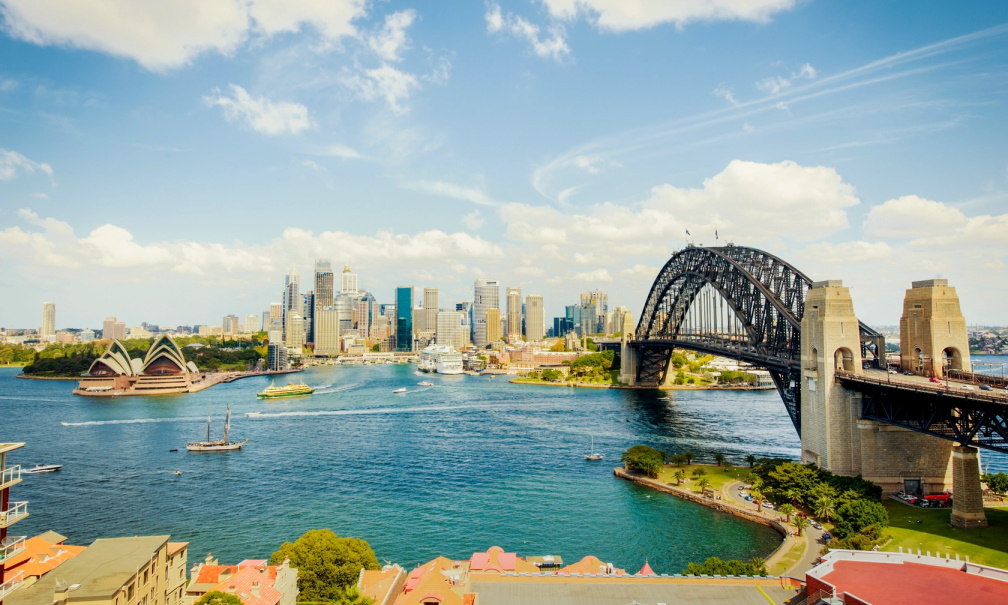
As the conflict reignited, symbolism was one of the first, and most strident, Australian political responses. The NSW government’s decision to project the image of the Israeli flag on the Sydney Opera House provoked “significant concern[4]” among authorities, and became a focal point for a pro-Palestinian protest.
Not so long ago, the Opera House’s iconic white sails were used to promote gambling[5]. It’s hardly a sacrosanct canvas. And, for some, it’s a contentious platform for the expression of solidarity with the suffering. And the suffering is profound, for all concerned.
Hamas’s attack on Israel, and Israel’s bombardment of Gaza, have resulted in the deaths of thousands of civilians[6]. It is likely many more will be killed based on current strategic rationales[7].
Contending with the human misery of the conflict has proven politically fraught at all levels. The Australian government joined with 43 other nations, including Canada, Germany, India and the UK, in abstaining from an amendment to a United Nations resolution[8] calling for the “protection of civilians and upholding legal and humanitarian obligations”. The political challenges appear similarly vexing domestically.
Prime Minister Anthony Albanese expressed early support for Israel, and has been “unequivocal” in condemning[9] the Hamas attack. As the political tempo slows and the broader picture becomes more complicated, the tone can also shift.
Foreign Minister Penny Wong has since qualified[10] that Australia’s support for Israel comes with an expectation it shows restraint. “Innocent Palestinian civilians”, she cautioned, “should not suffer because of the outrages perpetrated by Hamas”.
There has been no change in tempo from Opposition Leader Peter Dutton. As the current crisis began, he urged Israel to exercise “no restraint”[11] in doing “what is necessary […] to protect its people, and to thwart threats it now faces”. He has not wavered as the situation has deteriorated for civilians, describing[12] Australia’s UN vote abstention “an incredibly weak display of leadership from the prime minister”.
The Greens were scathing of the abstention for different reasons[13]. “By failing to back a ceasefire and continuing to approve defence exports to Israel,” said Greens leader Adam Bandt, “Labor shares responsibility for the unfolding catastrophe in Gaza.”
The opportunity for a bipartisan position on the conflict in Israel and Gaza looks not only to have passed, but to have almost completely evaporated. A similar collapse in bipartisanship[14] regarding Australia’s aid for Ukraine has occurred, but over a much longer period.
These distinct and firmly expressed political differences might suggest high levels of party unity on the stances respective leaders have adopted. But as the conflict continues, a diverse range of internal party opinions is also emerging.
National party whip Mark Coulton countered Dutton’s views, expressing concern[15] at the “whatever it takes to take out Hamas” language being used. “I didn’t want support for Palestinians just to be dismissed as something form the left”, he said. His call to “please respect civilian life”, noting Wong’s comments on restraint, is a point around which a degree of bipartisan support is emerging.
Labor MP Ed Husic said[16] Palestinians were being “collectively punished for Hamas’ barbarism”. His colleague, Anne Aly, backed Husic’s comments, saying it was “difficult to argue” that wasn’t the case in the face of rising civilian casualties. Other Labor MPs have since joined Husic and Aly in condemning the killing of civilians in the conflict.
Read more: Understanding the history of the Israeli-Palestinian conflict in 5 charts[17]
Former co-chair of the Parliamentary Friends of Palestine, Labor’s Maria Vamvakinou, reminded her House of Representatives colleagues[18] that Albanese, former Treasurer Joe Hockey, and Deputy Leader of the Liberal Party Sussan Ley were once members of the group.
As civilian deaths mount and amid predictions the conflict may expand[19], political dialogue in Australia will likely evolve in tempo and tone. On current trends, those shifts might prove most pronounced at the local level.
Questioned over a local council decision in his southwestern Sydney electorate to fly a Palestinian flag, senior Labor minister Tony Burke pointed to diasporic links[20]. “In my part of Sydney”, he observed, “people are […] getting information directly from the ground in Gaza”. His community is communicating via WhatsApp groups, and, he said, “seeing horrific images updated every hour on their phones”.
Burke warned against falling into an “immature debate” about blame and grief. “People have a right to be able to grieve when innocent life is lost.” His stance is not new. Nor is it necessarily out of step with long-held parliamentary standards.
There is a Labor tradition - forged during a different time but in a similarly complex geopolitical crisis - that went on to substantially shape Australian politics for nearly a decade. When, in 1965, then-Prime Minister Robert Menzies committed Australian troops to the war in Vietnam, Labor leader Arthur Calwell went against the tide[21] and opposed the deployment.
In a speech prepared by his press secretary, Graham Freudenberg, Calwell outlined the strategic case for his decision, spelling out Labor’s discord with the national interest. But his rationale went further. Like Burke, Calwell’s primary concern was civilian life. Labor, he declared, does “not believe [war] will promote the welfare of the people of Vietnam. On the contrary, we believe it will prolong and deepen the suffering.” He was right.
Only time, and the shifting tempo of politics, will determine the prescience (or otherwise) of political views on the tragic events occurring in Israel and Gaza. Who is right and who is wrong is unlikely to matter to those affected.
References
- ^ Voice referendum (theconversation.com)
- ^ fast politics (theconversation.com)
- ^ Six former prime ministers warn against letting the Israel-Gaza conflict divide Australians (theconversation.com)
- ^ significant concern (www.smh.com.au)
- ^ used to promote gambling (www.smh.com.au)
- ^ thousands of civilians (news.un.org)
- ^ current strategic rationales (www.idf.il)
- ^ United Nations resolution (press.un.org)
- ^ “unequivocal” in condemning (www.theaustralian.com.au)
- ^ Penny Wong has since qualified (www.abc.net.au)
- ^ urged Israel to exercise “no restraint” (www.peterdutton.com.au)
- ^ describing (www.abc.net.au)
- ^ for different reasons (greens.org.au)
- ^ A similar collapse in bipartisanship (www.smh.com.au)
- ^ expressing concern (www.smh.com.au)
- ^ said (www.theguardian.com)
- ^ Understanding the history of the Israeli-Palestinian conflict in 5 charts (theconversation.com)
- ^ reminded her House of Representatives colleagues (www.aph.gov.au)
- ^ amid predictions the conflict may expand (www.nbcnews.com)
- ^ Tony Burke pointed to diasporic links (www.theguardian.com)
- ^ Arthur Calwell went against the tide (www.thesaturdaypaper.com.au)
Authors: Andy Marks, Pro Vice-Chancellor, Strategy, Government and Alliances, Western Sydney University
Read more https://theconversation.com/australian-mps-walk-a-difficult-line-on-israel-hamas-conflict-216629