Like plumbing did for water, Australia's 'consumer data right' could make your personal data safer and easier to share
- Written by: Ross Buckley, ARC Laureate Fellow, Scientia Professor of Law, UNSW Sydney

Back in 2017, The Economist published a headline that became a meme. It said data had become the new oil[1].
By that it meant that the world’s biggest and most profitable companies no longer worked with oil, as they had throughout the 20th century[2], but with data.
By 2022, three of the world’s five most profitable companies specialised in data – Apple, Microsoft and Alphabet[3]. Only two of the five specialised in oil.
Oil did indeed shape our cities in the 20th century. It facilitated our post-war urban sprawl and connected our cities by air and sea.
But before that, our cities were shaped by plumbing, making it more accurate to say that data is the new water. Like water, controls over its flow will build the next economy.
In a paper accepted for publication in the Australian Business Law Review[4], we argue the new “consumer data right” will do for our data-driven economy of the future what plumbing has done for our cities.
Like water, data flows through pipes
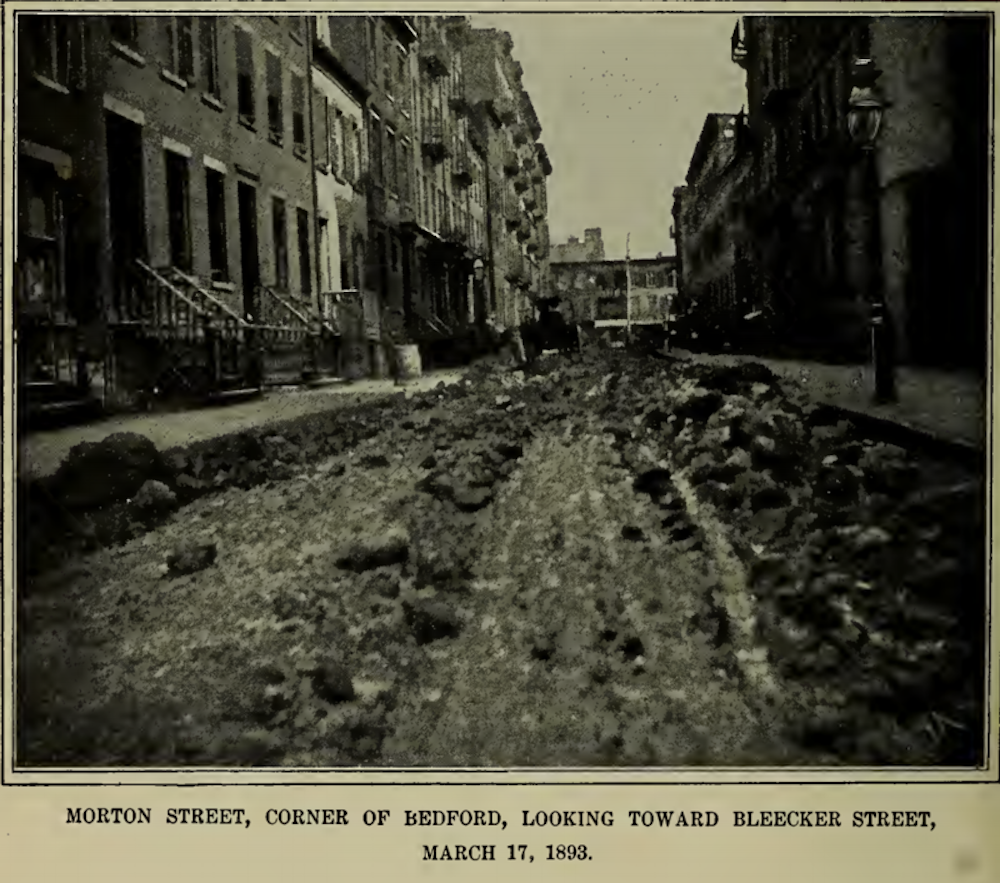
We have a photo on our office wall of Manhattan in the late 1800s, showing multistorey buildings surrounded by horses and carts, and presumably manure. The smell in summer must have been quite something!
 Optus exposed the personal data of millions of its customers.
AAP
Had Optus been accredited under the consumer data right before exposing the data of as many as 10 million current and former customers last year, in what has been labelled “the worst data breach in Australia’s history[13]”, it would most likely have been found to be in breach of its obligations by holding on to data it no longer needed.
Even better, the breach would have been less likely because of the requirements and the stringency of the accreditation process.
Running parallel to the consumer data right for firms that haven’t applied for accreditation are the old practices.
Old pipes are unsafe
All sorts of firms regularly share information about consumers with credit reporting agencies such as Equifax and Illion, regulated by laws including the Privacy Act[14].
Other data aggregators, such as Envestnet|Yodlee and Mint (which offers a popular personal finance management app[15]), have long accessed consumer data through ‘screen-scraping’ – a technology that relies on consumers handing over their bank login details in return for a service.
The Treasury regards screen scraping as inconsistent with cyber security advice and is seeking advice about banning it[16] as the consumer data right becomes available as an alternative.
Read more:
Why the class action against Optus could be Australia's biggest[17]
The sooner these old practices are replaced with practices governed by the consumer data right, the stronger Australia’s data economy will become.
What we find strange about the changes taking part in Australia is that overseas they are regarded as pioneering. Here, they get little media attention.
It is time for Australian businesses to embrace what’s coming and start developing uses for the consumer data right that will appeal to customers.
Those that do will help determine how the pipelines of the future are used.
References^ new oil (www.economist.com)^ throughout the 20th century (www.forbes.com)^ Apple, Microsoft and Alphabet (www.statista.com)^ Australian Business Law Review (papers.ssrn.com)^ 'Street-cleaning and the disposal of a city's wastes', Internet Archive, 1898 (archive.org)^ Consumer Data Right (www.cdr.gov.au)^ Beyond banking, consumer data rights are set to transform our lives (theconversation.com)^ Productivity Commission (www.pc.gov.au)^ leader (truelayer.com)^ Consumer Data Right (www.cdr.gov.au)^ technical standards (consumerdatastandards.gov.au)^ accredited data recipients (www.cdr.gov.au)^ the worst data breach in Australia’s history (www.bbc.com)^ Privacy Act (www.oaic.gov.au)^ personal finance management app (play.google.com)^ banning it (treasury.gov.au)^ Why the class action against Optus could be Australia's biggest (theconversation.com)Authors: Ross Buckley, ARC Laureate Fellow, Scientia Professor of Law, UNSW Sydney
Optus exposed the personal data of millions of its customers.
AAP
Had Optus been accredited under the consumer data right before exposing the data of as many as 10 million current and former customers last year, in what has been labelled “the worst data breach in Australia’s history[13]”, it would most likely have been found to be in breach of its obligations by holding on to data it no longer needed.
Even better, the breach would have been less likely because of the requirements and the stringency of the accreditation process.
Running parallel to the consumer data right for firms that haven’t applied for accreditation are the old practices.
Old pipes are unsafe
All sorts of firms regularly share information about consumers with credit reporting agencies such as Equifax and Illion, regulated by laws including the Privacy Act[14].
Other data aggregators, such as Envestnet|Yodlee and Mint (which offers a popular personal finance management app[15]), have long accessed consumer data through ‘screen-scraping’ – a technology that relies on consumers handing over their bank login details in return for a service.
The Treasury regards screen scraping as inconsistent with cyber security advice and is seeking advice about banning it[16] as the consumer data right becomes available as an alternative.
Read more:
Why the class action against Optus could be Australia's biggest[17]
The sooner these old practices are replaced with practices governed by the consumer data right, the stronger Australia’s data economy will become.
What we find strange about the changes taking part in Australia is that overseas they are regarded as pioneering. Here, they get little media attention.
It is time for Australian businesses to embrace what’s coming and start developing uses for the consumer data right that will appeal to customers.
Those that do will help determine how the pipelines of the future are used.
References^ new oil (www.economist.com)^ throughout the 20th century (www.forbes.com)^ Apple, Microsoft and Alphabet (www.statista.com)^ Australian Business Law Review (papers.ssrn.com)^ 'Street-cleaning and the disposal of a city's wastes', Internet Archive, 1898 (archive.org)^ Consumer Data Right (www.cdr.gov.au)^ Beyond banking, consumer data rights are set to transform our lives (theconversation.com)^ Productivity Commission (www.pc.gov.au)^ leader (truelayer.com)^ Consumer Data Right (www.cdr.gov.au)^ technical standards (consumerdatastandards.gov.au)^ accredited data recipients (www.cdr.gov.au)^ the worst data breach in Australia’s history (www.bbc.com)^ Privacy Act (www.oaic.gov.au)^ personal finance management app (play.google.com)^ banning it (treasury.gov.au)^ Why the class action against Optus could be Australia's biggest (theconversation.com)Authors: Ross Buckley, ARC Laureate Fellow, Scientia Professor of Law, UNSW Sydney