Weekend Times


Google Workspace

Business News

Australia's first wellbeing framework is about to measure what matters – but it's harder than counting GDP

  • Written by Robert Costanza, Professor of Ecological Economics, UCL

Australia's first wellbeing framework is about to measure what matters – but it's harder than counting GDP

In an implicit admission that the Commonwealth budget may not measure what really matters, Treasurer Jim Chalmers is about to release what he is calling “Measuring What Matters[1]” – Australia’s first national wellbeing framework.

The statement was to have been released as part of this year’s May budget, and an earlier hurriedly-prepared[2] attempt was included in Chalmers’ 2022 budget.

Chalmers’ description of it as Australia’s “first[3]” national wellbeing framework is an acknowledgement that first wellbeing statement didn’t amount to a framework. Chalmers says he is “up for the necessary conversations” needed to improve the framework further.

The one he is about to release has benefited from more than 280[4] submissions and the time needed to distil everything that matters for wellbeing into five broad themes, made up of about 50 indicators the treasury will track through time.

Chalmers says the themes are the extent to which Australia is

  • healthy

  • secure

  • sustainable

  • cohesive

  • prosperous.

In what turned out to be a parallel process, we have been developing what we call an “integrated science of wellbeing[5]” and have just published a book with 21 contributions on the subject through Oxford University Press.

One of us has a background in psychology, one in medicine, and two in social sciences, ecology, and economics.

Among the 45 authors who have contributed chapters are specialists in a range of topics, including ageing, architecture, biodiversity, compassion, governance, Indigenous studies, population, psychology, sustainability, and trauma.

Everything is connected

All of the authors were asked to relate their work to other aspects of wellbeing, so that each chapter considered interconnections.

Behind this was an understanding that things depend on each other – meaning that giving a score to one element of wellbeing, without examining how it impacts on other elements of wellbeing, can give us the wrong idea about how to make things better.
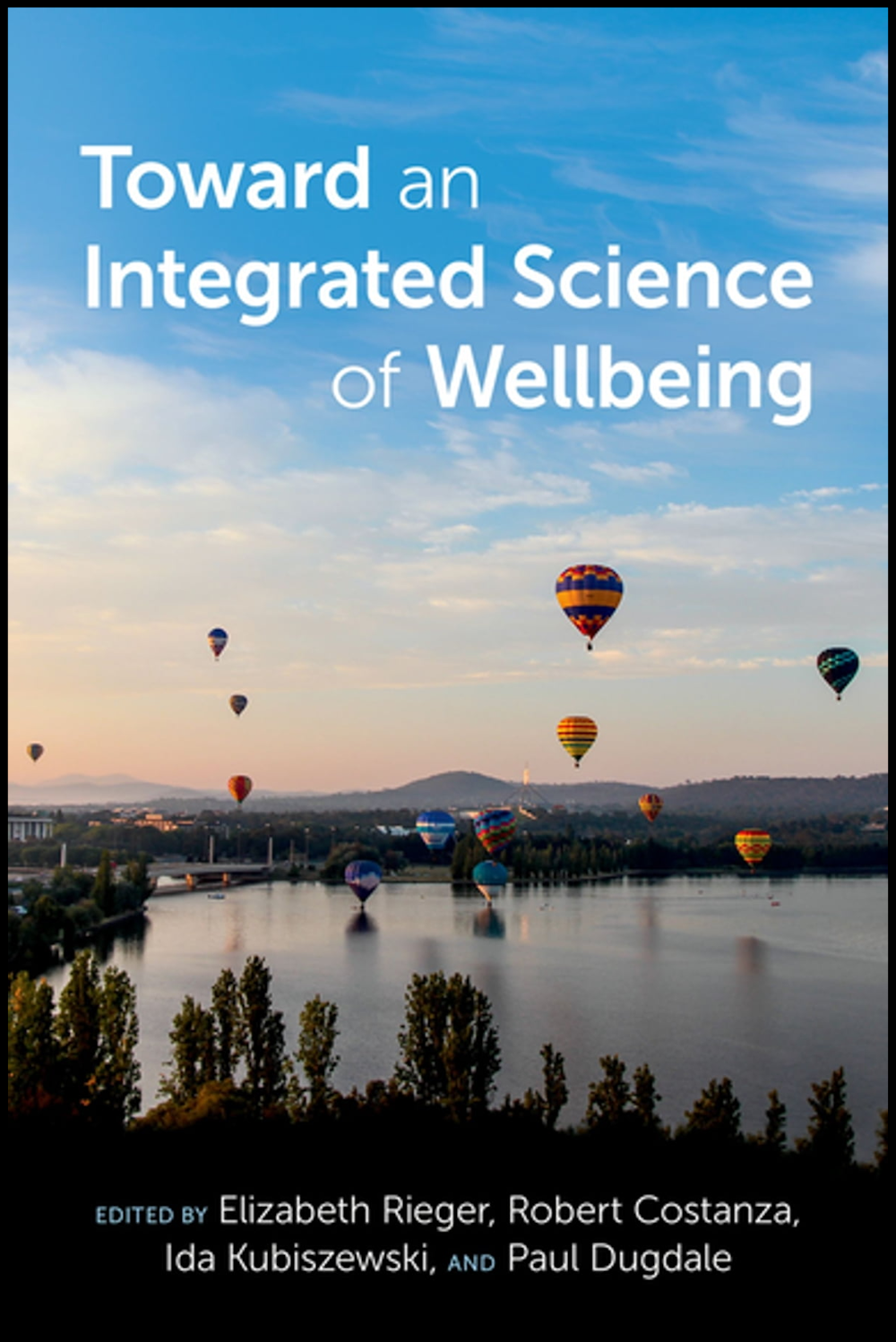
Oxford University Press[6] As an example, anger is generally regarded as deleterious to wellbeing and worth minimising. But if minimising anger meant less action on climate change, minimising it might make us worse off. And some of the things that are incredibly important for wellbeing are hard to measure, including what happens within relationships or access to sunlight. Related to these are the design of cities and their integration with hospital and health services. These matter for the quality of dying, as well as living. Lying behind much of what matters is inequality – which can be worsened by a misplaced focus on GDP growth at all costs – and the natural environment, most of which is missing from standard measures of GDP. Global work on wellbeing At the government level, wellbeing is being espoused by the Wellbeing Economy Governments[7] (which so far includes Scotland, New Zealand, Iceland, Wales, Finland, and Canada). It’s also being coordinated across the hundreds of groups working on this issue by the Wellbeing Economy Alliance[8], funded by philanthropic foundations. While their objectives are still being refined, they (and Chalmers’ objectives) don’t differ much from the five goals identified more than 30 years ago by pioneers in the field of ecological economics[9]: to stay within planetary biophysical boundaries to meet all fundamental human needs to create and maintain a fair distribution of resources, income, and wealth to bring about an efficient allocation of resources that allows human development and flourishing to create governance systems that are transparent, fair, responsive, just and accountable. We are about to find out how well Chalmers and his department have integrated these objectives, and how well they think Australia is doing. Read more: Australia's wellbeing budget: what we can – and can't – learn from NZ[10] References^ Measuring What Matters (treasury.gov.au)^ hurriedly-prepared (cdn.theconversation.com)^ first (ministers.treasury.gov.au)^ 280 (ministers.treasury.gov.au)^ integrated science of wellbeing (academic.oup.com)^ Oxford University Press (academic.oup.com)^ Wellbeing Economy Governments (wellbeingeconomy.org)^ Wellbeing Economy Alliance (weall.org)^ ecological economics (www.google.com.au)^ Australia's wellbeing budget: what we can – and can't – learn from NZ (theconversation.com)Authors: Robert Costanza, Professor of Ecological Economics, UCL

Read more https://theconversation.com/australias-first-wellbeing-framework-is-about-to-measure-what-matters-but-its-harder-than-counting-gdp-209868

The Weekend Times Magazine

Why Car Sharing is dominating Car Renting

Sustainability, budget, urban living, lack of parking – these are just a few of the reasons that many people are choosing not to buy cars in today’s environment. ...

Farmers Calling on Aussies and Restaurateurs to Help Save the Sydney Rock Oyster

The future of Sydney Rock Oyster farming in NSW is under extreme threat and a group of NSW farmers are urging restaurateurs and chefs to support the native Australian Sydney...

Tips For Creating A Safe Pool Environment For Your Growing Family

Having a pool in the backyard is a dream for many Australian families. It offers hours of entertainment, a way to stay active, and a place to cool off during...

Parrtjima opens in Australia’s Red Centre

Free event in Alice Springs will lift spirits every night until 20 September Parrtjima – A Festival in Light launched last night with an incredible display of lighting installations and interactive...

How To Install PVC Shutters At Home

Homes are the best place for relaxing and refreshing after the hectic and tiring daily life routine. The home should be decorated so that it gives people a warm welcome...

Aussies get budget savvy with surge in deferred payment of bills

Deferit co-founders Mat Blas and Jonty Hirsowitz Deferit, a payment platform exclusively focused on helping people pay their bills on time, has released new data on the huge uptake of its...

Paid parental leave needs an overhaul if governments want us to have ‘one for the country’

As Australia and New Zealand face the realities of slow growth, or even a decline in population, it’s time to ask if their governments are doing enough. Especially if they...

How TPD Solicitors Unlock Your Super Insurance Payout Fast

Up to 70% of Australians don't realize they have TPD insurance through their super, potentially missing out on life-changing payouts when they need them most. This staggering statistic reveals a...

Lady Elliot Island Tours

Uncover Island Bliss With a Luxury Vacay Exploring W Brisbane and Lady Elliot Island Who needs Bora Bora when you have one of the world's most pristine islands on your doorstep...