Is the Barbie movie a bold step to reinvent and fix past wrongs or a clever ploy to tap a new market?
- Written by: Lauren Gurrieri, Associate Professor in Marketing, RMIT University
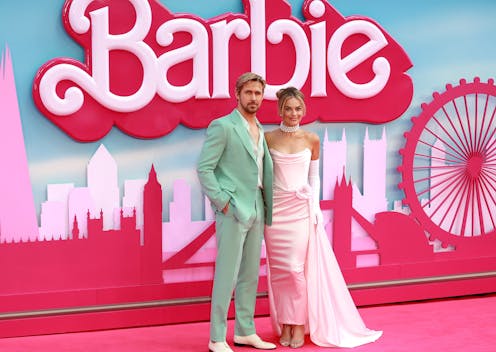
After a months-long marketing blitz, the much-hyped Barbie movie is released this week.
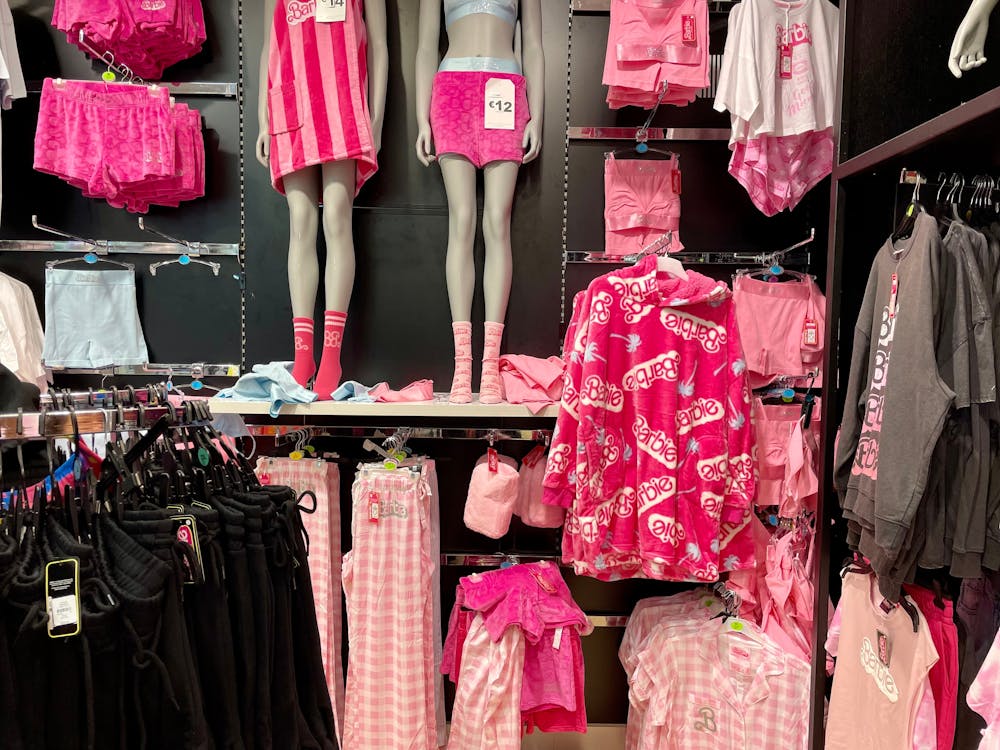
From a Malibu Barbie dreamhouse[1] listed on AirBnB, an AI tool that transforms selfies into Barbie movie posters[2] and multiple Barbie-themed brand collaborations ranging from nail polish to roller skates, Barbie is everywhere.
She has even gone viral as a fashion trend known as Barbiecore[3], exploding across social media with people embracing vibrant pink hues and hyper feminine aesthetics. A Barbie world is upon us.
Although some have criticised this saturation[4] strategy, it is a very deliberate marketing ploy to revitalise and redefine a brand with a contested position and history.
Read more: In a Barbie world ... after the movie frenzy fades, how do we avoid tonnes of Barbie dolls going to landfill?[5]
As well as attracting adults who grew up with Barbie and are curious to see what’s changed, the reinvention is drawing in those younger fans swept up by the tsunami of marketing and merchandise.
Despite being one of the most trusted brands[6] with a value of approximately $US700 million[7], Barbie has long attracted feminist criticism for fuelling outdated and problematic “plastic fantastic” sexist stereotypes and expectations.
The Barbie backlash
Only a few years back, Barbie was a brand in crisis. Sales plummeted[8] across 2011 to 2015 against the cultural backdrop of a rise in body positivity and backlash against a doll that represented narrow ideals and an impossible beauty standard.
After all, at life-size Barbie represents a body shape held by less than 1 in 100,000[9] real people. In fact, she is so anatomically impossible[10] that, if she were real, she would be unable to lift her head, store a full liver or intestines, or menstruate[11].
The backlash has also been in response to growing concerns about how she influences child development, particularly how and what children learn about gender. Barbie has been identified as a risk factor[12] for thin-ideal internalisation and body dissatisfaction for young girls, encouraging motivation for a thinner shape[13] that damages body image and self esteem.
And despite the multiple careers Barbie has held over the decades, research highlights that girls who play with Barbie believe they have fewer career options than boys[14]. This speaks to the power of toys to reinforce gender stereotypes, roles and expectations, and how Barbie has imported narrow ideals of femininity, girlhood and womanhood into young girls’ lives.
Reinventing a long-established icon
In response to this backlash, Mattel launched a new range of Barbies in 2016 that were promoted as diverse[15], representing different body shapes, sizes, hair types and skin tones. This was not without criticism, with “curvy” Barbie still considered thin and dolls named in ways that drew attention foremost to their bodies.
From a white, well-dressed, middle-class, girl-next-door with friends of a similar ilk, Barbie has since been marketed as a symbol of diversity and inclusion. To signify the extent of the transformation, Mattel’s executives gave this project the code name “Project Dawn”.
Mattel - like many other brands joining the “inclusivity revolution”[17] - knew that diversity sells, and they needed to make their brand relevant for contemporary consumers.
Diversity initiatives included a line of female role model dolls[18], promoted as “introducing girls to remarkable women’s stories to show them you can be anything”.
Barbie was also given a voice in the form of Barbie Vlogs[19], where she expressed her views on issues including depression and the sorry reflex[20]. A gender neutral collection called “creatable world” was added in 2019 to open up gender expression possibilities when playing with Barbies.
Such efforts were crucial to undoing missteps of the past, such as a “Teen Talk Barbie” that was programmed to say “Math class is tough![21]”, or the compulsory heterosexuality that Barbie has long advanced.
The latest step in Barbie’s transformation
Barbie the film is simply the next step in an evolution to make brand Barbie inclusive. And with a rumoured film budget of $100 million, the supporting marketing machine provides a critical opportunity to reset the Barbie narrative.
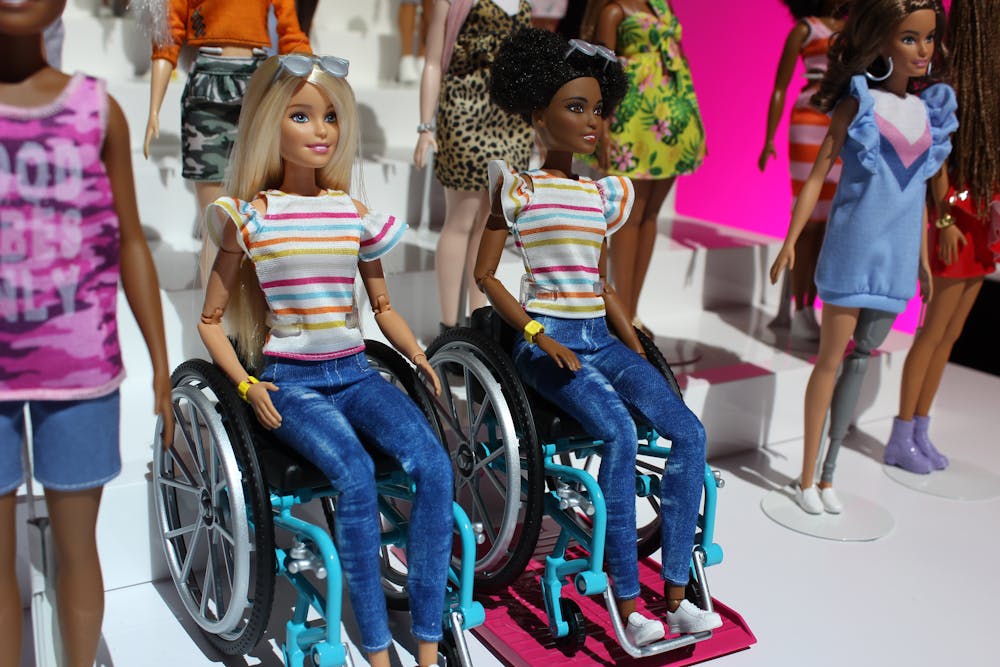 Part of the range of Barbies introduced in 2016 to promote diversity and inclusion.
Shutterstock[22]
Part of the range of Barbies introduced in 2016 to promote diversity and inclusion.
Shutterstock[22]
With Greta Gerwig, acclaimed director of female-led stories such as Little Women and Lady Bird at the helm, and a diverse cast of Barbies of different races, body types, gender identities and sexual preferences, the film and its creators have sought to assure audiences of the film’s feminist leanings.
Addressing the complicated history of Barbie is crucial for audiences who grew up and played with the doll and are grappling with introducing her to the next generation of doll consumers.
Yet, Robbie Brenner, executive producer of Mattel Films, has explicitly stated that Gerwig’s Barbie is “not a feminist movie”. Indeed, the main character still represents a narrow beauty standard - tall, thin, blonde, white - with diverse characters in place to support her narrative.
Read more: How I learned to stop worrying and love the doll – a feminist philosopher's journey back to Barbie[23]
Which begs the question: are these inclusion initiatives simply emblematic of diversity washing, where the language and symbolism of social justice are hijacked for corporate profit? Or do they represent a genuine effort to redress the chequered history of a brand that promotes poor body image, unrealistic ideals and rampant materialism?
What is clear is that in today’s climate where brands are increasingly rewarded for taking a stand on sociopolitical issues, brand Barbie’s attempts to reposition as inclusive have paid off: sales are now booming.
Seemingly, Barbie’s famous tagline that “anything is possible” has shown itself to be true.
References
- ^ Malibu Barbie dreamhouse (news.airbnb.com)
- ^ transforms selfies into Barbie movie posters (www.barbieselfie.ai)
- ^ Barbiecore (www.elle.com.au)
- ^ saturation (twitter.com)
- ^ In a Barbie world ... after the movie frenzy fades, how do we avoid tonnes of Barbie dolls going to landfill? (theconversation.com)
- ^ most trusted brands (www.newsweek.com)
- ^ $US700 million (www.statista.com)
- ^ Sales plummeted (time.com)
- ^ less than 1 in 100,000 (link.springer.com)
- ^ anatomically impossible (rehabs.com)
- ^ menstruate (www.bmj.com)
- ^ risk factor (www.sciencedirect.com)
- ^ motivation for a thinner shape (www.sciencedirect.com)
- ^ fewer career options than boys (link.springer.com)
- ^ diverse (shop.mattel.com)
- ^ Shutterstock (www.shutterstock.com)
- ^ “inclusivity revolution” (theconversation.com)
- ^ female role model dolls (shop.mattel.com)
- ^ Barbie Vlogs (www.youtube.com)
- ^ sorry reflex (www.bustle.com)
- ^ Math class is tough! (www.youtube.com)
- ^ Shutterstock (www.shutterstock.com)
- ^ How I learned to stop worrying and love the doll – a feminist philosopher's journey back to Barbie (theconversation.com)
Authors: Lauren Gurrieri, Associate Professor in Marketing, RMIT University