Weekend Times


The Times

Business News

How a secret plan 50 years ago changed Australia's economy forever, in just one night

  • Written by Alex Millmow, Senior Fellow, Federation University Australia
How a secret plan 50 years ago changed Australia's economy forever, in just one night

At a time when governments are timid, keener to announce reviews[1] than decisions, it’s refreshing to remember what happened 50 years ago today – on July 18 1973.

Inflation had surged to 14%[2]. Australia’s biggest customer, the United Kingdom, had joined the European Economic Community[3], agreeing to buy products from it rather than Australia. And the newly formed Organisation of Arab Petroleum Exporting Countries had doubled[4] the price of oil.

The tariffs imposed on imported goods to protect Australian manufacturers from competition were extraordinarily high. For clothing, they reached 55%[5]; for motor vehicles, 45%[6].

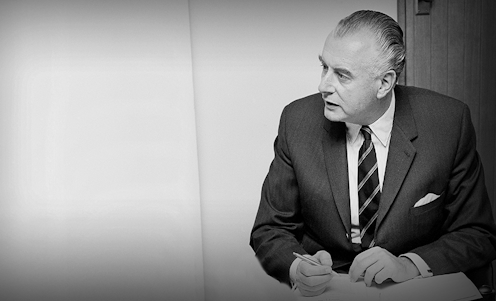
Then, with absolutely no public indication he had been considering anything as drastic, at 7pm on Wednesday July 18, the recently elected prime minister Gough Whitlam made an announcement[7].

Every tariff cut by one quarter overnight

From midnight, all tariffs would be cut by 25%. As Whitlam put it: “each tariff will be reduced by one quarter of what it is now”.

Gough Whitlam's statement[8] If Australian businesses (and the Australian public) were caught by surprise, it was because Whitlam had planned the whole thing in secret. He had given a six-person committee just three weeks to work out the details. Although the committee was chaired by the head of the Tariff Board, Alf Rattigan, and included an official from Whitlam’s own department, the department of industry and the department of trade, it met in an obscure location in Canberra’s civic centre rather than in public service offices, where the project might be discovered. Not included in the committee was a representative of the treasury, which its then deputy head John Stone said “knew nothing[9]” about what was unfolding. But driving the work of the committee were two academic outsiders – Fred Gruen, an economics professor at the Australian National University and adviser to Whitlam, and Brian Brogan, an economics lecturer at Monash University who was advising the trade minister, Jim Cairns. Outsiders, not treasury insiders As economists rather than bureaucrats, Gruen and Brogan were able to see benefits where others saw entrenched interests. Going to the tariff board and asking for extra tariffs, whenever it looked as if your prices might be undercut by imports, had become a reflex action for Australian businesses. In the words of Gary Banks[10] – later to become head of the successor to the tariff board, the Productivity Commission: “it was not a shameful thing for a conga line of industrialists to be seen wending its way to Canberra”. Read more: Half a century on, it's time to reassess the Whitlam government's economic legacy[11] Tariffs were good for business owners, athough bad for their customers, who had to pay much higher prices and often got worse goods[12]. They were also good for government – bringing in tax revenue. Whitlam was more interested in bringing down inflation. His announcement said increased competition would have a salutary effect upon those who have taken advantage of shortages by unjustified price increases which have exploited the public. Any firm seriously hurt by the extra imports could apply to a newly established tribunal for assistance, but the tribunal should not provide relief as a matter of course – that is, simply because the question of relief had been referred to it. So Whitlam offered “rationalisation assistance” to encourage firms to refocus their operations, and “compensation for closure” where that couldn’t be done and production had to cease. For displaced workers, the 7pm announcement offered anyone who lost their job retraining, as well as a weekly amount equal to his [sic] average wage in the previous six months until he obtains or is found suitable alternative employment. Over the next seven years, manufacturing employment fell by 80,000[13], but few of those job losses were immediate. Fifteen months after the 25% tariff cut, fewer than 6,000[14] people had claimed the wage replacement offered on the night of the announcement. When Whitlam went to the polls a year after the cut in the double dissolution election of May 1974, 122 university economists signed an open letter[15] of support. The letter said the general thrust of the government’s policy responses had been in the best interests of the nation as a whole, and added, more importantly, we seriously doubt that the previous government would have had the wisdom or the courage to undertake it. It had certainly given no indication of moving in that direction while it was in power, even though the need for such policies had become obvious. In its later days in office, the Whitlam government was roundly criticised for its irresponsible public spending. Ironically, in its approach to tariffs in the 1970s, it had taken the first steps in a neoliberal direction that characterised western governments of the 1980s. By acting boldly after decades of inaction, Whitlam showed what a government could do. It was a lesson his Labor successor Bob Hawke took to heart a decade later, when he floated the dollar, revamped Australia’s tax system and put in place a series of further cuts that reduced tariffs to near zero. It’s something we see less of today.

References

  1. ^ reviews (www.pc.gov.au)
  2. ^ 14% (www.datawrapper.de)
  3. ^ European Economic Community (news.bbc.co.uk)
  4. ^ doubled (advisor.visualcapitalist.com)
  5. ^ 55% (www.pc.gov.au)
  6. ^ 45% (ro.uow.edu.au)
  7. ^ announcement (pmtranscripts.pmc.gov.au)
  8. ^ Gough Whitlam's statement (pmtranscripts.pmc.gov.au)
  9. ^ knew nothing (cdn.theconversation.com)
  10. ^ Gary Banks (esavic.org.au)
  11. ^ Half a century on, it's time to reassess the Whitlam government's economic legacy (theconversation.com)
  12. ^ worse goods (www.afr.com)
  13. ^ 80,000 (www.bitre.gov.au)
  14. ^ 6,000 (www.jstor.org)
  15. ^ open letter (pmtranscripts.pmc.gov.au)

Authors: Alex Millmow, Senior Fellow, Federation University Australia

Read more https://theconversation.com/how-a-secret-plan-50-years-ago-changed-australias-economy-forever-in-just-one-night-209378

The Weekend Times Magazine

Dentists in Sydney: Your Guide to Dental Care

Sydney, Australia is home to the absolute best dental experts in the country. With a different range of services and specialties, dental specialists in Sydney take care of different needs...

Launching Weekly Campaigns with Zero Dev Involvement: The Headless Advantage

Marketing teams are forever tasked with more and more quickly. It wasn't long ago that launching a campaign weekly was a stretch goal and not a minimum viable timeframe. Today...

Diamonds & Why They Are The Popular Choice For Any Occasion Here In Australia

Diamonds have been an incredibly popular gem for many years now and they continue to be so even now in 2024. It seems like the perfect jewel to choose for...

Ensuring a consistent Australian foreign policy - Scott Morrison

The Morrison Government will introduce new legislation to ensure the arrangements states, territories, councils and universities have with foreign governments are consistent with Australian foreign policy.   The Commonwealth Government has exclusive...

Australia’s top economists oppose the next increases in compulsory super: new poll

The five consecutive consecutive hikes in compulsory super contributions due to start next July should be deferred or abandoned in the view of the overwhelming majority of the leading Australian...

Body Contouring Melbourne: Sculpting Confidence with Safe and Effective Treatments

Achieving your ideal body shape often takes more than just diet and exercise. For those looking to enhance their natural contours, body contouring Melbourne clinics offer advanced treatments designed to reduce...

Why Removalists Melbourne Are the Smartest Choice for an Easy and Organised Move

Relocating from one home or office to another can feel overwhelming, especially when you’re trying to balance packing, sorting, transporting, and managing deadlines all at once. Choosing experienced removalists Melbourne is...

Camplify Research Reveals 2020 is the Year of the Local Road Trip

Camplify has today released a research report highlighting that 2020 is no doubt the year of the local road trip. With COVID-19 restricting international travel, Australians have hit the roads...

Heating and Cooling Services That Keep Your Home Comfortable Year-Round

Australia’s climate is unpredictable. Sweltering summers and chilly winters can make indoor life uncomfortable without the right temperature control. That’s why professional heating and cooling services are no longer a luxury...

hacklink hack forum hacklink film izle hacklink jojobetonline casinos australiaonline casinosonline casino australiacasinos not on GamStopzlybrarypadişahbet güncelDeneme bonusu veren siteler 2026Casibomjojobet girişjojobet girişjojobet girişcasibom girişjojobet girişjojobetjojobetbetpark