Weekend Times


Google Workspace

Business News

Up to one in six recent migrants are paid less than the minimum wage. Here’s why

  • Written by Brendan Coates, Program Director, Economic Policy, Grattan Institute
Up to one in six recent migrants are paid less than the minimum wage. Here’s why

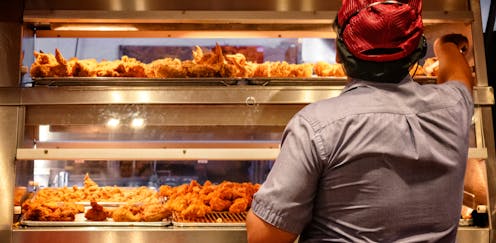
From working 20 to 30 hours[1] of unpaid overtime each week in one of Australia’s fanciest restaurants to picking fruit while being exposed to dangerous chemicals for less than $10 an hour[2], the underpayment of migrant workers is rife.

The Grattan Institute’s new report, Short-changed: How to stop the exploitation of migrant workers in Australia[3], show a broad pattern.

We’ve used two nationally representative Australian Bureau of Statistics surveys of employees and employers – Characteristics of Employment[4] and Employee Earnings and Hours[5] – to find out whether employees are paid below the national minimum hourly wage in Australia, currently $21.38 an hour or $26.73 an hour for casuals[6].

We estimate that recent migrants – those who arrived in Australia within the past five years – are twice as likely to be underpaid as migrants who have been in Australia for at least 10 years, and those born here.

Underpayment is widespread

In 2022, 5% to 16% of employed recent migrants were paid less than the national minimum wage. Between 1% and 8.5% of recent migrants were paid at least $3 less than the hourly minimum.


This compares with 3% to 9% of all employees in Australia being paid below the national minimum wage; with 0.5% to 4.5% paid at least $3 an hour less. These numbers are likely to under-represent the extent of underpayment because our analysis only counts those being paid less than the national minimum wage. It does not count cases where workers are underpaid against appropriate award rates, which typically pay more than the national minimum wage, penalty rates, or are not paid their superannuation. Factors contributing to exploitation Part of reason recent migrants are more likely to be underpaid is because they tend to work in industries where underpayment is more prevalent, such as hospitality and agriculture. For example, temporary visa holders account for nearly 20% of workers in hospitality, the industry with the highest reported rate of underpayment.
Migrants also tend to be younger workers. Employees aged 20 to 29 are nearly six times more likely to be paid less than the national minimum wage than workers aged 30 to 39. But even after accounting for age, industry and other demographic characteristics, migrants are still more likely to be underpaid. Migrants who arrived in the past five years are 40% more likely to be underpaid than long-term residents with similar skills working in the same job with the same characteristics. Migrants who arrived five to nine years ago are 20% more likely to be underpaid. Several things explain this. First are visa rules, which make temporary visa holders more vulnerable to exploitation. For example, many international students put up with mistreatment for fear their visa may be cancelled for working more hours than permitted by their visa rules. Two-thirds of recent migrants are on a temporary visa[7]. Migrants have less bargaining power than local workers, partly because they have small social networks to help them find a job. They may not know what workplace rights they are entitled to and face discrimination in the labour market. Read more: What's in a name? How recruitment discriminates against 'foreign' applicants[8] Our analysis shows the likelihood of underpayment is also higher among those working less-skilled jobs with fewer qualifications. Without change, underpayment will rise again Rates of underpayment for migrant workers and locals alike have fallen since the pandemic began In 2018, 8% to 22% of recent migrants were paid less than the minimum hourly wage (compared with 5% to 16% in 2022). This probably reflects the decline in the number of temporary visa holders living in Australia, especially students and working holiday makers, and labour shortages boosting worker’s bargaining power. But with borders open again and temporary visa holders coming back in big numbers[9], the rate of underpayment seems sure to rise again without action from government to stamp out exploitation. The federal government needs to reform the visa rules that make migrants vulnerable, boost resources to enforce workplace and migration laws and make it easier for migrants to claim money owed. Underpayment has been widespread for too long. Now is the time to put a stop to it. Read more: How to improve the migration system for the good of temporary migrants – and Australia[10] References^ 20 to 30 hours (www.smh.com.au)^ less than $10 an hour (www.smh.com.au)^ Short-changed: How to stop the exploitation of migrant workers in Australia (grattan.edu.au)^ Characteristics of Employment (www.abs.gov.au)^ Employee Earnings and Hours (www.abs.gov.au)^ $21.38 an hour or $26.73 an hour for casuals (www.fairwork.gov.au)^ Two-thirds of recent migrants are on a temporary visa (grattan.edu.au)^ What's in a name? How recruitment discriminates against 'foreign' applicants (theconversation.com)^ temporary visa holders coming back in big numbers (www.theaustralian.com.au)^ How to improve the migration system for the good of temporary migrants – and Australia (theconversation.com)Authors: Brendan Coates, Program Director, Economic Policy, Grattan Institute

Read more https://theconversation.com/up-to-one-in-six-recent-migrants-are-paid-less-than-the-minimum-wage-heres-why-206067

The Weekend Times Magazine

House Builders in Melbourne Delivering Homes Built for Modern Living

Choosing the right house builders Melbourne is one of the most important steps in creating a home that feels comfortable, functional, and built to last. House builders play a central role...

The Biggest Mistakes People Make When Hiring Lawyers in Sydney

Choosing the right legal help can feel daunting, especially when time is short and the stakes feel high. Many people start by searching for lawyers in Sydney, then rely on...

Discover the Benefits of Lifestyle Awnings for Your Home

Image by evening_tao on Freepik Adding shade and style to your outdoor space is easier than ever with Lifestyle Awnings. Whether you want to enjoy your backyard comfortably, protect your...

Building Designer in Melbourne: Crafting Innovative, Functional, and Sustainable Spaces

In a city celebrated for its architectural excellence and diverse urban character, the role of a building designer Melbourne has never been more important. Melbourne’s built environment is a dynamic blend...

How TPD Solicitors Unlock Your Super Insurance Payout Fast

Up to 70% of Australians don't realize they have TPD insurance through their super, potentially missing out on life-changing payouts when they need them most. This staggering statistic reveals a...

Planting The Seed To Health Living Top tips on planting for wellbeing

With the family home full time and a need to keep everyone busy, it is the ideal time to plant a seed to a healthier lifestyle. Tuscan Path Product Manager...

Microbes living on air a global phenomenon

UNSW researchers have found their previous discovery of bacteria living on air in Antarctica is likely a process that occurs globally, further supporting the potential existence of microbial life on...

Trading With Quantum AI: A How-To Guide

Quantum AI can be used in any country where retail CFD trading is legal. The site does warn that registration spots are limited, so your first try might not be successful. If...

Swimming with whales: you must know the risks and when it’s best to keep your distance

Three people were injured last month in separate humpback whale encounters off the Western Australia coast. The incidents happened during snorkelling tours on Ningaloo Reef when swimmers came too close to...