Tiny and alternate houses can help ease Australia's rental affordability crisis
- Written by: Heather Shearer, Research Fellow, Cities Research Institute, Griffith University
Rental housing in Australia is less affordable[1] than ever before. It is no exaggeration to call the situation a crisis, with vacancy rates at record lows[2].
But there are some relatively simple, easy-to-implement and cost-effective things that can be done to ease rental affordability pressures.
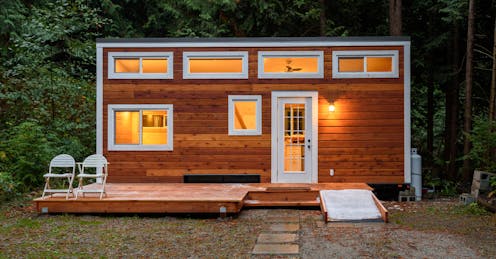
These include relaxing planning restrictions on small and non-traditional houses, allowing granny flats to be rented to anyone, permitting property owners to let space to tiny house dwellers, and possibly even subsidising the building of granny flats or modification of houses for dual occupancy.
Read more: Stability and security: the keys to closing the mental health gap between renters and home owners[3]
‘Dependant’ persons only
The degree to which local councils permit very small dwellings depends on factors such as dwelling type, lot characteristics, planning scheme zoning and overlays, and state regulations.
Subject to these constraints, granny flats are generally legal in Australia, though states such as Queensland and Victoria restrict who can live in them.
In Queensland, most councils limit occupancy to members of the same household, defined as[4] a group who “live together on a long-term basis and make common provision for food or other essentials for living”.
In Victoria, granny flats can only “provide accommodation for a person who is dependant on a resident of the existing dwelling” (and are hence called Dependant Person’s Units[5]).
While these laws are sometimes ignored, they limit the potential for this affordable housing option for other individuals who struggle in the housing market. Extra council regulations and fees also make building a granny flat complicated, time-consuming and expensive, particularly if they incur infrastructure charges.
Desperately seeking parking space
Tiny houses, especially those on wheels, are typically not approved for permanent residence. Councils consider them caravans, with periods of permitted occupancy ranging from zero to about three months.
Some councils will tolerate them but, if receiving a complaint, can demand the tiny house be removed at short notice.
This can cause extreme distress. Some tiny house owners report living in constant fear of being moved on. In recent years we’ve seen increasing numbers of posts on tiny house social media pages pleading for “parking space”.
Because of these barriers, most tiny houses in Australia aren’t in urban areas, where demand for rental properties is highest, but hidden “under the radar” in more rural areas.
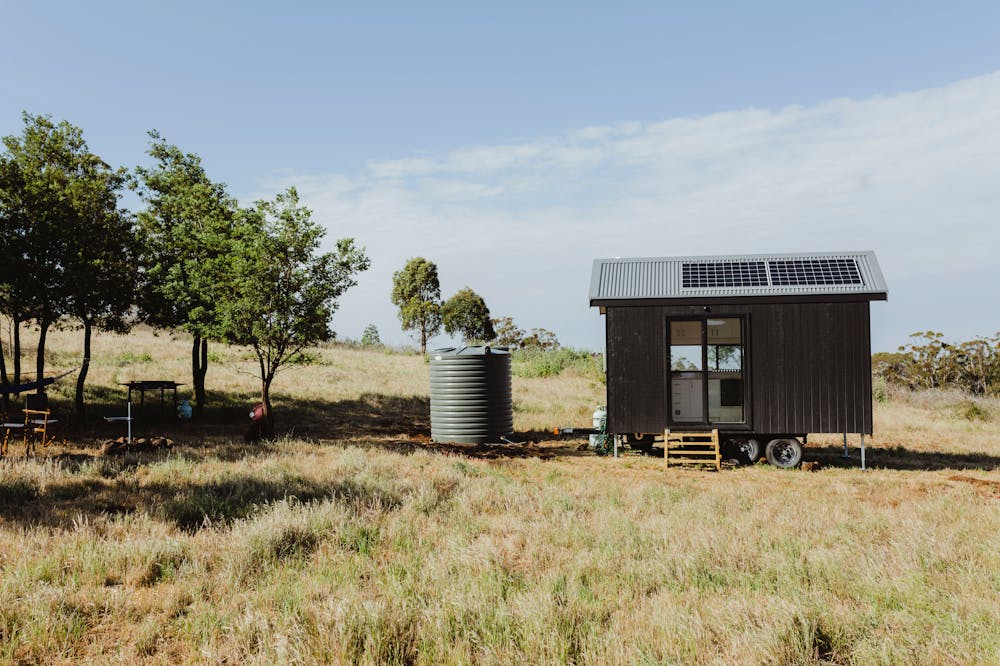
These areas typically have poorer access to public transport, employment, education and health services. If unknown to authorities, tiny house dwellers may also be at higher risk from natural disasters such as bushfires and floods.
Benefits from easing restrictions
Removing some restrictions on letting granny flats and permitting and regulating longer-term occupancy for tiny house dwellers can help ease these rental affordability challenges.
There are other benefits too. For local councils trying to limit unsustainable, low-density expansion on their fringes, these changes enable a relatively gentle and unobtrusive form of densification in places where resistance to change is common.
It could also support more ageing in place[7] (enabling the elderly to downsize while staying in their neighbourhood), reduce development pressures on the natural environment, and provide valuable income both for home owners and give local councils a new stream of rate income.
Read more: So, you want to live tiny? Here's what to consider when choosing a house, van or caravan[8]
Allowing property owners to let space to a tiny-house dweller (with appropriate regulations on aesthetic appearance, safety features and environmental impacts) could be a cost-effective and rapid way to increase rental supply for some demographics. Single women over 50, for example, are at high risk of homelessness and also the demographic most interested in tiny house living[9].
This crisis needs innovative responses
We have seen that, when disasters strike, governments can introduce innovative responses to local housing crises.
In response to the massive floods of February and March, the New South Wales government’s Temporary Accommodation Policy[10] changed the rules to allow a moveable dwelling or manufactured home to be placed in a disaster-affected area for up to two years, or longer subject to council approval.
Allowing tiny houses for a trial period of, say, two years could provide a valuable pilot project, and perhaps alleviate the concerns of some local ratepayers. In nine years of research into the tiny house movement in Australia, we have found some councils are willing to consider permitting tiny houses – but only if another council does it first.
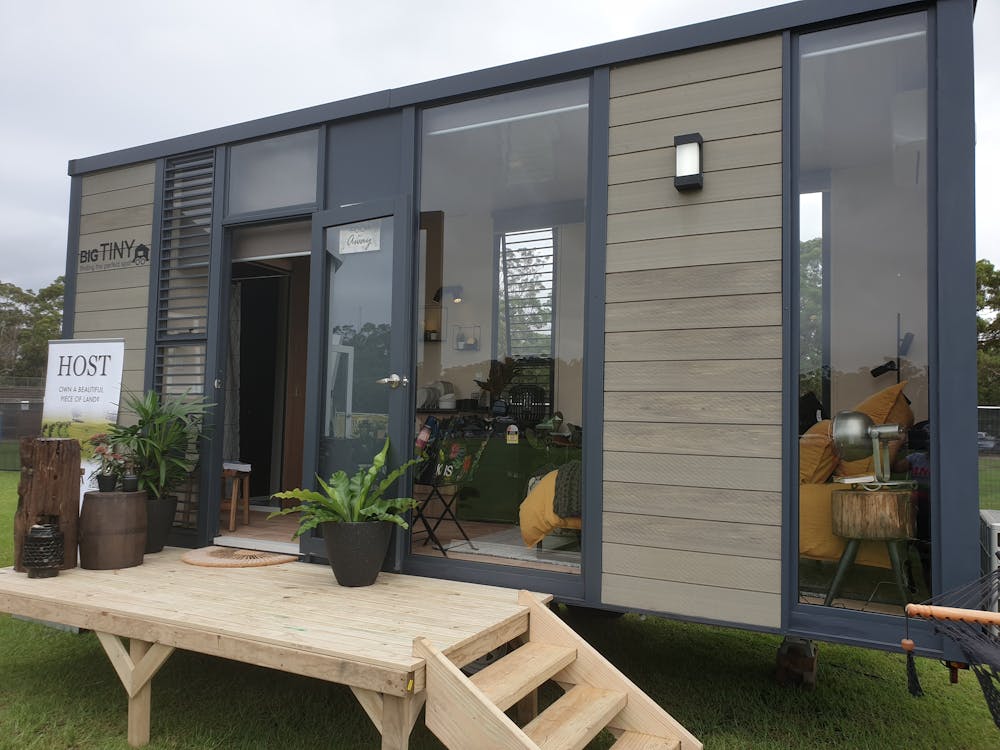 A tiny house for sale at the Sydney Tiny House Festival, March 2020.
Heather Shearer, Author provided
A tiny house for sale at the Sydney Tiny House Festival, March 2020.
Heather Shearer, Author provided
A longer-term solution is to encourage the building of more granny flats as part of a program of moderate densification, as is happening in Auckland, New Zealand[11].
Rather than subsidising expensive renovations of existing homes – as the Morrison government did with its HomeBuilder grants scheme[12] – federal, state and territory governments could offer incentives to divide or extend homes in well-designed and sustainably constructed ways to enable dual living.
Read more: Up on a roof: why New Zealand's move towards greater urban density should see a rooftop revolution[13]
While not as visibly dramatic as floods and bushfires, the crisis of housing affordability deserves equally imaginative policy responses. After all, adequate housing is enshrined in the UN’s Universal Declaration of Human Rights[14].
The crisis is complex and multifaceted. There are no easy solutions to address it in its entirety, and for every demographic. Tiny houses and granny flats are not suitable for all households. But business as usual is no solution.
We need a willingness to experiment with and learn from innovative and even disruptive approaches.
References
- ^ is less affordable (www.anglicare.asn.au)
- ^ record lows (www.domain.com.au)
- ^ Stability and security: the keys to closing the mental health gap between renters and home owners (theconversation.com)
- ^ defined as (www.brisbane.qld.gov.au)
- ^ Dependant Person’s Units (www.casey.vic.gov.au)
- ^ CC BY (creativecommons.org)
- ^ ageing in place (www.irt.org.au)
- ^ So, you want to live tiny? Here's what to consider when choosing a house, van or caravan (theconversation.com)
- ^ most interested in tiny house living (theconversation.com)
- ^ Temporary Accommodation Policy (www.planning.nsw.gov.au)
- ^ Auckland, New Zealand (www.aucklandcouncil.govt.nz)
- ^ HomeBuilder grants scheme (theconversation.com)
- ^ Up on a roof: why New Zealand's move towards greater urban density should see a rooftop revolution (theconversation.com)
- ^ Universal Declaration of Human Rights (www.un.org)
Authors: Heather Shearer, Research Fellow, Cities Research Institute, Griffith University