WeekendTimes.com.au


Men's Weekly

.

How to make roads with recycled waste, and pave the way to a circular economy

  • Written by Salman Shooshtarian, Research Fellow, RMIT University
How to make roads with recycled waste, and pave the way to a circular economy

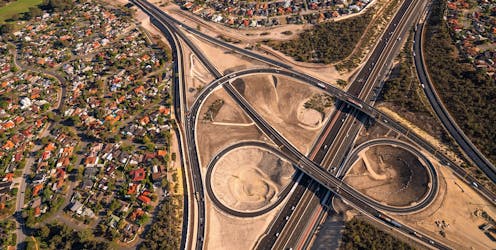
It cost A$49 million[1] to add 12.5 kilometres of extra lanes to Western Australia’s Kwinana Highway, south of Perth’s CBD. That’s not unusual. On average, building a single lane of road costs about about A$5 million per kilometre[2].

What is unusual about this stretch of extra freeway is not the money but the materials beneath the bitumen: two stabilising layers comprised of 25,000 tonnes of crushed recycled concrete[3], about 90% of which came from the demolition of Subiaco Oval (once Perth’s premier football ground).

Recycling building and construction materials remains the exception to the rule in Australia. The National Waste Policy[4] agreed to by federal, state and territory governments has a target of 80% resource recovery by 2030. It’s currently about 40%[5].

Of the 74 million tonnes of waste generated in Australia in 2020[6], masonry materials comprised about 22.9 million tonnes. Plastics, by comparison, comprised about 2.5 million tonnes. Of the 61.5 million tonnes of “core waste” managed by the waste and resource recovery sector, 44% (27 million tonnes) came from the construction and demolition sector, compared with 20% (12.6 million tonnes) from households and local government activities.

Most of this waste – concrete, brick, steel, timber, asphalt and plasterboard or cement sheeting – could be reused or recycled. It ends up in landfill due to simple economics. It’s cheaper to buy new materials and throw them away rather than reuse and recycle.

Changing this equation and moving to a circular economy, in which materials are reused and recycled rather than discarded in landfill, is a key goal to reduce the impact of building and construction on the environment, including its contribution to climate change.

Read more: A third of our waste comes from buildings. This one's designed for reuse and cuts emissions by 88%[7]

The economics of ‘externalities’

The fact it is more “economic” to throw materials away than reuse them is what economists call a market failure, driven by the problem of “externalities”. That is, the social and environmental costs of producing, consuming and throwing away materials is not reflected in the prices charged. Those costs are instead externalised – borne by others.

In such cases there is a legitimate – and necessary – role for governments to intervene and correct the market failure. For an externality such as carbon emissions (imposing costs on future generations) the market-based solution favoured by most economists is a carbon price.

Read more: COP26: cities create over 70% of energy-related emissions. Here's what must change[8]

For construction material waste, governments have a few more policy levers to help create a viable market for more recycling.

Using procurement policies

One way to make recycling more attractive to businesses would be to increase the cost of sending waste materials to landfill. But this would likely have unintended consequences, such as illegal dumping.

The more obvious and effective approach is to help create more demand for recycled materials through government procurement, adopting policies that require suppliers to, for example, use a minimum amount of recycled materials.

With enough demand, recyclers will invest in further waste recovery, reducing the costs. Lower costs in turn create the possibility of greater demand, creating a virtuous circle that leads to a circular economy.
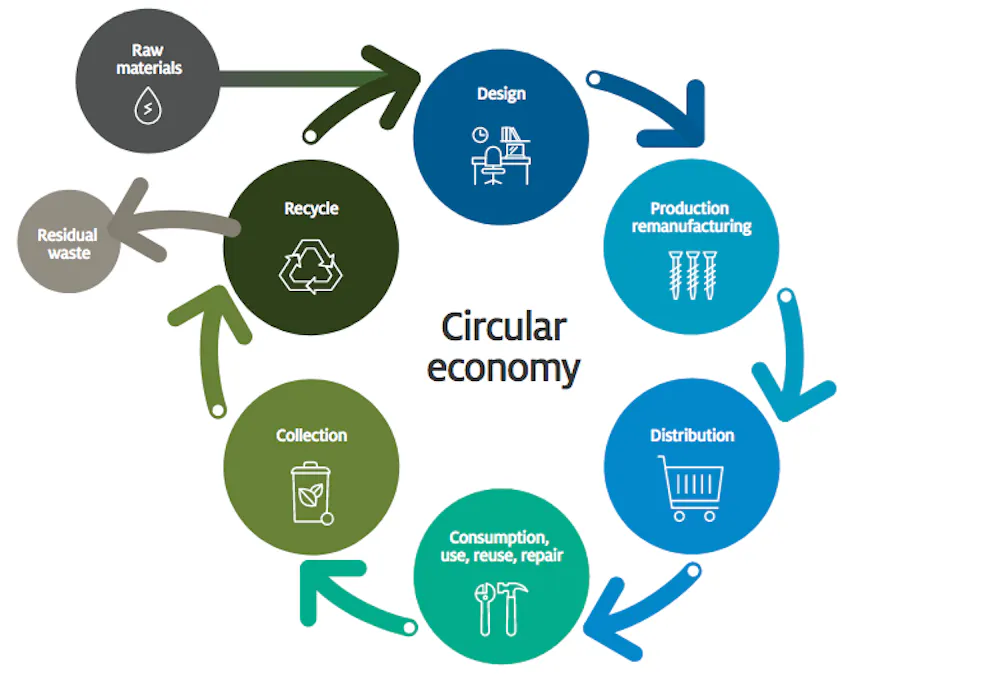
Diagram of the circular economy
Australian Government, Sustainable Procurement Guide: A practical guide for Commonwealth entities, 2021[9] Australia’s federal, state and territory governments all have sustainable procurement policies. The federal Sustainable Procurement Guide[10] states the Australian government “is committed to transforming Australia’s waste into a resource, where most goods and services can be continually used, reused, recycled and reprocessed as part of a circular economy”. But these policies lack some basic elements. Three key market-making reforms Our research suggests three important reforms could make a big difference to waste market operations. This is based on interviewing 27 stakeholders from the private sector and government about how to improve sustainable procurement. First, government waste policies that set aspirational goals are not supported by procurement policies setting mandatory minimum recycled content targets. All contractors on government-funded construction projects should be required to use a percentage of recycled waste materials. Second, the nature of salvaging construction materials means quality can vary significantly. Cement recycled from a demolition site, for example, could contain contaminants that reduce its durability. Read more: Australia needs construction waste recycling plants — but locals first need to be won over[11] Governments can help the market through regularly auditing the quality of recycler’s processes, to increase buyer confidence and motivate suppliers to invest in production technologies. Third, in some states (such as Western Australia) the testing regimes for recycled construction products are more complex than that what applies to raw materials. More reasonable specifications would reduce compliance costs and thereby the cost of using recycled materials. References^ A$49 million (www.buildingfortomorrow.wa.gov.au)^ A$5 million per kilometre (www.bitre.gov.au)^ 25,000 tonnes of crushed recycled concrete (www.wasteauthority.wa.gov.au)^ National Waste Policy (www.awe.gov.au)^ about 40% (www.awe.gov.au)^ generated in Australia in 2020 (www.environment.gov.au)^ A third of our waste comes from buildings. This one's designed for reuse and cuts emissions by 88% (theconversation.com)^ COP26: cities create over 70% of energy-related emissions. Here's what must change (theconversation.com)^ Australian Government, Sustainable Procurement Guide: A practical guide for Commonwealth entities, 2021 (www.awe.gov.au)^ Sustainable Procurement Guide (www.environment.gov.au)^ Australia needs construction waste recycling plants — but locals first need to be won over (theconversation.com)Authors: Salman Shooshtarian, Research Fellow, RMIT University

Read more https://theconversation.com/how-to-make-roads-with-recycled-waste-and-pave-the-way-to-a-circular-economy-164997

The Weekend Times Magazine

Top Applications of Sandstone Crazy Pavers

Crazy paving may not seem like an expensive flooring option, but it is well worth your attention and thought. It refers to the ‘crazed’ appearance of a completed area and...

Planting The Seed To Health Living Top tips on planting for wellbeing

With the family home full time and a need to keep everyone busy, it is the ideal time to plant a seed to a healthier lifestyle. Tuscan Path Product Manager...

How to work from home and not get divorced

Covid has triggered life-changing decisions for some people and has put a lot of relationship strain on couples. The stress of working from home and having to home school the...

The Smartest Financial Moves to Make In 2021

You are going to need all the finance tips you can get after winning your best US online casino real money. Everything may be unforeseen, therefore you must make wise...

Understanding the Power of Smart Home Automation in Modern Living

Technology is no longer confined to our pockets and workplaces—it has made a confident entrance into our homes. Among the most impactful technological trends reshaping domestic life is smart home...

The Best Tech Inventions to Cover the Next Decade

Online casino gaming is one piece of evidence to prove that the tech world is constantly evolving and becoming better. Thanks to the coming of technology you can get to...

How pool putty can be a lifesaver when it comes to pool repairs

Pool putty is a great way to repair your pool. It works well for all types of repairs, especially when you need to patch up a hole in the liner...

How TPD Solicitors Unlock Your Super Insurance Payout Fast

Up to 70% of Australians don't realize they have TPD insurance through their super, potentially missing out on life-changing payouts when they need them most. This staggering statistic reveals a...

The Ultimate Guide to Choosing the Right Removalists for Your Next Move

Whether you are relocating for work, upgrading your living space, or downsizing, the process of moving often requires careful planning, organization, and assistance. One of the most important steps in...

hacklink hack forum hacklink film izle hacklink หวยออนไลน์mavibetPusulabetสล็อตเว็บตรงgamdom girişpadişahbetMostbetcarros usadoskn777pradabetcocktail glassestipobetjojobetcasibomjojobet girişjojobet girişbetofficeBets10pusulabetholiganbet色情 film izlejojobetYakabet1xbet girişjojobetGrandpashabetgobahiskingroyaljojobetultrabet girişzbahisbets10kingbettingmamibetkingroyalcasibommeritkingbetciougwin288matadorbetcasibomcasibomJojobetmadridbetjustintvcasibomdeneme bonusukingroyalSekabetCasibommadridbetsekabetDinamobetrealbahisVdcasinobetpuanMarsbahisultrabet girişpaşacasinomeritkingpaşacasinomeritkingholiganbetcasibompadişahbetbetpuansahabet twittermr pachocasibomcasibomvbettipobetmeritbet girişkralbet girişultrabet girişultrabet girişcasibomdeneme bonusu veren siteleronwinonwintimebetkonya escorthttps://bogaria-atelier.com/grandbettinggrandbettinggrandbettingjojobet girişjojobet güncel girişultrabetbets10matbet güncel girişnorabahisKayseri Escortjojobet girişbettiltcasibomPusulabetaviator gamebahislioncasibomdeneme bonusu veren sitelercrown155 casinohb88aussuper96 loginholiganbetpadişahbet주소모음 주소모아spin2u loginneoaus96 casino loginPusulabetStreameastjojobetpadişahbetbetasusbets10ff29 casinobets10best e-wallet pokies 2025matbetmatbetgrandpashabetjojobet giriş