


‘Uncontrolled warrior culture’: Australia’s special forces under fire in new inquiry
- Written by: Weekend Times
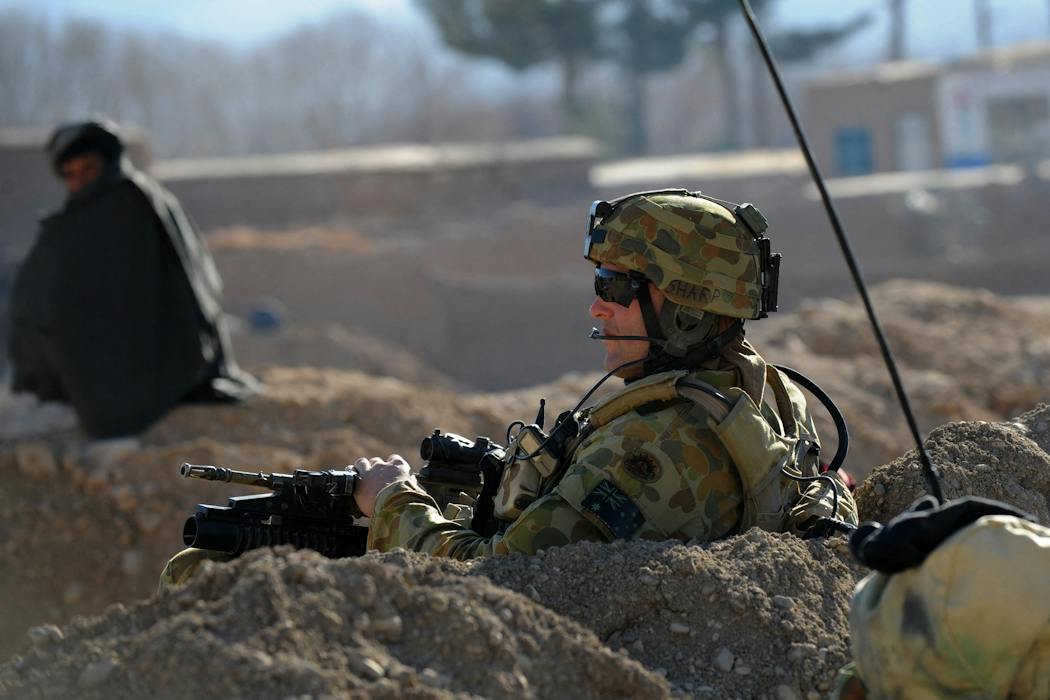
The inspector-general of the Australian Defence Force has released the executive summary of an inquiry into the culture and command of Australian special forces in Afghanistan.
This
inquiry followed the 2020 release of the landmark Brereton report, which investigated the conduct of Australian special forces personnel in Afghanistan between 2005 and 2016.
The summary of the new inquiry focuses again on the Special Forces Task Group, in particular the responsibility of commanders for the behaviour of special forces operators.
The report’s release addresses questions that remained after the Brereton report which contained credible information that special forces from Australia murdered 39 Afghan civilians and prisoners.
While that report suggested the responsibility for misconduct was likely at the level of patrol commanders, this latest inquiry scrutinises more senior leaders.
What is in the new inquiry?
The inspector general delivered 42 findings in the latest report.
Rather than make recommendations, the report suggests there are nine overarching issues that could form part of broader efforts by the defence force to reform Australian special forces operations.
These issues paint a picture of Australian forces operating in Afghanistan without adequate oversight and with an “uncontrolled warrior culture”.
The inquiry also notes the overuse of the special forces and their isolation from the broader army.
The report describes issues within the special forces mostly in terms of governance and culture. Areas of concern were military discipline, adequate oversight and communication and the effective operation of a chain of command.
Liberal MP Andrew Hastie, a former SAS captain, backed the findings. He said:
I lived a lot of what I read in that report. There’s almost 50 findings and a lot of it rings very true to me as a junior officer at the time. [The report] confirms there was unlawful conduct […] but rather than focusing on individuals, it spreads responsibility throughout the chain of command.
An ‘inversion of authority’
In regular military operations, orders are supposed to be passed down the chain of command, from headquarters to the field. This is to ensure a level of compliance with not only those orders but the broader expectations the army has over the conduct of its forces.
The inspector-general found problems with Australian command structures and procedures. The report suggests that in Afghanistan, there was actually “an inversion of authority” in some forces.
Tight-knit groups of lower ranking soldiers made operational decisions that would normally be made by more senior personnel.
According to a principle in war crimes law, known as command responsibility, commanders are legally responsible for the conduct of their troops. The onus is on them to address suspected misconduct as well as failures in communication and oversight.
So while the report describes the events in Afghanistan mostly in terms of failures of governance and culture, it may also lead to investigations of some commanders for war crimes.

A further challenge for the defence force is how to undertake organisational change in the special forces while still preserving their flexibility and capacity to operate unconventionally.
Special forces tend to operate with more independence than other military units. They undertake specialised missions and respond rapidly to changing battlefield circumstances. Sometimes this takes them beyond the direct reach of their commanders.
The trouble is, more autonomy for isolated units diminishes central control over operations. Unconventional operations are often therefore sometimes difficult to reconcile with our conventional understanding of military law and military discipline.
In the aftermath of the September 11 2001 terrorist attacks, the Australian government committed its special forces to the war on terror.
This was partly as a show of support to its senior alliance partner: the United States. As a smaller military power, it is often Australia’s most highly trained units that appeal to its partners.
This places Australian special forces in a difficult position. They can be committed to long-running high intensity conflicts and frequent rotations through combat zones.
While Australia’s presence in military coalitions is important from a foreign relations standpoint, the burden is felt by the operators in the field.
A moment of reckoning
As it stands now, the work by the inspector general casts doubt over whether special forces deployments are appropriate. The report raises serious moral and potentially legal questions over leadership, support structures and culture.
The conduct of individual soldiers in Afghanistan will continue to be scrutinised, within courtrooms and beyond.
In light of the inspector general’s latest report, this is now also a moment of reckoning for the leadership within the Australian Defence Force.
Dean Aszkielowicz has previously received funding from the Australian Army Research Scheme.
Paul Taucher does not work for, consult, own shares in or receive funding from any company or organisation that would benefit from this article, and has disclosed no relevant affiliations beyond their academic appointment.