Queensland is leading Australia’s fight against illicit tobacco. Should other states follow suit?
- Written by: Weekend Times
Not a week goes by without a news story about illicit tobacco in Australia, which is now a serious problem across the country.
This week, the
federal government announced an additional A$2.7 million in funding for Queensland to support ongoing illicit tobacco control efforts in the state.
The announcement featured trends in monthly legal tobacco sales from major retailers in the past financial year. The data show a massive increase in legal sales in Queensland, jumping 55% in December 2025 compared to July 2025. The figures showed the national market remained steady across the same period.
These findings suggest that, in Queensland, a large proportion of consumers who had previously switched to the illicit market, switched back to buying their tobacco legally at the end of 2025, but this trend was not replicated across the country.
What’s Queensland doing?
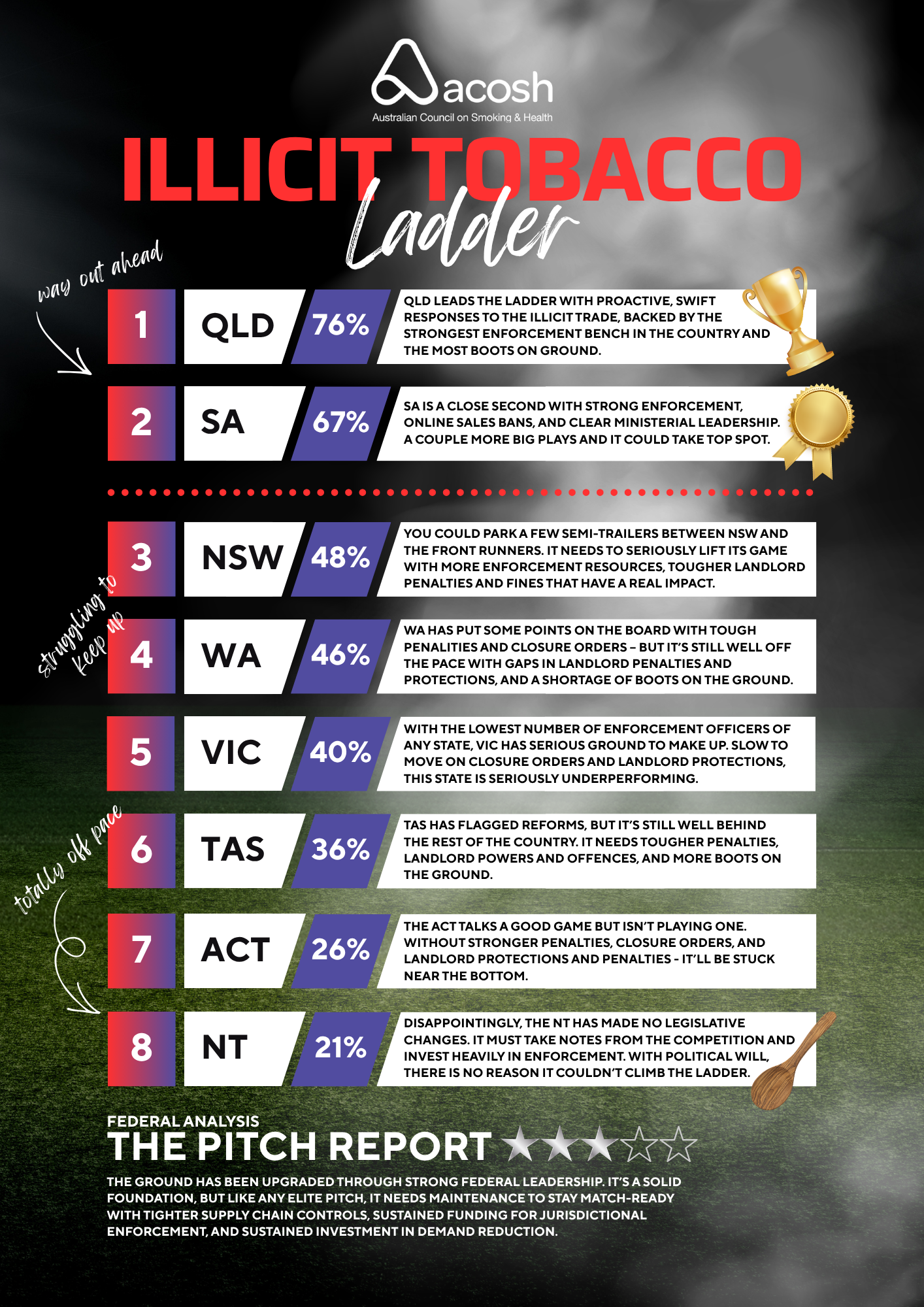
The Australian Council on Smoking & Health states Queensland’s multi-pronged approach to illicit tobacco control is the best in the country.

It includes investment in the largest enforcement team per capita in Australia and strong penalties for retailers found selling illegal tobacco or vaping products.
These penalties include large fines, the power to immediately close stores for three months, empowering landlords to end leases, and penalties for landlords who turn a blind eye to illegal sales from their leased premises.
The jump in legal sales in Queensland followed an enforcement blitz in November and December 2025.
What about other states and territories?
Research published this week outlines how other states and territories are strengthening their laws to deal with the illicit tobacco trade. Some have been much slower in doing so and invested less in their enforcement workforce than Queensland did.
For example, Victoria only started enforcement activities in February 2026. Its initial enforcement team consisted of only 14 officers. In contrast, Queensland has been closing stores since November 2024. By October 2025, it reported 159 authorised health and compliance officers, with an additional 43 dedicated officers recruited in 2025.
However, Victoria is now doing more to combat illicit tobacco, announcing what it says is Australia’s toughest enforcement laws, granting authorities the power to:
- instantly shut down illegal shops for 90 days
- enforce fines of more than $2.4 million and up to 20 years in jail
- hold landlords criminally liable
- triple the inspector workforce.
Western Australia and Tasmania have new laws, including 90 day closure orders. However, neither hold landlords accountable for illegal sales, unlike Queensland, South Australia, New South Wales and Victoria.
The laws related to landlords have been an important part of Queensland’s success. So, Western Australia, Tasmania, along with the ACT and Northern Territory – which lag behind all the states – should also update their laws to include them.
What more needs to happen?
The purpose of high tobacco taxes and graphic health warnings on cigarette packs is to improve health by reducing smoking. Also, fewer people smoking means fewer potential customers for illicit tobacco.
Given the latest national statistics suggest smoking rates have never been lower, building momentum to increase quitting and reduce smoking uptake is more important than ever.
Reassuringly, in addition to the increase in legal sales, calls to Queensland’s Quitline doubled following the recent enforcement blitz.
This is a promising sign, showing many Queenslanders are keen to quit smoking.
Queensland’s illicit tobacco strategy includes free nicotine replacement therapy and telephone counselling via Quitline for eligible groups to help them quit smoking or vaping.
This initiative should be replicated across Australia, with access to free support expanded to all people who smoke, rather than restricted to specific groups.
New policies that could support both illicit tobacco control and more people quitting are needed.
One option is to reduce the number of retailers permitted to sell tobacco and to greatly increase governance over the entire supply chain.
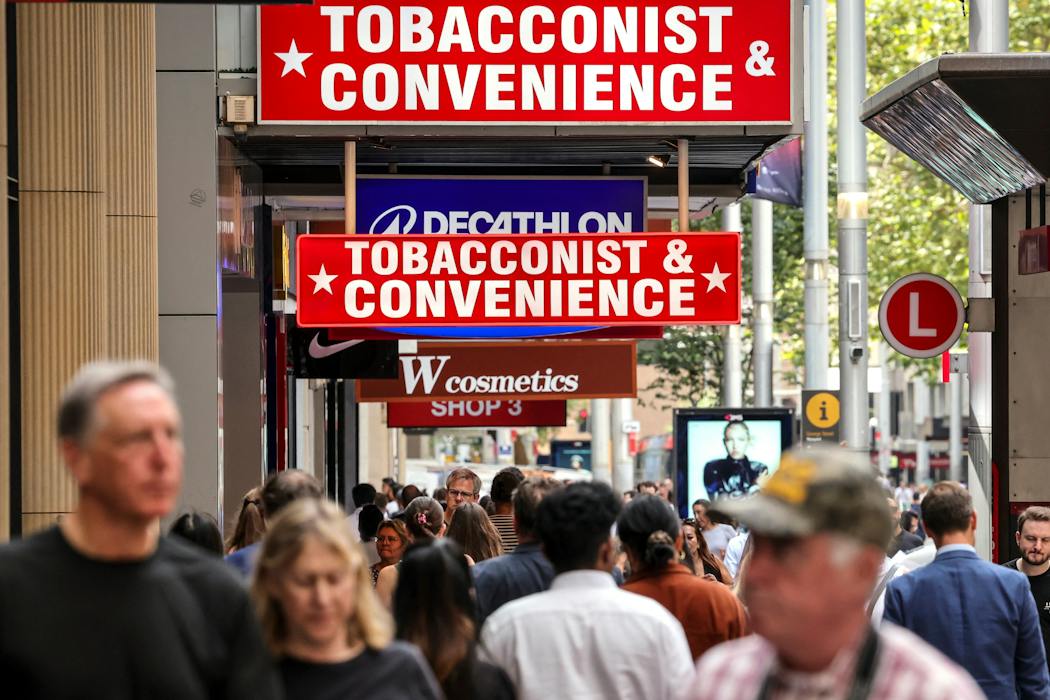
Small tobacco retailers such as tobacconists and convenience stores are the last remaining forms of tobacco product promotion. Their widespread presence in the community can make quitting more difficult.
Small retailers, particularly tobacconists, have also been strongly associated with supply of illicit tobacco in Australia. During the time of increased illicit tobacco trade, the proportion of consumers buying tobacco from supermarkets dropped from 51% in 2013 to 35% in 2022–2023. The proportion buying from tobacconists increased from 17% to 33%.
In 2025, more than half of those who bought illicit cigarette packs reported buying them from a tobacconist.
So, reducing the number of smaller retail outlets that have been a highly visible source of illicit tobacco may also reduce access to illicit tobacco in addition to helping people quit smoking.
The bigger picture
Ultimately, Queensland’s experience suggests strong enforcement can disrupt illicit tobacco trade. But, real success should not be measured in how many consumers return to the legal market but in how many quit smoking altogether.
Policies that encourage less tobacco use overall are critical to tackling the illicit tobacco problem.
Coral Gartner receives funding in the form of competitive grants from National Health and Medical Research Council (NHMRC) and Australian Research Council (ARC). She is the director of the NHMRC Centre of Research Excellence on Achieving the Tobacco Endgame, which is a network participant in the Global Alliance for Tobacco Control. She is also a member of Project Sunset, which is a network of tobacco control researchers and advocates who support phasing out the general retailing of commercial tobacco products.
Cheneal Puljević has received funding from the Australian Research Council; Department of Health, Disability and Ageing; Australian Institute of Criminology; Queensland Injectors Voice for Advocacy and Action; Cancer Council Victoria; Queensland Police Service; Metro South Health; and VicHealth.