Can we predict genocide by listening to what leaders say? Research finds common threads
- Written by: Weekend Times
On the eve of the full-scale invasion of Ukraine on February 24 2022, Russian President
href="http://en.kremlin.ru/events/president/news/67843">Vladimir Putin gave a speech. Several things stood out. He started by discussing the fundamental threat posed to Russia by “the West”.
This, he claimed, included the eastward expansion of the North Atlantic Treaty Organization (NATO), which he emphasised was becoming more dangerous, threatening Russian security.
Putin also, falsely, accused Ukraine of genocide, of killing millions of people who lived in the eastern region known as Donbas. He stated Ukraine would undoubtedly bring war to (the recently illegally annexed) Crimea and kill people there, something Russia had to stop.
What happened next is well known. Thousands of Ukrainian (and Russian) people have been killed. Millions have been displaced. Growing evidence suggests Russia has committed genocide in occupied Ukrainian territories.
Were there clues in Putin’s speech about what was about to happen? Our recent research suggests the answer is yes.
At a moment where mass atrocities are continuing and escalating in multiple conflicts, finding ways to spot these warning signs earlier could help mitigate or prevent future catastrophes.
Defining genocide
We use a long-established definition in political science and define genocide as:
the promotion, execution or implied consent of sustained policies by governing elites or their agents that are intended to destroy – in whole or part – a communal, political or politicised ethnic group.
Our pilot analysis of 13 speeches from eight genocide cases in the period 1956–2000 (a fifth of all cases in the period) shows there are, in fact, some common threads when it comes to the speeches that precede genocides.
Creating a sense of imminent danger
First, the most common theme across all 13 texts we analysed were references to the threat of harm the target group would inflict if not stopped. These references were more common than actual statements enticing violence against the target group.
The Rwandan genocide of 1994 claimed the lives of an estimated 800,000 people – mostly Tutsis, a minority ethnic group, but also some moderate Hutus (the majority ethnic group). It was perpetrated by extremist Hutu armed forces, militias and some popular mobilisation.
Prior to the violence, Tutsis were described as cockroaches, or inyenzi in the Kinyarwanda language. This is commonly understood as being dehumanising. However, the word actually relates to Tutsi rebels from the 1960s (and beyond) being called, and calling themselves, inyenzi based on their tactics of raiding across borders at night.
In that context, describing all Tutsis as cockroaches is not so much dehumanising them as framing them all as rebels and therefore a threat to Hutus.
These findings suggest that a characterisation of perpetrators as victims is potentially a more powerful tool than a direct call to arms.
Second, far less prevalent in the speeches we assessed, although potentially powerful in its impact, was the use of adjectives and nouns to portray the victim of the genocide as an outsider and alien. Existing literature on genocide refers to this as toxicity and impurity.

Invoking a foreign threat
These first two findings are not entirely new to genocide research. But we also found a third important characteristic – references to a foreign threat. One insight rarely mentioned in the existing genocide literature is that self-defense framings might be enhanced by references to external, foreign threats.
These make the target group seem potentially more powerful (suggesting they have powerful allies abroad), and more treacherous (they conspire against our country with outsiders). This is used to provide the justification for eliminationist political violence, such as genocide, against the target group.
In some cases, these foreign connections may be real, and represent a genuine threat, even if exaggerated or misconstrued in the rhetoric. In other instances, they are imagined.
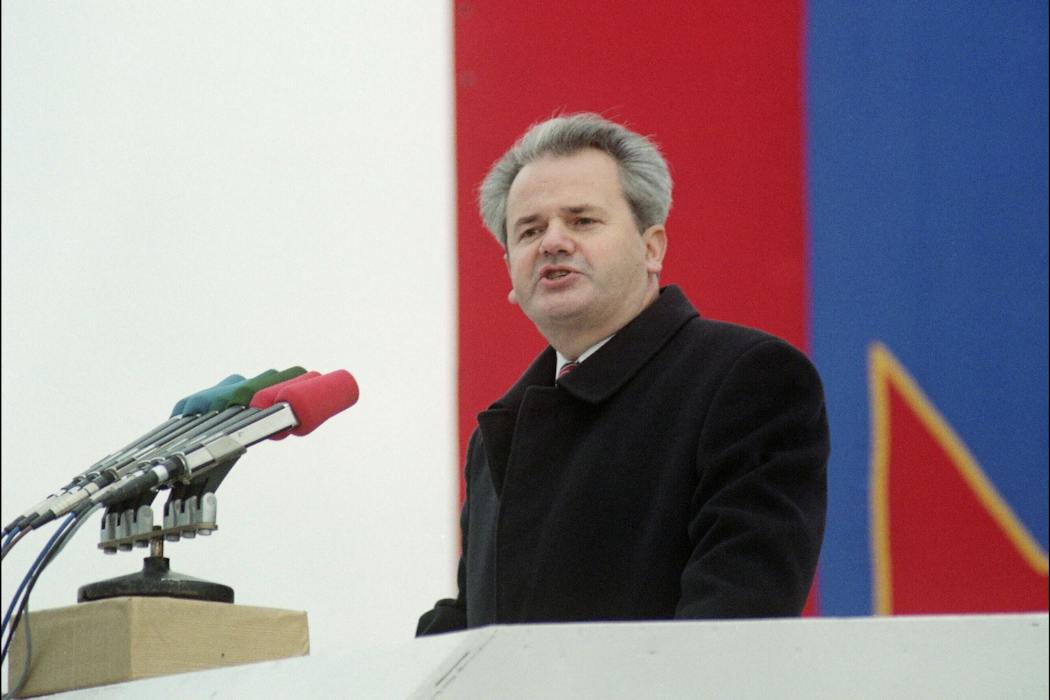
For example, in an interview from Belgrade, Serbia, in December 1998, Slobodan Milošević, then-president of the Federal Republic of Yugoslavia, noted that “terrorism was supported by different foreign factors”. He was talking about interference from Albania, including non-governmental groups acting during a period of Yugoslav instability.
Months after this statement, Yugoslav and Serbian forces dramatically escalated a campaign of ethnic cleansing of Kosovar Albanians that eventually ended after months of bombing under NATO military intervention.
In a 1977 speech, Argentinian General Jorge Rafael Videla said “the Argentine man is now facing both domestic and foreign aggression”.
Videla was the military ruler of Argentina during the so-called “Dirty War”, in which up to 30,000 suspected leftist sympathisers were “disappeared”. The junta justified its repression, in part, through the broader Cold War context.

Lessons from Rwanda
Such rhetoric was also important in the Rwandan genocide. An infamous speech by Hutu propagandist Léon Mugesera implored Hutus not to “let yourselves be invaded”. He was drawing on deeply held beliefs that Tutsis were by ancestry foreign to the region.
“I am telling you that your home is in Ethiopia, that we are going to send you back there quickly,” as corpses floating in a river, he declared.
Hutu propaganda emphasised not only the actual close connections between Tutsi military leaders and Uganda – where the Tutsi-led Rwandan Patriotic Front forces invaded from in 1990 – but also to support from “Nilo-Hamitic people of the region”. This included Uganda, Ethiopia, Zaire (now the Democratic Republic of the Congo) and Burundi.
What can analysis of speeches reveal?
The research program into genocidal speech has already made important contributions. But it has the potential to fundamentally improve our understanding of genocidal violence and enhance our capabilities for early warning and prevention.
Technological advances create opportunities that make the coding and integration of speech for the purposes of use in atrocity forecasting models increasingly plausible.
This does not overcome the limitations of absent political will. But it may aid better and more timely prediction efforts.
Svitlana Chernykh received funding for this research under a Cross-College Grant from the Research School of Social Sciences, Australian National University.
Benjamin E. Goldsmith received funding for this research under a Cross-College Grant from the Research School of Social Sciences, Australian National University.
Sascha Nanlohy is a Senior Research Fellow with the Institute for Economics and Peace.