Sports leagues’ concussion guidelines must be broadened as brain health concerns rise
- Written by: Weekend Times
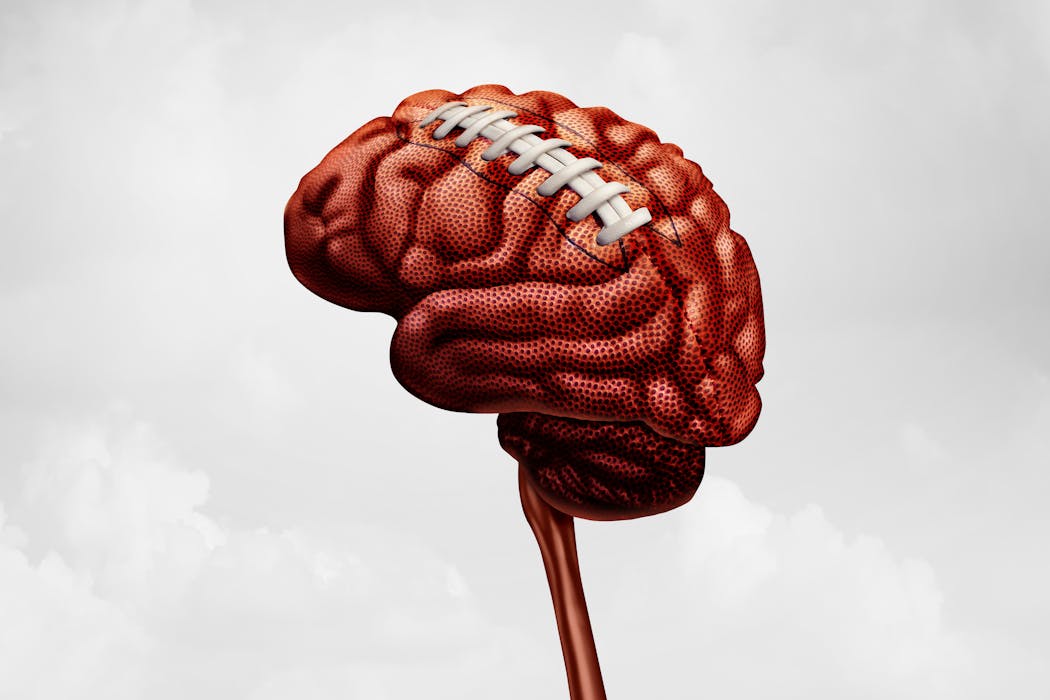
Recently, the Australian Football League (AFL) was rocked when it was revealed a Geelong player with a history of concussion had been asked to waive his legal rights to claim
for any future brain trauma.
Read more: A secret waiver but no punishment: the AFL’s concussion conundrum just got murkier
It was the latest in a series of concussion issues the AFL has had to address in recent years.
But the focus on concussion is problematic. Indeed, concussions are not necessarily the most pressing issue in contact sports when it comes to brain injuries.
The bigger concern should be chronic traumatic encephalopathy (CTE).
What is CTE?
CTE is a neurodegenerative brain disease that has been linked to contact sports such as Australian football, rugby league, rugby union and soccer.
It often strikes later in life but has been diagnosed in athletes as young as 20 in Australia.
It can only be diagnosed posthumously.
CTE develops after repetitive brain trauma – research indicates concussions may not necessarily be the primary cause. Instead, repeated subconcussive impacts to the brain is where the actual risk lies.
Read more: Little hits in sports may be just as dangerous as concussions – and can lead to brain damage
These subconcussive impacts, which rarely cause any symptoms, can occur during normal game play from actions such as tackling or bumping.
It is the accumulated damage from these repeated subconcussive impacts that can lead to CTE.
Encouraging action on concussion
In the past decade or so, the AFL and other contact sports have made changes to mitigate the impacts of concussion, through rule changes aimed at minimising head contact, rigorous concussion assessment protocols, and mandatory “stand-down” periods following concussion.
These measures should be acknowledged.
However, research is increasingly suggesting the biggest risk comes from subconcussive impacts.
So, what have Australia’s sporting codes done to address this risk?
The answer is somewhat surprising.
The main cause of CTE is barely acknowledged
I recently analysed the community concussion management guidelines from some of Australia’s major sports.
What I found was concerning.
In the AFL’s guidelines it is apparent what the focus is: “concussion” is mentioned 264 times in 36 pages. The measures outlined are focused on concussion prevention, diagnosis and management.
However, a search for “subconcussive” shows no mentions. The term “repeated head impacts” (or similar) is used 11 times but usually in conjunction with concussion or to minimise the issue of such impacts. For example, on page five it states:
while head trauma poses a higher risk, not everyone who experiences repeated concussions develops CTE, and it is uncertain the degree to which repeated head impacts increase the risk.
Yet researchers are now confident subconcussive impacts play a significant role in the development of CTE. The AFL’s emphasis on “uncertain”, then, is interesting phrasing.
Only once, on page four, is the phrase “repetitive nonconcussive head impacts” used but even then, the term is not defined or explained:
Head trauma, either as a single concussion, repeated concussions or repetitive ‘nonconcussive’ head impacts, also appears to be associated with an increased risk of brain degeneration later in life.
Similar issues arise in other sports.
In rugby league, the Australian Rugby League Commission guidelines mention “concussion” 126 times in 15 pages but not once is “subconcussion/non-concussion” mentioned.
There are also no mentions of “repeated/repetitive head impacts”.
Again these guidelines deal only with concussion prevention, diagnosis and management.
In soccer, Football Australia’s guidelines mention “concussion” 52 times in eight pages, but again there is no mention of “subconcussion” or warning of the risk of repeated subconcussive impacts. This is despite the strong link between repeatedly heading the ball and a higher risk of developing CTE.
In rugby union, Rugby Australia’s guidelines mention “concussion” 153 times in 20 pages, with “subconcussion” again not mentioned at all.
What should be done?
It would be simple to explain the dangers of subconcussive impacts in these guidelines. The leagues should update them to include references to subconcussive impacts and more information about the risk as soon as possible.
Other information – such as the potential value of mouthguards with inbuilt sensors to monitor contact forces – could be included.
Contact restrictions at training – which the NRL and World Rugby have already introduced, with the AFL reportedly following suit soon – should also be formally recommended, as well as raising of the age of “first exposure” to contact.
Such measures would inform athletes, families and officials about the seriousness with which sports need to approach participants’ brain health.
It’s more than just concussion
At the moment, many people who play contact sports may incorrectly think sports governing bodies have already dealt with the “concussion issue”. Dozens of pages in the guidelines arguably do this quite well.
However, the failure to explain the risk posed by repeated subconcussive impacts – and to warn those who play they may develop a devastating brain disease even if they never suffer a concussion – is concerning.
Leon Harris does not work for, consult, own shares in or receive funding from any company or organisation that would benefit from this article, and has disclosed no relevant affiliations beyond their academic appointment.