Big US-style trucks are killing more pedestrians in Australia – our research proves it
- Written by: Weekend Times
For several years now, more Australians have been dying on the road.
This trend is moving Australia further away from its Vision Zero ambition – a national commitment to
eliminate all road deaths and serious injuries by 2050.
But what is driving the increase? And is the trend evenly distributed across different road users?
The answer to the first question is complex. The short answer to the second is no.
A bucked trend
Historical data show for much of the past two decades, population-adjusted fatality rates for pedestrians and car occupants (drivers and passengers) broadly followed the same downward trajectory.
But since 2021, the two trends have started to noticeably diverge. Pedestrian fatality rates have been rising, while those for drivers and passengers have remained relatively stable.
Does this indicate some systemic change in our road system? We know vehicles on Australian roads are getting progressively bigger: more protective of their own occupants, but potentially more dangerous to those outside them.
Read more: Australia’s roads are full of giant cars, and everyone pays the price. What can be done?
Could that explain this divergence, at least in part?
To find out, we conducted the first Australian study to investigate this question using detailed pedestrian crash data.
We linked each crash to the size and weight of the vehicle involved and developed statistical models to isolate the contribution of vehicle size while accounting for other important factors.
The changing shape of Australia’s cars
Data show the average footprint (the ground area covered by the car) of light vehicles in Australia has increased by around 7% since 2005.
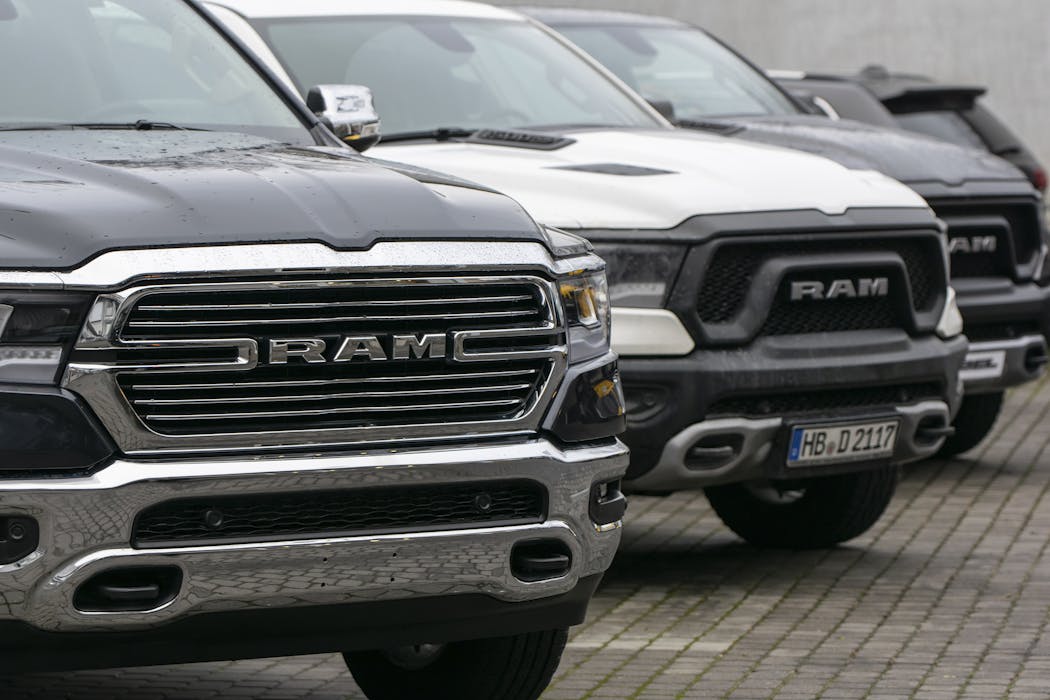
For utes and US-style trucks, the increase has been even greater, approaching 18%.
This means the gap between conventional passenger cars and utes/US-style pick-up trucks continues to widen.
There are also more bigger cars on our roads. In 2012, of all new vehicles sold in Australia, only about one quarter were SUVs. By 2023, they accounted for 57%.
This transformation is reflected in the crash data too. Between 2012 and 2024, the average weight of passenger vehicles involved in pedestrian crashes in Victoria rose from about 1,440 kilograms to 1,570 kg – an increase of around 130 kg (9%).
Does bigger mean deadlier?
For years, evidence that larger passenger vehicles are more dangerous to pedestrians has come almost entirely from the United States.
We wanted to know whether the same relationship exists in Australia.
To answer that question, we analysed 10,376 pedestrian crashes involving passenger vehicles in Victoria between 2012 and mid-2025. Heavy vehicles such as trucks and buses were excluded.
The crash records contained detailed information on the circumstances of every collision, including the road environment, speed limit, driver and pedestrian characteristics, time of day and other factors.
We then linked every crash to the weight and height of the vehicle involved by matching its make, model and year with external vehicle specification databases.
We then built statistical models to isolate the contribution of vehicle size while accounting for the other factors that influence pedestrian survival. In other words: if two otherwise similar pedestrian crashes differed only in the size of the vehicle involved, how much would that change the likelihood of a fatal outcome?
Here’s what we found:
every additional 100 kg of vehicle weight was associated with a 6% increase in the odds of pedestrian fatality
every additional 10 cm of height was associated with an 11% increase in the odds of pedestrian fatality
utes and US-style pick-up trucks were associated with around 60% higher pedestrian fatality risk than conventional passenger cars
the relationship was even stronger in lower-speed environments.
We then simulated a scenario in which the larger vehicles involved in these crashes were hypothetically reduced to the size of a typical passenger vehicle today, while everything else about the crashes stayed the same.
The model predicted about 9% fewer pedestrian fatalities.
We also tested the reverse scenario by hypothetically increasing the weight and height of the vehicles involved. As expected, the likelihood of pedestrian death increased – but the rise was consistently greater for height than for weight.
In other words, pedestrian fatality risk appeared more sensitive to increases in vehicle height.
This is largely because taller vehicles are more likely to impact people’s upper body, chest or head.
What does this mean?
Our evidence now suggests, much like in the US, larger passenger vehicles are associated with more severe outcomes for pedestrians in Australia, too.
The difference is Australia appears to be earlier in this transition.
Without policy change, that transition is likely to continue, just as it has done in the US in the past decade.
What can be done?
In Australia, many larger vehicles attract favourable tax treatments, while manufacturers aggressively promote them.
Then there is the belief that bigger means safer. This is a key ingredient car manufacturers use to promote bigger cars, and is believed to be the main driver of the car size race.
Governments at all levels have a range of policy levers they can use to nudge things in a safer and more sustainable direction.
Possible options are:
removing tax concessions that favour larger passenger vehicles
making vehicle purchase taxes or registration fees proportional to vehicle weight or size
introducing additional licensing requirements for the largest passenger vehicles, including restrictions for probationary licence holders
making parking charges or even road penalties proportional to vehicle size.
The early warning signs are clear and, without meaningful policy change, this trend is unlikely to reverse. Governments at every level could have a role to play in changing its course.
Milad Haghani receives funding from the Australian government's Office of Road Safety.
Abbas Rajabifard, Iman Taheri Sarteshnizi, and Neema Nassir do not work for, consult, own shares in or receive funding from any company or organisation that would benefit from this article, and have disclosed no relevant affiliations beyond their academic appointment.