These shocks to Australia’s food system won’t be the last. Will it learn in time for the next one?
- Written by: Rebecca Strating, Director, La Trobe Centre for Global Security, and Professor of International Relations, La Trobe University
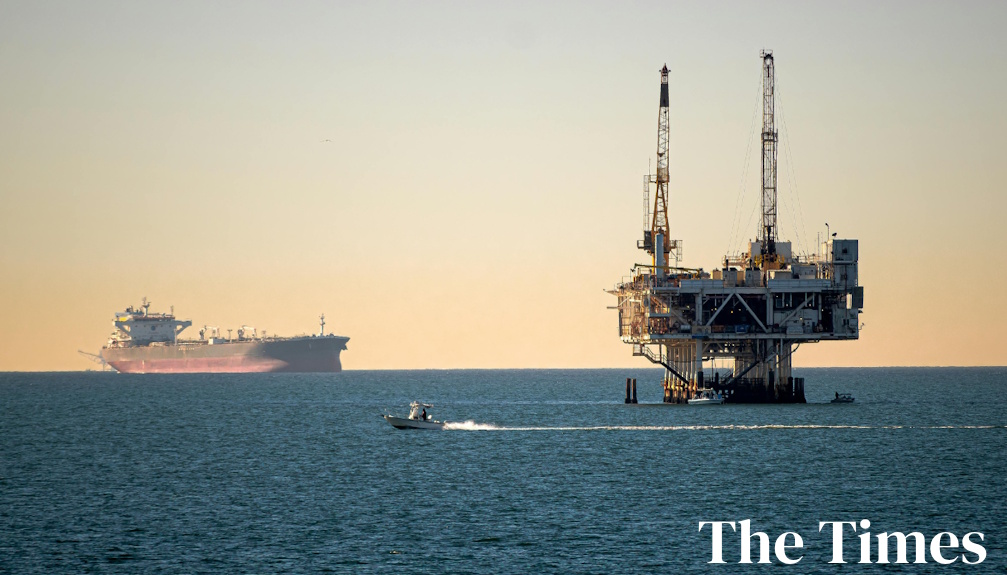
News of a fragile ceasefire has done little to calm anxieties about the Strait of Hormuz, where Iran has choked shipping and the United States has responded with a targeted maritime blockade.
Concerns are growing the strait could begin to function less as an open waterway and more as a “tollway[1]”.
Such a shift would challenge a maritime order long underpinned by the United Nations Convention on the Law of the Sea and its support for norms of freedom of navigation.
Around 99%[2] of Australia’s international trade moves by sea, so any erosion of freedom of navigation norms would be of serious concern.
Disruptions to trade flows through the Persian Gulf have rippled across global supply chains. The crisis exposes how deeply Australia’s economy and society depends on secure maritime routes.
In Australia, and globally, food security is also linked to access to oil.
Fossil fuels are entwined at every link in the food chain[3] – from fertilisers and transport to packaging and refrigeration. These disruptions in energy supply will be felt across the entire food system.
Australia’s food system needs shipping
There is a long-standing myth that Australia produces more food than it needs.
But while we export large volumes of raw commodities, we depend on imports for many essential food products. We also depend on fuel and fertiliser to produce food.
Australia’s vulnerability is evidenced acutely by its reliance on imported fuel and “just-in-time[4]” supply chains.
It depends on imports and a limited number of trading partners for more than 90% of its fuel consumption[5] and 80% of its nitrogen fertilisers[6].
For times of crisis, Australia should have 90 days of oil supplies in reserve under International Energy Agency rules. It hasn’t met this goal[7] in more than a decade.
Australia’s access to fuel connects directly to food production and distribution. It affects every part of the food system – from exports and imports to nationwide distribution.
This means access to open sea lanes is crucial for ensuring Australians can reliably access food.
A lesson that should have been learned
This was a lesson we should have learned from the COVID-19 pandemic, which exposed how little buffer exists in the system.
Geopolitical shocks can have an impact on Australia’s ability to feed its population[8].
While the pandemic exposed major logistics failings, the current crisis has highlighted our dependence on overseas supplies for fuel, fertilisers, chemicals and packaging materials.
The ongoing uncertainty is placing additional strain on already stretched systems and people in the system – from farmers to manufacturers to logistics workers.
Recent data from AUSVEG[9], which represents vegetable growers, is illuminating. It shows 27% of growers have reduced or stopped planting in response to the war. More than 50% of growers have reported fertiliser shortages.
The full impacts of today’s production decisions will be felt in the months to come.
Policy focus
Ultimately, Australia’s sovereignty is increasingly tied to how well it manages the intersection of maritime, energy and food security in an era of growing geopolitical uncertainty.
In food security, this means re-imagining Australia’s food systems.
Australia cannot eliminate its reliance on maritime trade, which is why keeping sea lanes open and secure is so vital.
At the same time, isolationist or protectionist policies would only magnify supply risks.
The focus must be on:
reducing reliance on fossil fuels over the long term, particularly for diesel-reliant heavy machinery
reimagining national and global food systems, supply chains and infrastructure to be more robust
working with regional and global partners who share fuel and food security concerns, and other global security issues
coordinating policy across energy, maritime and food security, and avoiding fragmented or reactive approaches
learning from crises like the pandemic to anticipate and prepare for disruptions before they occur.
The consequences of failing to act are clear.
A major geopolitical conflict, such as a war between China and the United States, would disrupt global shipping and supply chains even more significantly, posing a significant sovereign security risk.
Strengthening the resilience of Australia’s food system now is a matter of national security.
References
- ^ tollway (www.nytimes.com)
- ^ 99% (www.amsa.gov.au)
- ^ link in the food chain (ipes-food.org)
- ^ just-in-time (www.investopedia.com)
- ^ 90% of its fuel consumption (australiainstitute.org.au)
- ^ 80% of its nitrogen fertilisers (parlinfo.aph.gov.au)
- ^ hasn’t met this goal (www.aph.gov.au)
- ^ feed its population (www.aslcg.org)
- ^ AUSVEG (ausveg.com.au)
Authors: Rebecca Strating, Director, La Trobe Centre for Global Security, and Professor of International Relations, La Trobe University