Google AI

Weekend Times


The Times

Business News

While it wasn’t his idea, Medicare helped make the mythos of Bob Hawke

  • Written by: Mark Kenny, Professor, Australian Studies Institute, Australian National University

It was the big-picture reform that defined the Labor prime minister Bob Hawke and infuriated his opponents with its radical promise of a fairer, healthier society.

Medicare, Australia’s taxpayer-funded system of universal health insurance, established in 1984, has long presented as a paradox. It’s a political winner and a political target. A government-run scheme in an era of marketisation. A constant that has been constantly debated.

Pledges to limit the program have come and gone, and most elections have, at some point, centred on threats to its continuation – whether real or conjured.

For Hawke, it would be his signature achievement – the reform for which his promise of a new national unity or “reconciliation” was to be most enduringly evinced.
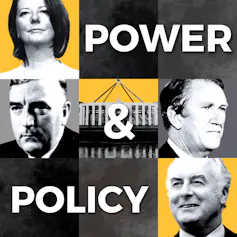
While it wasn’t his idea, Medicare helped make the mythos of Bob Hawke
Politics and policy share a love-hate relationship, but we can’t have one without the other. In this six-part series[1], we’re chronicling how policies have shaped Australia’s prime ministers, for better or worse, and what it means for how politicians tackle today’s big challenges. A policy borrowed From the vantage of 2026, it’s arguable Medicare has had the deepest personal and social impact of any single program in the nation’s history. Yet it wasn’t even Hawke’s idea. Because he had seized the Labor leadership from the luckless Bill Hayden on the very day the 1983 election was called, Hawke, of necessity, campaigned on Hayden’s suite of policies. Central among these was Hayden’s detailed plan to legislate an improved version of the dismissed Whitlam government’s 1975 forerunner, then called Medibank. Bitterly opposed by conservatives, Medibank was decried[2] as socialism. It was quickly pared down to a government-owned participant in the medical insurance market from 1976 under Malcolm Fraser’s prime ministership. As economist and journalist George Megalogenis noted[3], Hawke had been opposition leader for just weeks before the election proper. His reform-minded treasury spokesperson, Paul Keating, had been in that post for only a fortnight longer. Megalogenis wrote: it would be Hayden’s agenda they would be selling. The reforming duo of Hawke and Keating were, in fact, the accidental creation of Hayden […] The most significant policy commitment was the reintroduction of Hayden’s universal healthcare plan from 1975 – renamed Medicare. The plan’s authorship aside, Medicare dovetailed neatly into Hawke’s broad egalitarian message, cleverly captured by Labor’s revised campaign slogan in 1983, “Bob Hawke: Bringing Australia Together”. Through three successive elections (1984, 1987, 1990) Labor’s defence of Medicare remained prominent and offered a clear – if sometimes exaggerated – point of difference with the Coalition parties. ‘The best friend Medicare’s ever had’ By 1993, however, that contrast sharpened under the openly pro-market “Fightback![4]” manifesto of a new Liberal leader, John Hewson. Medicare was again on the line. Gearing up for that election, Keating, who had by then replaced Hawke as Labor prime minister, attacked Hewson’s treatment of health care as synonymous with others goods and services. “The unrestrained market will not provide effective health services for everyone while keeping costs contained. In fact, Fightback would see costs soar,” he told the National Press Club. It’s testament to Medicare’s wide public support that 20 years after Keating’s critique of Fightback, a newly elected Liberal prime minister, Tony Abbott, would first propose, and later abandon[5], a proposed $7 Medicare co-payment designed to cut costs and discourage unnecessary GP appointments through the creation of a price signal. As the outrage grew through 2014, Abbott yielded, declaring “I want this government to be […] the best friend that Medicare ever had”. It was a refrain he was to repeat often – a sure sign that Hawke’s most enduring programmatic legacy was still shaping politics decades later. A crowd of protesters hold up signs saying save our medicare
The proposed Medicare co-payment received widespread community backlash in 2014. Ava Benny-Morrison/AAP[6]

Read more: Medicare co-payment: a case study in policy implosion[7]

Medicare or mediscare?

The scheme has not only survived these travails but has gradually acquired formal bipartisan protection, even as it remained a magnet for philosophical differences and over-heated political skirmishes.

A narrowly reelected Malcolm Turnbull complained on election night in 2016 that a Labor SMS campaign alleging Medicare was to be privatised by a re-elected Turnbull government, constituted “the most systematic, well-funded lies ever peddled in Australia”.

A 2016 Labor election campaign ad.

In the past two elections (2022 and 2025) Labor has successfully paraded its full commitment to Medicare against the less enthusiastic support of the Coalition.

Substantive or not, that contrast continues, with voters generally ranking Labor as the party more likely to prioritise health policy.

Even recently, in March 2026, Health Minister Mark Butler accused[8] the Coalition’s newly appointed shadow treasurer, Tim Wilson, of not-so-secretly wanting to privatise the scheme.

“He wants to tear the whole system down,” Butler told the House of Representatives.

this is what he’s written. He wants to see “the transfer of health financing shifted from government to individuals”. Put simply, every Australian would have an individual health account that they’d contribute to on a periodic basis from their income, and that savings account would be used to pay for healthcare services as required through their lifetime.

Butler described Wilson as “a bloke who wants to privatise Medicare; a bloke who wants to foist American-style healthcare on the Australian people”.

While this is not Coalition policy, rhetoric such as this has long surrounded Medicare. Even at its inception in the mid-1980s, it had to overcome the pro-market, small government milieu – often called neoliberalism – sweeping across western economies.

For Hawke, this was key to its political logic. By having the government run healthcare, it could pull out of sectors such as banking while ensuring voters felt they were being well-served. For a Labor government, this trade-off was crucial to holding its electoral and union bases together.

Plus, the new scheme was specifically referenced in the government’s Prices and Incomes Accord[9]. The accord introduced the “social wage”: a deal with the unions to stop wages increasing too high in return for more government provision of social services.

John Howard was fond of saying[10] good policy is good politics. Medicare’s survival through his government and others, seems to prove that point.

Read more: Australian politics explainer: the Prices and Incomes Accord[11]

References

  1. ^ six-part series (theconversation.com)
  2. ^ decried (www.sydney.edu.au)
  3. ^ noted (www.penguin.com.au)
  4. ^ Fightback! (parlinfo.aph.gov.au)
  5. ^ later abandon (theconversation.com)
  6. ^ Ava Benny-Morrison/AAP (photos.aap.com.au)
  7. ^ Medicare co-payment: a case study in policy implosion (theconversation.com)
  8. ^ accused (www.aph.gov.au)
  9. ^ Prices and Incomes Accord (theconversation.com)
  10. ^ fond of saying (pmtranscripts.pmc.gov.au)
  11. ^ Australian politics explainer: the Prices and Incomes Accord (theconversation.com)

Authors: Mark Kenny, Professor, Australian Studies Institute, Australian National University

Read more https://theconversation.com/while-it-wasnt-his-idea-medicare-helped-make-the-mythos-of-bob-hawke-276632

The Weekend Times Magazine

What To Look For In a Robot Pool Cleaner

Robotic pool cleaners are a stunning feat of modern technology, allowing you to keep your pools clean with minimal effort on your part. Pool cleaning and maintenance has always remained...

A Fantastic Trip To Melbourne, Australia With Minimal Spending? Here’s How?

Famed for the iconic Melbourne cup horse race, Melbourne, Australia ranks as one of the best travel destinations worldwide. It offers tourists an escape from the hustle and bustle of...

Out of 500 Nominations, My Guardian Breaks into Top 3 at Australia’s Prestigious 2025 ACE Awards

Sydney, 22 July 2025 – From humble beginnings to national recognition, My Guardian is celebrating a milestone achievement - being selected as one of the top three finalists in the...

Australia’s top economists oppose the next increases in compulsory super: new poll

The five consecutive consecutive hikes in compulsory super contributions due to start next July should be deferred or abandoned in the view of the overwhelming majority of the leading Australian...

Farmers Calling on Aussies and Restaurateurs to Help Save the Sydney Rock Oyster

The future of Sydney Rock Oyster farming in NSW is under extreme threat and a group of NSW farmers are urging restaurateurs and chefs to support the native Australian Sydney...

Ensuring a consistent Australian foreign policy - Scott Morrison

The Morrison Government will introduce new legislation to ensure the arrangements states, territories, councils and universities have with foreign governments are consistent with Australian foreign policy.   The Commonwealth Government has exclusive...

The Importance of Quality Paint Protection for Brisbane Drivers

Shielding Your Vehicle with the Right Protection Every car owner appreciates that fresh showroom finish—the gleam of the paintwork, the smoothness of brand new panels. But once you drive out of...

Trading With Quantum AI: A How-To Guide

Quantum AI can be used in any country where retail CFD trading is legal. The site does warn that registration spots are limited, so your first try might not be successful. If...

Top 6 Ways Robotic Pool Cleaners Save You Time and Money

A pool is a great investment that improves the aesthetics of your home and also offers a fun and enjoyable way to relax, exercise or entertain loved ones. However, many...