one family’s tragedy now a chance to reform NZ’s child protection system
- Written by: Anna Marie Brennan, Senior Lecturer in Law, University of Waikato
Yesterday’s announcement of a public inquiry[1] into the handling of the Tom Phillips case was inevitable. When children go missing for years, the public has a right to understand whether the agencies responsible acted with the necessary urgency and coordination.
Yet the inquiry goes beyond one family’s tragedy. It touches on the integrity of New Zealand’s child protection system[2] and its compliance with international law.
When Phillips disappeared with his three children from Marokopa, Waikato, in December 2021[3], the case quickly became one of the country’s most troubling child welfare mysteries.
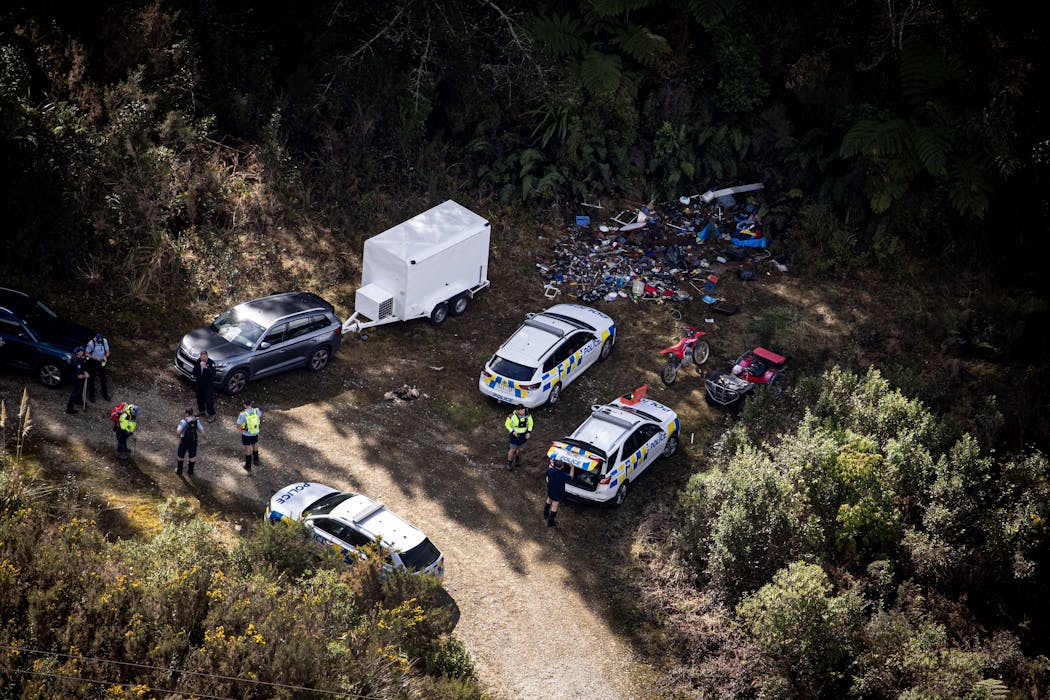
For nearly four years, he managed to evade authorities, living in remote bushland until his death in a shootout[4] with police in September.
What makes the case distinctive, and why it demands an inquiry, is the convergence of several unusual features: a parent reportedly acting without legal custody; the children’s prolonged deprivation[5] of education and healthcare; the difficulty of locating them in isolated terrain; and the apparent inability of multiple agencies to coordinate effectively over an extended period.
These characteristics expose systemic vulnerabilities and raise questions about whether New Zealand’s legal and institutional frameworks were sufficiently equipped to respond.
Moving beyond blame
Attorney-General Judith Collins has confirmed the inquiry will examine whether government agencies took “all practicable steps[6]” to protect the children’s safety and welfare.
The phrase is legally significant: it sets a standard higher than mere reasonableness, requiring proactive and coordinated measures.
The inquiry is not simply about identifying individual failings; it is about testing whether the system itself was resilient enough to respond to an extraordinary situation. There are three central legal questions:
- whether parenting orders were properly enforced
- whether police and child protection services discharged their statutory duties
- and whether inter-agency coordination met the relevant thresholds of both domestic law and international conventions.
The inquiry may also consider whether institutional caution, procedural delays or jurisdictional silos undermined the state’s ability to act decisively.
International child law as the benchmark
The Phillips family’s support for the inquiry underscores New Zealand’s obligations as a signatory (since 1993[7]) to the United Nations Convention on the Rights of the Child[8]. These place the best interests of the child[9] at the centre of all relevant decision-making.
The convention obliges states to protect children from harm, neglect and abuse. And it makes clear that children deprived of their family environment must be given special protection and assistance.
These are binding commitments, not aspirational goals. The prolonged absence of the Phillips children from lawful custodial care[10] raises serious doubts about whether the state discharged its duty to provide “special protection and assistance”.
The Phillips case also highlights the critical intersection of custody enforcement and child protection. Parenting orders[11] are not merely civil instruments; they are mechanisms through which the state ensures children remain in safe and lawful environments.
When those orders are breached, the matter becomes one of child safety, triggering statutory obligations on police and child protection agencies.
The inquiry may therefore examine whether risk assessments were sufficiently rigorous, whether monitoring mechanisms were in place to detect and respond to breaches, and whether agencies coordinated effectively.
If agencies operated in silos, or if enforcement was treated as a routine civil matter rather than a child protection emergency, then the state may have failed to meet its obligations under both domestic law and the UN convention.
Lessons from other jurisdictions
To understand where New Zealand stands, we can examine how comparable jurisdictions have developed legal mechanisms to address similar challenges.
In Australia, recovery orders[12] empower courts to direct police to locate and return children who have been unlawfully removed or withheld.
These orders are treated as urgent matters[13], reflecting the principle that the best interests of the child require swift and decisive action.
In the United Kingdom, custody disputes are governed by the Children Act 1989[14], with enforcement supported by mechanisms such as “tipstaff orders[15]”, which allow the High Court to direct police to recover children.
The UK’s law stresses the child’s welfare is the court’s primary consideration, and delays or fragmented enforcement are consistently held to undermine this principle.
The use of multi-agency “safeguarding hubs[16]” further strengthens coordination, ensuring police, social services and health professionals share intelligence in real time.
New Zealand, by contrast, relies on general police resources and fragmented[17] inter-agency coordination. While the Family Court can issue enforcement orders under the Care of Children Act, delays and procedural hurdles[18] often weaken their effectiveness.
Unlike Australia or the UK, New Zealand lacks a coherent statutory framework[19] for urgent child recovery, and responses appear slower and less systematic. The Phillips case starkly illustrates these differences.
The inquiry must therefore ask whether New Zealand’s current structures meet the threshold implied by its obligations under the UN convention.
An opportunity for reform
The inquiry will inevitably have broader implications. It will force a national conversation about how New Zealand balances[20] parental rights with child safety, and whether rural and remote communities are adequately supported in child welfare cases.
While outside its scope, the inquiry may also reignite debates about the Family Court system[21], which has long faced criticism[22] for delays and inconsistencies in custody enforcement.
While the inquiry will respect the independence of the Family Court, these systemic issues will need to be considered at some point because they shape the environment in which cases such as the Phillips disappearance unfold.
Ultimately, the Phillips case is tragic, but it presents an opportunity for legal reform. The inquiry is essential not only to establish accountability, but to ensure New Zealand’s child protection framework meets international standards of care and vigilance.
It is a chance to reaffirm the country’s commitment to protecting its most vulnerable citizens and to demonstrate that lessons will be learned from this painful chapter.
References
- ^ announcement of a public inquiry (www.beehive.govt.nz)
- ^ New Zealand’s child protection system (www.justice.govt.nz)
- ^ December 2021 (www.rnz.co.nz)
- ^ death in a shootout (www.1news.co.nz)
- ^ prolonged deprivation (www.thepress.co.nz)
- ^ all practicable steps (www.beehive.govt.nz)
- ^ since 1993 (www.justice.govt.nz)
- ^ United Nations Convention on the Rights of the Child (www.ohchr.org)
- ^ the best interests of the child (www.tandfonline.com)
- ^ lawful custodial care (www.thepost.co.nz)
- ^ Parenting orders (www.legislation.govt.nz)
- ^ recovery orders (www.fcfcoa.gov.au)
- ^ urgent matters (www.fcfcoa.gov.au)
- ^ Children Act 1989 (www.legislation.gov.uk)
- ^ tipstaff orders (www.justice.gov.uk)
- ^ safeguarding hubs (www.gov.uk)
- ^ fragmented (www.msd.govt.nz)
- ^ delays and procedural hurdles (www.msd.govt.nz)
- ^ coherent statutory framework (www.ombudsman.parliament.nz)
- ^ balances (www.tandfonline.com)
- ^ Family Court system (www.justice.govt.nz)
- ^ long faced criticism (www.nzlii.org)
Authors: Anna Marie Brennan, Senior Lecturer in Law, University of Waikato