more than half of LGBTIQ+ flatmates face discrimination for their identity
- Written by: Brodie Fraser, Senior Research Fellow, He Kāinga Oranga Housing and Health Research Programme, University of Otago
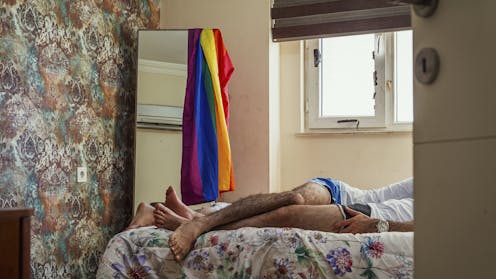
People who belong to the LGBTIQ+ community say flatting is fraught with difficulties that go well beyond learning new routines and sharing space with strangers.
Our new research[1] on the flatting experiences of the LGBTIQ+ community found many experienced discrimination – with some opting to sleep rough rather than remain living with discriminatory flatmates.
Our survey results highlight the ongoing challenges faced by this community, and the choices they face when it comes to their living arrangements.
Shared spaces
It is difficult to say exactly how many New Zealanders are in a flatting situation. But data from the 2023 Census indicates 17.2% of households (293,244) include some sort of non-family sharing arrangement.
Flatting adds an extra layer of instability to New Zealand’s already mobile housing culture[2], where the median tenancy is 25 months. Many people in flatting situations are not named on tenancy agreements and are vulnerable to being asked to leave by fellow flatmates.
Of the 900 LGBTIQ+ people over the age of 16 we surveyed, 33% (298) lived in a flatting situation.
Those who were flatting were significantly more likely to be younger and to be non-binary or identify with a gender other than male or female (34.6%), compared to those who were not flatting (24.8%).
The flatters in our survey had lower incomes than non-flatters, with a higher proportion of incomes under NZ$20,000 annually (33.9% compared to 16.8% of non-flatters). They also had a lower proportion of incomes over NZD$100,000 annually (2.3% compared to 14.4% of non-flatters).
People who responded to our survey also reported high levels of homelessness, with 37.47% saying they had experienced it during their lifetime.
Unsafe at home
More than half (52%) the flatters in our survey said they had experienced some kind of discrimination in their living situation, with 23.8% saying it came directly from their flatmates.
As one of our research participants said:
I moved once, in large part because a flatmate expressed homophobic views when I was not out. They said they wouldn’t be comfortable with a gay couple moving in.
Another explained:
I’ve had homosexual flatmates tell me they “know my secret” and tell me angrily that I’ve been “lying to them the whole time” just because I didn’t tell them I was trans.
But discrimination didn’t just come from flatmates. Survey respondents expressed concern about visitors to to their homes.
As one said:
An old flatmate’s girlfriend was visibly uncomfortable interacting with me, and my flatmate used to tell me about the awful things that her family would say about trans people. I used to hate it when she came over.
A different participant said:
My flatmate’s boyfriend often made questionable comments about queer people in front of me and she did nothing to stop it, and often would tell me things that he said, like I would think it was funny or wouldn’t be hurt.
The threat of homelessness loomed over the LGBTIQ+ people who were flatting. Over half the flatters in our survey said they moved due to difficult relationships with flatmates.
But moving was not always a choice. Some of our survey participants said they were asked to leave because of their gender identity or sexual preference.
One said suspicion was enough to make them vulnerable:
[I was] asked to leave a flat when someone suspected I was “a faggot”.
Another said coming out caused a rift in the flat:
I was kicked out of a house when coming out as trans to my flatmates and asking they use my preferred name and pronouns.
Tenancy protections needed
Our research highlights just how vulnerable the LGBTIQ+ community continues to be in almost every aspect of their lives.
But flatters, in general, have few protections. If a flatmate is not included in a tenancy agreement, they are not protected by the Residential Tenancy Act and have very limited legal protections.
Improved rental laws could make it easier for tenants to change leases, allowing flatters to leave unsafe situations. Improvements could also make it easier to be included on leases so everyone living at a property is afforded the same protections under the Residential Tenancy Act.
References
- ^ new research (www.tandfonline.com)
- ^ mobile housing culture (www.rnz.co.nz)
Authors: Brodie Fraser, Senior Research Fellow, He Kāinga Oranga Housing and Health Research Programme, University of Otago