10 reasons why banning social media for New Zealanders under 16 is a bad idea – and will affect adults too
- Written by: Alex Beattie, Lecturer, Media and Communication, Te Herenga Waka — Victoria University of Wellington
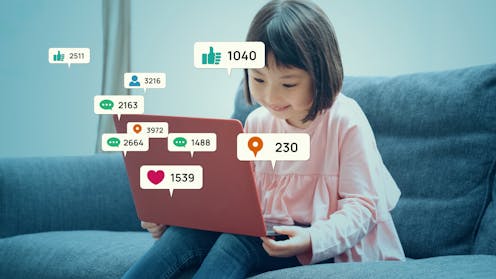
Government coalition partners National and Act are at odds over proposed restrictions on social media use by New Zealanders aged 16 and under.
Prime Minister Christopher Luxon recently announced a National Party private member’s bill that would require social media companies to verify someone is aged 16 or older. Luxon said social media was not “always a safe place for young people”[1].
But ACT Party leader David Seymour has dismissed National’s proposal, saying it was “simple, neat and wrong[2]”.
Even if the member’s bill is not chosen out of the parliament biscuit tin[3], global interest in getting young people off social media is increasing.
In late 2024, Australia passed a law[4] banning children aged under 16 from social media platforms. Advocates, police and politicians in the United Kingdom[5], United States[6] and elsewhere[7] have all proposed similar laws.
While there is merit in young people spending more time offline, and there are real concerns about the impact of social media on wider society, it’s not clear that outright prohibition will achieve what is hoped for. Here are ten reasons a blanket ban is not the answer.
1. The addiction fallacy
Lobby group Before 16 has compared social media to tobacco[8], saying the platforms should be treated as a public health harm. The implication is that young people could get addicted to social media.
But the standard for diagnosing addiction is high[9]. Most young people are not addicted to social media; they have a habitual relationship with it that is hard to change.
Likewise, comparing digital experiences to food may not capture the full range of interactions and impacts. This often implies value judgements[10], suggesting online experiences are all about “dopamine hits” (similar to sweet treats) and inherently less valuable or “unhealthy” compared to offline experiences.
2. People are not ‘exposed to’ social media
The language of the ban seems to suggest the relationship between social media and users goes in one direction – that people are simply exposed to the good and bad of platforms such as Facebook, TikTok and X. But using social media is not like going outside and getting burnt by the sun.
While social media affects people, it’s also a tool we use to actively shape and create meaning for ourselves. It provides social scaffolding for day-to-day lives[12], identity formation, communication with family overseas, community support, and even a place to complain about parents.
3. Murky science
One of most influential books behind the ban is Jonathan Haidt’s The Anxious Generation[13]. Haidt claims a causal link between social media use and increased anxiety[14] and depression in Gen Z (those born between 1995 and 2012).
But this claim is highly contentious[15] and has been criticised for failing to consider other causes for the rise in anxiety in young people.
At best, there may be a correlation between social media and poor mental health – they are happening at the same time. Young people are also grappling with the climate crisis, increasing inequality and global instability. These variables are difficult to isolate in a study, meaning social media becomes an easy target.
4. A range of experiences
Critics of social media also assume everyone has a negative experience online. And yes, if you tend to compare yourself to others on social media[16] then you might end up feeling bad about your life.
But not everyone thinks this way or uses social media to compare what they have (and don’t have) with others.
5. The moral panic factor
Moral panics can occur when emerging technologies challenge established social norms[17].
Phenomena such as “phubbing[18]” (using a phone to snub someone) challenge what is considered “socially acceptable” behaviour, triggering a deluge of think pieces about how they hurt society[19].
While some skills may decline (such as reading and writing) with new technology, others like visual or oral storytelling practiced on social media[20] are on the rise.
Banning social media could mean young people miss out on valuable digital skills.
6. Marginalised groups lose out
Getting young people off social media might not be a big deal for kids who fit within their community. But if you are young, gay and live in a small town, for example, social media may provide the only space where you can feel safe or celebrated for who you are[22].
Social media is also a key means for immigrants to stay in touch with their families and culture.
7. Enforcement challenges
There are also problems with how the ban is supposed to work – something Australia is still grappling with[23] despite already passing a ban into law (which comes into effect at the end of this year).
Policymakers have yet to explain how age verification technologies would work without giving away more personal data to media platforms[24]. And everyone would have to verify their age, regardless of whether they are under 16 years old or not.
8. Losing innovation
Young people are savvier with technology than older generations. They lead with innovations such as FINSTA (fake Instagram) accounts[25] – fake profiles that allow people to post more privately on Instagram without the pressure of conforming to expectations or the judgement of people who know them.
Blanket bans could hurt this technological adeptness and creativity and stop young people from teaching us how to navigate our online and offline lives.
9. Learning how to disconnect
Media literacy is also a crucial skill in today’s media saturated age. The skill of unplugging could become part of that curriculum[26].
Temporarily going offline is an excellent way to make students aware of their relationship with social media. Schools could have media-free classes or courses to build awareness, encourage new habits and support students to develop new routines.
10. Better options than a ban
No one is arguing that social media hasn’t had a negative effect on individuals and society as a whole. But instead of a ban, why not work to improve the platforms?
We could focus regulatory efforts on creating safer spaces, like we do with physical buildings.
Overseas advocacy work on children’s digital rights[27] shows how we can protect children from algorithms, gamification and other predatory tactics used by social media platforms, rather than introducing an outright ban.
References
- ^ social media was not “always a safe place for young people” (www.1news.co.nz)
- ^ simple, neat and wrong (www.rnz.co.nz)
- ^ parliament biscuit tin (www.theguardian.com)
- ^ Australia passed a law (www.theguardian.com)
- ^ in the United Kingdom (www.theguardian.com)
- ^ United States (www.biometricupdate.com)
- ^ elsewhere (www.reuters.com)
- ^ compared social media to tobacco (www.stuff.co.nz)
- ^ standard for diagnosing addiction is high (childmind.org)
- ^ This often implies value judgements (firstmonday.org)
- ^ Hagen Hopkins/Getty Images (www.gettyimages.com.au)
- ^ social scaffolding for day-to-day lives (theconversation.com)
- ^ The Anxious Generation (www.penguin.co.nz)
- ^ causal link between social media use and increased anxiety (theconversation.com)
- ^ highly contentious (blogs.lse.ac.uk)
- ^ tend to compare yourself to others on social media (journals.sagepub.com)
- ^ emerging technologies challenge established social norms (journals.sagepub.com)
- ^ phubbing (www.sciencedirect.com)
- ^ hurt society (insight.study.csu.edu.au)
- ^ visual or oral storytelling practiced on social media (www.vogue.com)
- ^ Hagen Hopkins/Getty Images (www.gettyimages.com.au)
- ^ feel safe or celebrated for who you are (www.tedxwarwick.com)
- ^ Australia is still grappling with (www.theguardian.com)
- ^ giving away more personal data to media platforms (www.npr.org)
- ^ FINSTA (fake Instagram) accounts (www.parents.com)
- ^ unplugging could become part of that curriculum (digitalcommons.uri.edu)
- ^ children’s digital rights (5rightsfoundation.com)
Authors: Alex Beattie, Lecturer, Media and Communication, Te Herenga Waka — Victoria University of Wellington