Elections mean more misinformation. Here’s what we know about how it spreads in migrant communities
- Written by: Fan Yang, Research fellow at Melbourne Law School, the University of Melbourne and the ARC Centre of Excellence for Automated Decision-Making and Society., The University of Melbourne
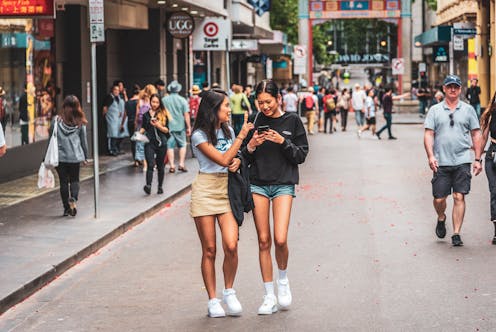
Migrants in Australia often encounter disinformation targeting their communities. However, disinformation circulated in non-English languages and within private chat groups often falls beyond the reach of Australian public agencies, national media and platform algorithms.
This regulatory gap means migrant communities are disproportionately targeted[1] during crises, elections and referendums when misinformation and disinformation are amplified.
With a federal election just around the corner, we wanted to understand how migrants come across disinformation, how they respond to it, and importantly, what can be done to help.
Read more: Misinformation, disinformation and hoaxes: What’s the difference?[2]
Our research
Our research[3] finds political disinformation circulates both online and in person among friends and family.
Between 2023 and 2024, we carried out a survey with 192 respondents. We then conducted seven focus groups with 14 participants who identify as having Chinese or South Asian cultural heritage.
We wanted to understand their experiences of political engagement[4] and media consumption[5] in Australia.
An important challenge faced by research participants is online disinformation. This issue was already long-standing[6] and inadequately addressed by Australian public agencies and technology companies, even before Meta ended its fact-checking[7] program.
Lack of diversity in news
Our study finds participants read news and information from a diverse array of traditional and digital media services with heightened sense of caution.
They encounter disinformation in two ways.
The first is information misrepresenting their identity, culture, and countries of origin, particularly found in English-language Australian national media.
The second is targeted disinformation distributed across non-English social media services, including in private social media channels.

From zero (no trust) to five (most trusted), we asked our survey participants to rank their trust towards Australian national media sources. This included the ABC, SBS, The Age, Sydney Morning Herald, 9 News and the 7 Network.
Participants reported a medium level of trust (three).
Our focus groups explained the mistrust participants have towards both traditional and social media news sources. Their thoughts echoed other research with migrants[9]. For instance, a second-generation South Asian migrant said:
it feels like a lot of marketing with traditional media […] they use marketing language to persuade people in a certain way.
Several participants of Chinese and South Asian cultural backgrounds reported that Australian national media misrepresent their culture and identity due to a lack of genuine diversity within news organisations[10]. One said:
the moment you’re a person of colour, everyone thinks that you’re Chinese. And we do get painted with the same paintbrush. It is very frustrating […]
Another added:
Sri Lanka usually gets in the media for cricket mainly, travel and tourism. So apart from that, there’s not a lot of deep insight.
For migrants, the lack of genuine engagement with their communities and countries of origin distorts public understanding, reducing migrants to a one-dimensional, often stereotypical, portrayal. This oversimplification undermines migrants’ trust in Australian national media.
Participants also expressed minimal trust in news and information on social media. They often avoid clicking on headline links, including those shared by Australian national media outlets. According to a politically active male participant of Chinese-Malaysian origin:
I don’t really like reading Chinese social media even though I’m very active on WeChat and subscribe to some news just to see what’s going on. I don’t rely on them because I usually don’t trust them and can often spot mistakes and opinionated editorials rather than actual news.
Consuming news from multiple sources to understand a range of political leanings is a strategy many participants employed to counteract biased or partial news coverage. This was particularly the case on issues of personal interest, such as human rights and climate change.
Read more: About half the Asian migrants we surveyed said they didn't fully understand how our voting systems work. It's bad for our democracy[11]
What can be done?
Currently, Australia lacks effective mechanisms to combat online disinformation targeting migrant communities, especially those whose first language is not English.
Generalised counter-disinformation approaches (such as awareness camapaigns) fail to be effective even when translated into multiple languages.
This is because the disinformation circulating in these communities is often highly targeted and tailored. Scaremongering around geopolitical, economic and immigration policies is a common theme[12]. These narratives are too specific for a population-level approach to work.
Our focus groups revealed that the burden of addressing disinformation often falls on family members or close friends. This responsibility is particularly carried by community-minded individuals with higher levels of media and digital knowledge. Women and younger family members play a key role.

Focus group members told us how they explained Australian political events to their families in terms they were more familiar with.
During the Voice to Parliament referendum, one participant referenced China’s history of resistance against Japanese Imperialism to help a Chinese-Australian friend better understand the consequences of colonialism and its impacts on Australia’s First Nations communities.
Younger women participants shared that combating online disinformation is an emotionally taxing process. This is especially so when it occurs within the family, often leading to conflicts. One said:
I’m so tired of intervening to be honest, and mostly it’s family […] my parents and close friends and alike. There is so much misinformation passed around on WhatsApp or socials. When I do see someone take a very strong stand, usually my father or my mother, I step in.
Intervening in an informal way[14] doesn’t always work. Family dynamics, gender hierarchies[15] and generational differences can impede these efforts.
Countering disinformation requires us to confront deeper societal issues related to race, ethnicity, gender, power and the environment.
International research suggests community-based[16] approaches work better for combating misinformation in specific cohorts, like migrants. This sort of work could take place in settings people trust, be that community centres or public libraries.
This means not relying exclusively on changes in the law or the practices of online platforms.
Instead, the evidence suggests developing community-based interventions that are culturally resonant[17] and attuned to historical disadvantage would help.
Our recently-released toolkit[18] makes a suite of recommendations for Australian public services and institutions, including the national media, to avoid alienating and inadvertently misinforming Asian-Australians as we approach a crucial election campaign.
References
- ^ disproportionately targeted (www.hrw.org)
- ^ Misinformation, disinformation and hoaxes: What’s the difference? (theconversation.com)
- ^ Our research (apo.org.au)
- ^ political engagement (theconversation.com)
- ^ media consumption (apo.org.au)
- ^ long-standing (opal.latrobe.edu.au)
- ^ fact-checking (theconversation.com)
- ^ Shutterstock (www.shutterstock.com)
- ^ other research with migrants (journals.sagepub.com)
- ^ news organisations (theconversation.com)
- ^ About half the Asian migrants we surveyed said they didn't fully understand how our voting systems work. It's bad for our democracy (theconversation.com)
- ^ common theme (ijoc.org)
- ^ Shutterstock (www.shutterstock.com)
- ^ an informal way (www.npr.org)
- ^ gender hierarchies (www.disinfo.eu)
- ^ community-based (www.cip.uw.edu)
- ^ interventions that are culturally resonant (www.asianamdisinfo.org)
- ^ recently-released toolkit (static1.squarespace.com)
Authors: Fan Yang, Research fellow at Melbourne Law School, the University of Melbourne and the ARC Centre of Excellence for Automated Decision-Making and Society., The University of Melbourne