India is the new China – NZ needs to see the bigger picture in trade negotiations
- Written by: Chris Ogden, Associate Professor in Global Studies, University of Auckland, Waipapa Taumata Rau
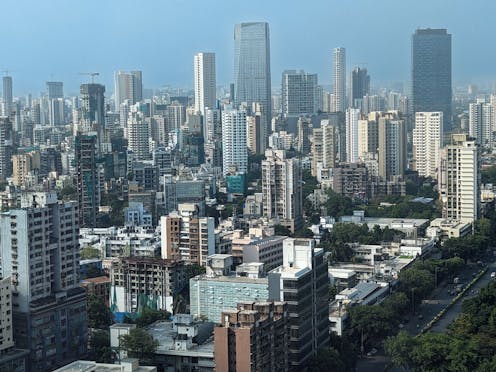
Anyone who has followed New Zealand’s protracted trade negotiations with India will know any new announcement of progress needs to be taken with a grain of salt.
Foreign Affairs Minister Winston Peters’ hint last week[1] that talks may be resuming is therefore best taken as a sign of optimism rather than anything more tangible. After all, negotiations go back as far as 2010, but had largely stalled by 2015.
A lot has changed since then, not least the advent of a second Trump presidency in the US, and shifting power balances in the Asia-Pacific region exemplified by the AUKUS security pact.
Wellington’s desire for a free trade agreement[2] with New Delhi is clearly already a delicate balancing act. These new dynamics will make it more delicate still. But engaging with India remains vital, given its increasingly prominent global influence.
In many ways, India’s rise is not unlike China’s was – and New Zealand can learn from its trade and diplomatic relationships with Beijing. If India is roughly where China was 15 years ago, we can see clear portents of what the future holds.
India’s rise
In 2023, India’s GDP was US$14.54 trillion[3], the world’s fourth largest economy, behind the United States, China and the European Union. China hit that level during 2009.
But India’s current annual GDP growth of 7.6%[4] now outstrips all those other countries. If maintained, it will result in India matching China’s 2023 GDP of $34.64 trillion in 14 years. Given India’s population overtook China’s[5] in 2023, that timeframe may be smaller.
India’s expanding financial capacity has been matched by growing military expenditure. In 2023, India spent $83.57 billion[6] on defence, third behind the US and China. Beijing was spending an equivalent amount in 2009.
India was also the world’s largest arms importer from 1950 to 2023[7]. Like the US, China and Russia, it possesses a “nuclear triad[8]” of land-based, submarine and airborne capability.
Like China, India has a large landmass (the world’s seventh largest)[9] and is pivotal to trade routes crossing the Indian Ocean, as well as being close to China, the preeminent trading nation at the heart of the Indo-Pacific region.
Negative realities
India, like China, is also led by a forceful, self-assured and outspoken autocrat. Prime Minister Narendra Modi’s Bharatiya Janata Party[10] (BJP) is one of the world’s two largest political groups – the other is Chinese President Xi Jinping’s Chinese Communist Party (CCP).
Both leaders harness often strident domestic nationalism and common colonial histories[11] to inspire popular notions of being or becoming great powers.
But exceptionally high levels and prolonged periods[12] of economic growth – averaging 9.33% per year from 1980 to 2022 in China, and 6.46% per year from 1990 to 2023 in India – also put national development goals at risk.
High energy consumption and levels of pollution have seen natural environments deteriorate[13] in both countries. And both India[14] and China[15] have suffered from endemic corruption since liberalising their economies.
Prevalent political dynasties in India[16] – the equivalent of China’s “princelings[17]” (the offspring or relatives-by-marriage of Communist Party veterans) – concentrate wealth and privilege within elites.
And, like China, India also stands accused of repressing ethnic and religious minorities, particularly against the Muslim portion of Kashmir[18] and against various communities in the northeast, particularly in Assam[19].
Future fractures
Despite those human rights concerns, both India and China have – at different times – been courted and engaged by the West for strategic reasons.
In the 1970s, the US sought closer relations with China[20] as a countermeasure against the Soviet Union, at the time Washington’s primary rival. Nowadays, the US seeks enhanced ties with India[21] to counter the rise of China.
Both approaches were and are open to accusations of shortsightedness and political cynicism. The US rapprochement with China in the 1970s occurred during the depths of the Cultural Revolution, and Washington was muted in its criticism[22] of the Tiananmen Square massacre in 1989.
Similarly, the perceived need to curb China’s rising power and influence means the West is prepared to work around India’s internal political realities. But this has arguably emboldened Indian foreign policy, with its intelligence services accused of targeting Sikh separatists in Canada[23], the UK[24] and the US[25].
As contemporary US-China relations tip towards what has been called a “new Cold War[26]”, one can imagine a future where the US and India face off in the same way. Given India’s trajectory, that might happen as soon as 2040.
Were that to happen – and given China’s slowing economy[27], ageing population[28] and decoupling from the West – then India may well become China’s successor.
Of course, we can’t predict the future, but all of these considerations will need to be part of New Zealand’s calculations if and when trade negotiations with India truly begin in earnest. And they must remain part of Wellington’s wider strategic calculations in the decades to come.
References
- ^ hint last week (www.rnz.co.nz)
- ^ desire for a free trade agreement (www.rnz.co.nz)
- ^ India’s GDP was US$14.54 trillion (data.worldbank.org)
- ^ annual GDP growth of 7.6% (data.worldbank.org)
- ^ overtook China’s (www.theguardian.com)
- ^ India spent $83.57 billion (www.sipri.org)
- ^ the world’s largest arms importer from 1950 to 2023 (armstrade.sipri.org)
- ^ nuclear triad (en.wikipedia.org)
- ^ the world’s seventh largest) (www.cia.gov)
- ^ Bharatiya Janata Party (www.oxfordreference.com)
- ^ common colonial histories (www.e-ir.info)
- ^ high levels and prolonged periods (data.worldbank.org)
- ^ natural environments deteriorate (www.sciencedirect.com)
- ^ India (www.cfr.org)
- ^ China (www.npr.org)
- ^ political dynasties in India (theprint.in)
- ^ princelings (thediplomat.com)
- ^ against the Muslim portion of Kashmir (www.reuters.com)
- ^ in Assam (www.aljazeera.com)
- ^ closer relations with China (www.history.com)
- ^ enhanced ties with India (www.latimes.com)
- ^ muted in its criticism (www.dallasnews.com)
- ^ Canada (www.cbc.ca)
- ^ the UK (www.theguardian.com)
- ^ the US (www.reuters.com)
- ^ new Cold War (english.elpais.com)
- ^ China’s slowing economy (www.bbc.com)
- ^ ageing population (time.com)
Authors: Chris Ogden, Associate Professor in Global Studies, University of Auckland, Waipapa Taumata Rau