Australians love sport, but which ones do they actually play? National survey results paint a surprising picture
- Written by: Vaughan Cruickshank, Senior Lecturer in Health and Physical Education, University of Tasmania
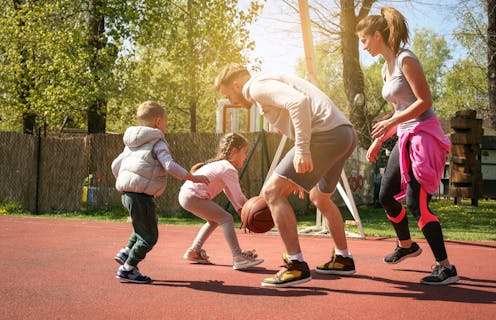
Sport and physical activity are an important[1] part[2] of Australian culture and society.
But how do we know which sports have the highest participation rates in Australia? And does this change depend on factors such as age, gender and location?
Since 2015, the Australian Sports Commission[3] has been conducting the AusPlay survey to answer questions like these.
The data suggests those who are more physically active are generally younger, employed, highly educated, and earn a higher household income.
What is AusPlay?
AusPlay[4] is a large national survey that focuses on how much sport and physical activity Australians participate in. It collects national, state and territory data on more than 600[5] different activities[6] and who participates in them.
These activities include popular pursuits such as bushwalking[7] and cycling[8], as well as less mainstream sports such as bobsledding[9] and wheelchair rugby[10].
Other questions[11] in the survey are about things like sports injuries, motivations for participating, barriers to participating, and use of technology like smart watches.
The data[12] collected in the survey is used to do things like:
inform government investment, policy and programs
help sports organisations better understand participation and track it over time
explore the links between participation and other factors (such as age, injuries as household income).
In 2023, AusPlay changed to an online survey instead of telephone interviewing. As such, this year’s results cannot be directly compared[13] to earlier figures because the data have been collected differently.
AusPlay 2024 participation findings
The latest results[14] include data collected from July 2023 to June 2024. Forty thousand adults (aged 15 and older) completed the survey. Some respondents are also parents, so data were also collected for around 8,800 children aged 14 and under.
The activities with the highest participation[15] by Australians over 15 years old are walking, fitness/gym, bushwalking, running/jogging and swimming.
The top activities for children are swimming, soccer, dance, basketball and gymnastics.
While all these activities are popular for many Australians, there are some obvious differences between age groups.
Younger Australians participate in more team-based activities that require speed and agility, whereas older Australians prefer to participate in less intense aerobic activities.
Many of these sports are popular across genders. However, there are some differences: some examples of activities more popular with women include pilates, walking and yoga, whereas basketball, soccer and golf are more popular with men.
Some 84%[16] of Australian adults and 71% of children are considered active, which is defined as participating in sport and physical activity at least once per year.
However, only 66%[17] of adults and 40% of children are active at least once per week. Just 48% of adults and 14% of children are active at least three times per week.
These figures indicate the majority of Australians may not be meeting the national physical activity and exercise guidelines[18].
For example, these guidelines recommend adults[19] be active most days, preferably every day.
The most popular activities for adults were non-organised – not run by an organisation or club, but likely to be organised by the adults themselves (66%) or with friends (50%) in a public place.
This finding supports the trend towards flexible, informal sport[20] and physical activity that has been noticed[21] by researchers[22] in recent years.
About 40% of adults participated in an organised activity, which was most likely to occur in a sports club or association (13%) or gym/fitness centre (11%).
Sports club or association (27%) and gym/fitness club (19%) were also the most popular locations for children’s organised participation.
The ACT reported the highest rates of participation of any state or territory.
What else did AusPlay find?
More physically active[23] adult Australians tended to be younger, employed, more highly educated, and earning a higher household income.
For example, 94% of adults with household incomes more than $200,000 participated in sport and physical activity, compared with 79% of adults with a household income of less than $70,000.
This finding may be related to the current cost of living[24] crisis.
Read more: No cash, no play? Have cost-of-living pressures impacted sports participation in Australia?[25]
In terms of cost to participate in sport, adults paid an average of $1,238 each year; with men spending more ($1,377) than women ($1,074). Children paid an average of $944 each year to participate in sport. However, girls ($1,048) paid more than boys ($843).
The top reasons for Australian adults to be active are to improve fitness, for fun/enjoyment, to lose weight, to be outdoors and for social reasons.
Key barriers for adults include poor health/injury, increasing age, disability, laziness and lack of time. The main barriers for children are being too young, not liking physical activity, and cost.
The most common technology used were headphones, tracking apps and wearable technology.
New survey questions
Adding more questions to the online survey this year has meant there are new findings that will allow for better understanding[26] of the participation behaviours of Australia’s diverse population.
These new findings include insights on volunteering, injuries, diversity and inclusion.
Volunteers contribute more than 145 million hours[27] to sport in Australia each year, most commonly in roles such as umpiring and coaching.
The most common disabilities reported by participants aged 18+ were musculoskeletal conditions, mental health issues and cardiovascular conditions.
The most common types of injuries were soft-tissue injuries such as torn muscles and tendinitis.
In line with the Australian sport participation strategy “Play Well[28]” and its motto “everyone has a place in sport,” additional demographic questions were included focused on sex at birth and sexual orientation for adults over the age of 18.
These questions will continue to be included in future AusPlay surveys.
References
- ^ important (www.health.gov.au)
- ^ part (asf.org.au)
- ^ Australian Sports Commission (www.ausport.gov.au)
- ^ AusPlay (www.clearinghouseforsport.gov.au)
- ^ 600 (www.clearinghouseforsport.gov.au)
- ^ activities (www.clearinghouseforsport.gov.au)
- ^ bushwalking (www.bushwalkingaustralia.org)
- ^ cycling (auscycling.org.au)
- ^ bobsledding (www.bobsleighskeleton.org.au)
- ^ wheelchair rugby (www.wheelchairrugby.com.au)
- ^ questions (www.clearinghouseforsport.gov.au)
- ^ data (www.clearinghouseforsport.gov.au)
- ^ compared (www.sportaus.gov.au)
- ^ latest results (www.clearinghouseforsport.gov.au)
- ^ highest participation (www.clearinghouseforsport.gov.au)
- ^ 84% (www.sportaus.gov.au)
- ^ 66% (www.clearinghouseforsport.gov.au)
- ^ physical activity and exercise guidelines (www.health.gov.au)
- ^ adults (www.health.gov.au)
- ^ informal sport (www.tandfonline.com)
- ^ noticed (www.clearinghouseforsport.gov.au)
- ^ researchers (bmcsportsscimedrehabil.biomedcentral.com)
- ^ physically active (www.clearinghouseforsport.gov.au)
- ^ cost of living (www.abc.net.au)
- ^ No cash, no play? Have cost-of-living pressures impacted sports participation in Australia? (theconversation.com)
- ^ better understanding (www.clearinghouseforsport.gov.au)
- ^ 145 million hours (www.sportaus.gov.au)
- ^ Play Well (www.ausport.gov.au)
Authors: Vaughan Cruickshank, Senior Lecturer in Health and Physical Education, University of Tasmania