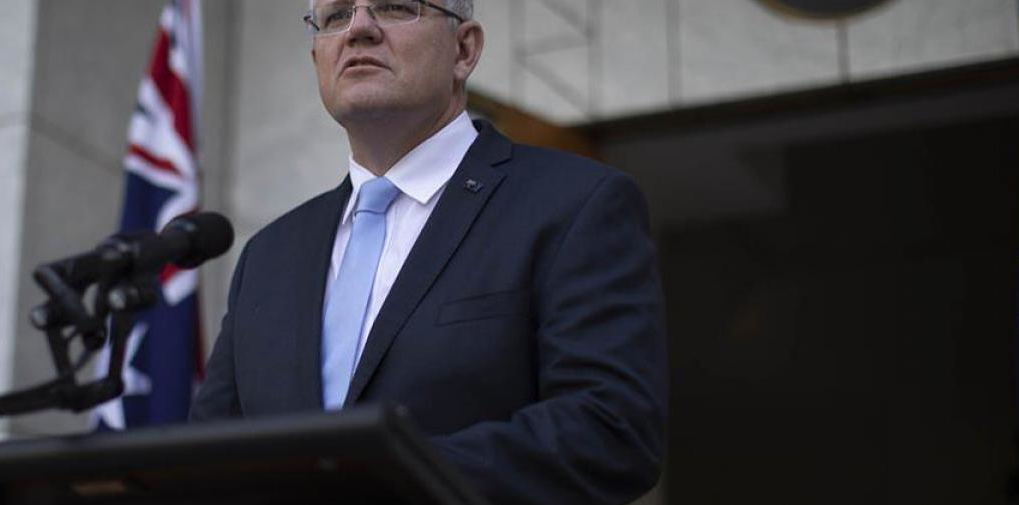
Why did Japan’s prime minister decide to step down? And who might replace him?
- Written by: Craig Mark, Adjunct Lecturer, Faculty of Economics, Hosei University
In a surprise announcement, Japanese Prime Minister Fumio Kishida said[1] today he would step down as leader of the ruling Liberal Democratic Party (LDP) next month, bringing his premiership to an early end.
Since coming to office in October 2021, Kishida has struggled to overcome dire approval ratings.
The party has been dogged by revelations[2] of ties to the Korean-based Unification Church in the wake of the assassination of former Prime Minister Shinzo Abe in July 2022, as well as a political fundraising scandal[3] uncovered last November.
Kishida dissolved his own powerful faction in the party and pressured the largest conservative faction, formerly headed by Abe, to dissolve itself in the wake of the scandal. Up to 80 LDP members of the Diet (Japan’s parliament) were implicated, and four cabinet ministers resigned[4].
Public prosecutors investigating the scandal decided not to proceed[5] with indictments against Kishida and seven other senior LDP figures, due to lack of evidence.
Just three months ago, Kishida vowed he would not step aside[6], instead pledging to push anti-corruption measures and other political reforms.
To try to stem the damage, the LDP passed a bill[7] in the Diet in June to reform the political funds control law, but the opposition called it inadequate.
The chief of the Maritime Self-Defence Force also resigned[8] last month over allegations he mishandled national security information, making things even tougher for the Kishida government.
In a poll in late July, 74% of respondents[9] said they did not want Kishida to stay on as party leader after the LDP leadership election in September. With his public unpopularity remaining entrenched, he was unlikely to receive the backing of a majority of LDP Diet members in next month’s vote.
Widely considered a consistent foreign policy performer, Kishida had a series of strong diplomatic appearances in recent months. He attended[10] NATO’s 75th anniversary summit in Washington, followed by an official visit to Germany[11]. He then returned to Tokyo to host[12] the Pacific Island Leaders meeting last month.
He had been due to embark on a tour of Central Asia last week, but cancelled[13] the trip after a magnitude 7.1 earthquake struck Japan.
Rivals are already emerging
Kishida’s rivals have already started to position themselves for next month’s leadership election – and to become Japan’s new prime minister.
Shigeru Ishiba, a former defence minister and LDP secretary-general, regularly polls as the public’s preferred candidate[14]. He has already announced[15] he will run, with the backing of Kishida’s predecessor, Yoshihide Suga.
LDP Secretary-General Toshimitsu Motegi, who refused to dismantle his faction in the wake of the fundraising scandal, is also considered a potential contender. Digital Minister Taro Kono, one of Kishida’s opponents in the 2021 leadership race, is another.
Economic Security Minister Sanae Takaichi and Foreign Minister Yoko Kamikawa could also enter the contest. If either of them won, Japan would have its first female prime minister.
Challenges remain
Whoever replaces Kishida in September will then have to restore the LDP’s electoral fortunes before the next national election, due by October 2025.
Key to this will be reinvigorating Japan’s sluggish growth[16], which has shown the relative failure of Kishida’s “New Capitalism[17]” policy to revive the economy.
The weak yen has boosted export earnings and profits for some of Japan’s largest corporations, in addition to helping the tourism industry exceed pre-pandemic levels. But higher-priced imports have further dampened consumption among ordinary Japanese, particularly those on fixed incomes and in irregular, low-paid, casual work.
Japan’s shrinking labour force also continues[18] to exacerbate economic and social strains.
And just days ago, the decision by the Bank of Japan to raise interest rates[19] to 0.25% triggered a wave of stock market volatility. The Nikkei index suffered its biggest drop[20] since 1987, although it has largely recovered since then.
Despite Kishida’s considerable efforts to boost Japan’s alliances[21] and a recent boost[22] in defence spending, the country also faces an increasingly threatening security environment. This could become even more challenging if Donald Trump wins the US presidency in November.
Despite the recent missteps and scandals, the LDP is still likely to return to power in the next election, given the ongoing weakness of the main opposition Constitutional Democratic Party.
The next prime minister could then decide to hold a snap election this year, taking advantage of a brief honeymoon period to exploit the disunity among the opposition parties.
However, it will take a lot for any new leader to appeal to a Japanese public that is weary and jaded after years of political drama.
References
- ^ said (www.abc.net.au)
- ^ revelations (apnews.com)
- ^ political fundraising scandal (www.bbc.com)
- ^ resigned (www.bbc.com)
- ^ not to proceed (english.kyodonews.net)
- ^ vowed he would not step aside (apnews.com)
- ^ passed a bill (japannews.yomiuri.co.jp)
- ^ resigned (www3.nhk.or.jp)
- ^ 74% of respondents (www.asahi.com)
- ^ attended (www.mofa.go.jp)
- ^ official visit to Germany (japan.kantei.go.jp)
- ^ host (japan.kantei.go.jp)
- ^ cancelled (www3.nhk.or.jp)
- ^ public’s preferred candidate (www.japantimes.co.jp)
- ^ announced (www.asahi.com)
- ^ growth (english.kyodonews.net)
- ^ New Capitalism (thediplomat.com)
- ^ continues (eastasiaforum.org)
- ^ raise interest rates (asia.nikkei.com)
- ^ biggest drop (apnews.com)
- ^ boost Japan’s alliances (theconversation.com)
- ^ recent boost (www.ussc.edu.au)
Authors: Craig Mark, Adjunct Lecturer, Faculty of Economics, Hosei University