why being alone isn’t the same as being lonely – and why it matters
- Written by: Nancy Kong, Senior Lecturer in the Centre for Health Economics Research and Evaluation, University of Technology Sydney
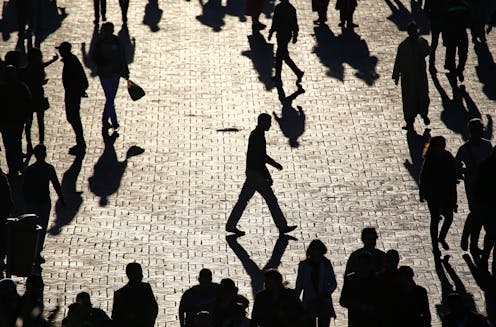
Loneliness isn’t just awful for individuals – it has society-wide impacts too. It significantly contributes to mental health issues, sleep disorders[1], cardiovascular disease, and early death[2]. Researchers have even compared its impact on health to that of smoking[3].
Loneliness is everywhere[4], yet we understand so little about why some people feel it more keenly than others.
Our new study[5], published recently in the Journal of Economic Behavior & Organization, looked at this question. We wanted to better understand the relationship between loneliness and physical isolation (such as living under lockdown and rarely seeing others).
By analysing five years’ worth of data from the Household, Income and Labour Dynamics in Australia (HILDA) Survey[6], we found physical solitude doesn’t always mean loneliness.
In other words, people who are not physically isolated can experience loneliness – and people who are in physical isolation could still be OK.
Our findings challenge the widely held assumption by some people that being alone may be the same as being lonely. It also provides further impetus to disentangle loneliness, physical isolation, and social isolation.
What we did and what we found
We looked at survey data that tracked more than 17,000 individuals[7] over five years in Australia.
Every year, the same group of people were asked to rate, from one to seven, how much they agreed with the statement “I often feel very lonely”.
Tracking the same people over time allowed us to study how changes in circumstances affected feelings of loneliness.
We were particularly interested in how COVID lockdowns affected feelings of loneliness. We compared changes in loneliness levels between those who experienced extended lockdowns and those who had little to no lockdown.
Interestingly, we found physical isolation, represented by the number of lockdown days, did not significantly affect loneliness.
Accounting for factors such as working from home, health status, job industry, household composition, and dwelling types did not change these results.
This finding challenges the widely held belief, by some, that being more physically isolated may be related to higher levels of loneliness.
We were also interested in the potential long-term effects of physical isolation, so we looked at survey data two years after lockdown.
We had wondered whether the impacts of lockdown on loneliness (if any) persisted over time – but found no significant long-term effects.

Physical isolation is tough on extroverts and young people
We were also interested in how loneliness might be influenced by factors such as income, age, gender, ethnicity, personality, living arrangements, and remoteness.
The HILDA Survey also asked people personality questions and, using this data, we could determine how introverted or extroverted they were.
Our analysis of the results found only extroverts and young people showed increased loneliness during physical isolation.
We were also interested in whether people may anchor their feelings to their friends’, family’s, and community’s experiences. If all your friends and relatives are in physical isolation, does that mean you’re less likely to feel lonely?
We found, however, for those who are in lockdown, the proximity to lockdown borders (meaning you live near a local government area that was not subject to lockdowns) did not significantly impact loneliness. This suggests people did not feel more or less lonely based on their immediate neighbours’ experiences.
 We found extroverts and young people were more likely to feel lonely during lockdown.
Alina Bitta/Shutterstock[9]
We found extroverts and young people were more likely to feel lonely during lockdown.
Alina Bitta/Shutterstock[9]
Quality of community and social interactions is key
In fact, the survey data we examined showed many people who were physically isolated from others did not change how satisfied they were with their community compared to before physical isolation.
And those who were very satisfied with their community had lower levels of loneliness.
This underscores the importance of a supportive community in reducing the risk of loneliness.
We also found people in lockdown who maintained regular social interactions (such as via phone call or online) reported lower levels of loneliness. In other words, people who were in physical isolation but kept in touch with friends or relatives felt less lonely.
Interestingly, we also found that merely having access to the internet does not reduce loneliness; it’s how you use the internet that matters.
We found couples locked down together reported higher levels of relationship satisfaction, spending more time doing household work, playing with kids, and less time running errands and commuting. These factors could also explain why lockdowns did not increase loneliness for these people.
Addressing the root causes of loneliness
Our study challenges the idea that “being alone” and “being lonely” are the same thing.
We found social interactions (whether online or via phone) and support networks are crucial. This could help policymakers and mental health professionals to develop more interventions focused on fostering social connections rather than merely addressing physical isolation.
Addressing the root causes of loneliness and fostering social connections is essential to improving overall wellbeing.
References
- ^ mental health issues, sleep disorders (journals.lww.com)
- ^ cardiovascular disease, and early death (www.nature.com)
- ^ smoking (www.researchgate.net)
- ^ everywhere (pubmed.ncbi.nlm.nih.gov)
- ^ study (www.sciencedirect.com)
- ^ the Household, Income and Labour Dynamics in Australia (HILDA) Survey (melbourneinstitute.unimelb.edu.au)
- ^ data that tracked more than 17,000 individuals (melbourneinstitute.unimelb.edu.au)
- ^ Photo by Marcus Aurelius/Pexels (www.pexels.com)
- ^ Alina Bitta/Shutterstock (www.shutterstock.com)
Authors: Nancy Kong, Senior Lecturer in the Centre for Health Economics Research and Evaluation, University of Technology Sydney