Olympic swimmers improving by … running? How exploration can help elite athletes and weekend warriors alike
- Written by: Scott Goddard, Postdoctoral research fellow, Southern Cross University
The 2024 Paris Olympics are fast approaching and we can imagine the elite athletes maintaining a strict and gruelling training regimen in order to give themselves every chance of standing on the podium with a gold medal.
Unrelenting discipline and structure. Blood, sweat, and tears. That’s what it takes to excel, right?
But what if that’s not the only way?
Thinking outside the box
Earlier this year, world champion Australian swimmer Cameron McEvoy spoke about the benefits of a new training schedule[1], which included a reduced training load:
I can do the Olympics, worlds, then have 12 months exploring other stuff and come back. And I’ve got tonnes of side quests I want to do […] train for 100m track sprinting and see how low I can go, the world street lifting competition.
McEvoy also suggested that exploring other interests has “extended the longevity of this career” and alleviated the “bad relationship” he has had with the sport – all while improving his performance.
McEvoy is not the only athlete sharing experiences of exploration. A 2021 study[2] that interviewed runners soon after an exceptional performance found exploration played a key role in their highly positive experiences.
One interviewee stated:
By going somewhere different to run, [the route] was something different to look at; it was different when you turn the corner, and you go up a different path. I was less [thinking about] running and more about exploring.
And it’s not just elite athletes who are interested in exploration. Complementing their high-performance sports strategy[3] – “win well” – the Australian Sports Commission recently published an inaugural national sport participation strategy[4] – “play well”.
“Play well” is designed to ensure everyone has a place in sport, with a core focus being “to break down barriers and empower individuals to explore, create and connect through sport”.
So, what does it actually mean to explore in sport? And why might exploration be beneficial for all of us?
What is exploration?
Exploration is defined[5] as “the activity of searching and finding out about something”.
Or, as astrophysist Neil deGrasse Tyson says[6]:
exploration is what you do when you don’t know what you’re doing […] if a scientist already knew what they were doing, they wouldn’t be discovering anything.
At first glance, we might assume exploration is only for those who are embarking on epic journeys to unknown parts of the world or climbing mountains for the first time. In fact, it’s something we can all do on a daily basis.
For example, when we go to a new city and walk down the street to see what shops and cafes they’ve got, that’s exploring. And it’s good for us.
What are the benefits of exploration?
Psychologists[7] believe we’re born with an innate desire to explore the world around us. And opportunities to do so lead to positive outcomes in sport.
For instance, similar to McEvoy’s exploration of other interests, researchers have noted the importance[8] of participating in a variety of different sports rather than focusing on just one sport.
While this recommendation is typically directed toward young athletes, this flexible approach to sport was adopted by Norway[9] – known as “joy of sport for all” – and has been credited with a huge increase in winter Olympic medals.
Researchers also suggest[10] children should engage in less structured versions of sports, which can promote flexibility. As well, sports with informal rules – think backyard cricket – can maximise enjoyment and can lead to long-term participation.
Much of our own research indicates that exploratory experiences are at the heart of our most positive and memorable experiences in sport.
We’ve previously reported[11] that exploration appears to be fundamental to the experience of “flow state”, where you become completely absorbed in what you are doing and you perform the task effortlessly.
Indeed, the founder of flow, Hungarian-American psychologist Mihaly Csikszentmihalyi, said[12] the types of activities that promote flow “give participants a sense of discovery and exploration – in other words, a feeling of novelty and challenge”.
Lessons from athletes on how to explore
Exploration is certainly not limited to elite athletes but there are useful lessons we can take from them about how to incorporate exploration into our own sport participation.
Like McEvoy, you might consider varying your training routine or trying a new sport. Or like the Norwegians, you might play a modified version of your sport with fewer rules, less emphasis on competition and more focus on fun.
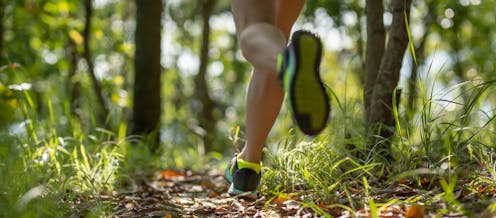
It could be as simple as taking a different route on a run or setting an open-ended goal[13] (like “how far I can run in 25 minutes”?), which can help facilitate exploration and reduce pressure. Or if you’re playing football, you might try out a new position or tactic.
Sometimes, it’s okay to not have a plan. Without a specific plan (like which restaurant to eat in), we need to go exploring to find out the best option (like stumbling across a place you’ve never heard of that has a great menu).
So, as we anticipate the upcoming Olympics and marvel at the athletes’ achievements, let’s remember their success might not only be the result of relentless discipline but also the joy and benefits of exploration.
Whether we are elite athletes or weekend warriors, heading out with the intention to “search and find out about something” can enhance our engagement, performance, and enjoyment in sport.
References
- ^ the benefits of a new training schedule (www.abc.net.au)
- ^ study (www.sciencedirect.com)
- ^ Complementing their high-performance sports strategy (theconversation.com)
- ^ national sport participation strategy (www.ausport.gov.au)
- ^ defined (dictionary.cambridge.org)
- ^ says (www.npr.org)
- ^ Psychologists (selfdeterminationtheory.org)
- ^ noted the importance (issponline.org)
- ^ adopted by Norway (www.theglobeandmail.com)
- ^ suggest (issponline.org)
- ^ previously reported (theconversation.com)
- ^ said (www.google.com.au)
- ^ setting an open-ended goal (theconversation.com)
Authors: Scott Goddard, Postdoctoral research fellow, Southern Cross University