power should be subsidised for struggling households
- Written by: Jodi Gardner, Professor, Law School, University of Auckland, Waipapa Taumata Rau
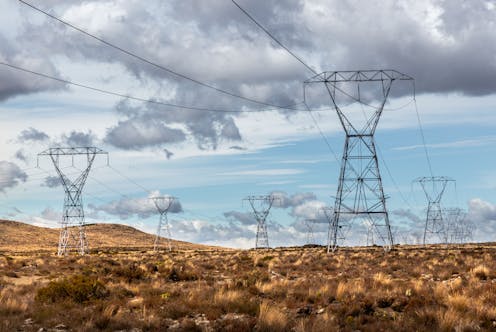
Last week’s headlines warning of electricity shortfalls[1] brought the issue of access to energy into (increasingly chilly) homes around the country.
The threat of power cuts due to an unseasonable cold snap and low wind generation was averted by a nationwide effort to reduce consumption[2]. But winter has not even begun in earnest.
Ensuring households can access fuel to warm living areas of the home has been ranked a basic human right[3] by scholars[4], advocates[5] and some at the United Nations[6]. In a recent survey in the United Kingdom, 97% of survey respondents[7] classified it as a “necessity” to live an adequate life.
And yet an estimated 40,000 New Zealand households had their power cut[8] due to unpaid bills in 2023. And one in five had trouble paying their monthly power bill.
How have we ended up with so many people unable to access such a basic necessity – particularly when energy companies are making near-record margins? Meridian, Contact, Genesis and Mercury made a combined NZ$2.7 billion profit[9] in the 2023 financial year.
The answer goes back to New Zealand’s market structures and the fact so many basic necessities – food, housing and electricity – are provided by private companies.
The rise in fuel poverty
Fuel poverty[11] (also known as fuel hardship) is an ongoing challenge in Aotearoa New Zealand – particularly when it comes to heating.
According to the UK government[12], a household experiences fuel poverty if it has to spend more than 10% of the total household income on electricity, gas and other fuels to achieve a satisfactory indoor environment. This is defined as meaning at least 21°C in the living areas and 18°C in other parts of the house.
The situation has been exacerbated by COVID-19, increasing inequality, and the cost-of-living crisis.
According to the government, 110,000 households[13] could not afford to keep their house adequately warm in 2022. Māori and Pacific households, renters and low-income households were more likely to experience hardship.
Inadequately heating homes, or having to disconnect electricity, does not just mean people are cold. There are many related, serious social, health and economic consequences[14].
Damp and mould become a problem, children do not get adequate nutrition due to money going on heating, people’s physical and mental health conditions worsen, food in fridges and freezers can spoil.
According to Consumer NZ, 19% of households had trouble paying their monthly power bill in 2023 but still didn’t meet the threshold of “energy hardship[15]”. Those in dire straits can apply for a Work and Income grant. But these are essentially a loan[16] and can cause financial strain while being repaid.
Private responsibility for a public problem
The political system has almost completely wiped its hands of any overriding duty to ensure people have access to electricity. Instead, it is provided through a contract between the consumer and the energy company.
If someone cannot afford to pay their electricity bill, they run the risk of being judged for not being financially responsible[17] and forced to pay additional disconnection (and reconnection) fees. This approach ignores the fact that the minimum wage rose by only 2% in April[18] but inflation sat at 4% in the first quarter of 2024[19].
The problem is exacerbated by significant fluctuations in the cost of electricity. This is based on both wholesale cost and the amount of electricity used by households. As the country heads into winter, hundreds of thousands may not be able to heat their homes adequately.
The government has previously offered piecemeal solutions, such as the (now disbanded) Warmer Kiwi Homes programme[20]. A small number of the most vulnerable households also receive up to $31.82 per week[21] to help pay for electricity.
But the statistics on struggling households and financial hardship around the country show these responses are really only a drop in the bucket.
The ‘social tarrif’ solution
One solution would be to return to state ownership of electricity, but that is far from realistic in this political environment.
A simpler – and more appropriately targeted – approach is to implement “social tariffs[22]” for electricity. These are targeted discount energy deals funded by the government for qualifying low-income consumers.
There are examples of social tariffs being used overseas to reduce the harm being caused by profit-driven companies operating in essential sectors.
In the UK, for example, a number of private telecommunications providers have voluntarily chosen to implement subsidised social tariffs for broadband and telephone for people on certain welfare benefits. This is because access to the internet, like electricity, is seen as a basic human right[23] in developed countries.
In light of the profits being made by New Zealand’s biggest energy providers, a serious reconsideration of the system is surely justified. Cost-of-living pressures are ongoing, while temperatures are falling.
If we believe energy is a human right, and all New Zealand houses deserve to be comfortable this winter, now would be the time to act.
References
- ^ warning of electricity shortfalls (www.stuff.co.nz)
- ^ nationwide effort to reduce consumption (www.rnz.co.nz)
- ^ ranked a basic human right (scholarlycommons.law.northwestern.edu)
- ^ scholars (www.tandfonline.com)
- ^ advocates (www.greenpeace.org)
- ^ some at the United Nations (www.sciencedirect.com)
- ^ 97% of survey respondents (www.sciencedirect.com)
- ^ had their power cut (www.consumer.org.nz)
- ^ NZ$2.7 billion profit (www.rnz.co.nz)
- ^ coldsnowstorm/Getty Images (www.gettyimages.com.au)
- ^ Fuel poverty (www.msd.govt.nz)
- ^ UK government (researchbriefings.files.parliament.uk)
- ^ 110,000 households (www.mbie.govt.nz)
- ^ social, health and economic consequences (www.phcc.org.nz)
- ^ energy hardship (www.mbie.govt.nz)
- ^ essentially a loan (theconversation.com)
- ^ not being financially responsible (www.rnz.co.nz)
- ^ minimum wage rose by only 2% in April (www.beehive.govt.nz)
- ^ 4% in the first quarter of 2024 (www.infometrics.co.nz)
- ^ Warmer Kiwi Homes programme (www.beehive.govt.nz)
- ^ receive up to $31.82 per week (www.powercompare.co.nz)
- ^ social tariffs (fuelpovertypanel.scot)
- ^ basic human right (journals.sagepub.com)
Authors: Jodi Gardner, Professor, Law School, University of Auckland, Waipapa Taumata Rau