Non-disclosure agreements are commonplace in sexual harassment cases, but they’re being misused to silence people
- Written by: Regina Featherstone, Social Justice Practitioner in Residence/Senior Lawyer, University of Sydney

Non-disclosure agreements (NDAs) came into public consciousness during the #MeToo movement after multiple women spoke out with sexual harassment allegations against film producer Harvey Weinstein.
Weinstein systematically used NDAs to silence victim-survivors[1]. It’s a major reason it took years for his behaviour to be made public. Because of the secrecy involved, it’s also how he was able to continue perpetrating harm against so many women.
We’ve been researching how NDAs are used in out-of-court sexual harassment settlements here in Australia. We’ve found[2] NDAs remain the default resolution practice for most lawyers, despite guidelines advising against it.
Given one in three[3] Australian workers have been sexually harassed in the past five years and that many incidents are not reported, the pervasive use of confidentiality agreements means we know very little about what is happening in our workplaces and the cultural drivers of sexual harassment. It also means victim-survivors may agree to terms that prevent their psychological healing because they are bound to confidentiality.
Read more: Buying silence: we can't stop workplace sexual harassment without banning non-disclosure agreements[4]
What is a non-disclosure agreement?
NDA is the universal description for what we call confidentiality agreements or confidentiality contractual terms.
Most sexual harassment complaints are resolved out of court[5] and are subject to a “settlement agreement”. These are contractual agreements that release respondents from any liability in exchange for a benefit to the applicant, such as money.
In Australia, confidentiality and non-disparagement terms are usually part of this settlement, so it’s effectively a NDA.
There is no doubt these agreements can be beneficial, and certainly some victim-survivors seek these terms. However, the Australian Human Rights Commission recognised that they’ve become standard and misused in the Respect@Work Report[6].
The Respect@Work Council was set up to implement the recommendations in that report. The council released guidelines[7] in December 2022 on the use of NDAs in workplace sexual harassment settlements. The guidelines say confidentiality clauses should not be seen as standard terms. They say that if NDAs must be used, scope should be limited, with exceptions allowing victim-survivors to speak to people in their support network, such as doctors or family.
We surveyed 145 sexual harassment lawyers to see how the guidelines are working in practice.
Are the guidelines being followed?
Even after those guidelines were released and after social movements like #MeToo and #TimesUp, our research[8] shows 75% of legal practitioners have never resolved a sexual harassment settlement without a strict NDA. This means blanket confidentiality with no carve-outs for disclosures to doctors or other supports.
We found the guidelines are not, at least yet, used as an effective resolution mechanism. In fact, 25% of sexual harassment practitioners have not read the guidelines and they are rarely provided to the other side in negotiations.
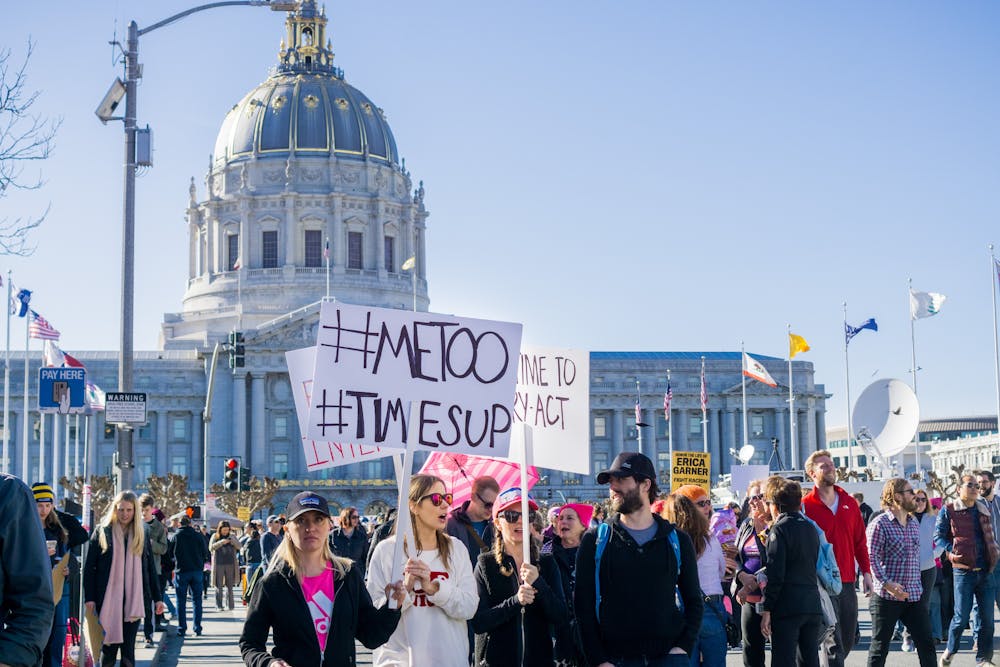 The #MeToo movement prompted some legislative change in the US.
Shutterstock[9]
The #MeToo movement prompted some legislative change in the US.
Shutterstock[9]
We also found there is no cohesive approach in the legal profession to how confidentiality agreements are used in sexual harassment settlements. We identified three themes:
some advocates told us the “standard” NDA practice is having carve-outs for victim-survivors to speak to doctors or family
other advocates spoke of usually having confidentiality around settlement terms only, allowing victim-survivors to otherwise speak about their experience
many advocates told us that exhaustive or strict agreements are standard practice, which mean a victim-survivor cannot speak to anyone about their experience.
Read more: Companies need confidentiality clauses – but not to muzzle sexual abuse victims[10]
As an example of the third point, one solicitor said:
If you propose a non-standard clause which is anything but broad confidentiality there’s such a lot of pushback from the respondents that it just it feels like you both have to advocate for your client and also educate the respondent simultaneously.
NDAs are not mandatory but their use is so entrenched that many practitioners do not advise of the option of not having one. Close to 30% of applicant practitioners and 50% of respondent practitioners have never provided this advice to clients.
It is a basic premise that lawyers provide advice and clients instruct. It’s spelled out in our Solicitors Conduct Rules. How can a client provide an instruction if they do not know all their options? If clients aren’t being advised on the nuances of NDAs, including possible carve-outs or reduction in scope, they are not empowered as active participants in their own legal matter.
What are other countries doing?
In Canada and the United States, legislation has been introduced to limit the use of NDAs and move away from these clauses being “standard”. A key aim of many of these proposed reforms is to provide the complainant with true choice, including proposed laws being considered in Victoria[11].
While new legislation is one way to tackle the problem, an effective response may exist already within the regulation of legal conduct.
Until recently in Australia, the conduct of lawyers in negotiations was not commonly considered a disciplinary or professional conduct issue. But in September 2023, the Victorian Legal Services Board + Commissioner published advice[12] on how lawyers should use NDAs when resolving workplace sexual harassment complaints.
It advised lawyers they must be mindful to maintain the professional duty to act with independence and integrity when also upholding their duty to act in the best interest of their client. This requires careful consideration of clients’ short- and long-term interests.
Read more: Banning non-disclosure agreements isn't enough to stop unethical workplace leader behaviour[13]
A confidentiality clause may be useful in the short term to protect an employer from reputational damage. The same clause, however, may operate against a client’s long-term interests if the same perpetrator sexually harasses another person and it becomes public knowledge that the business had been using NDAs to hide this conduct.
Our research found lawyers for alleged victim-survivors who advocate on this issue routinely are achieving settlements without strict NDAs. We had many lawyers who act for both employees and employers tell us they have settled multiple matters in the past 12 months without strict NDAs, in ways that are tailored to their client’s needs.
But the advocacy of lawyers can be limited if outdated practices remain entrenched. Ultimately, the entire profession needs to be better educated to ensure these agreements aren’t misused. In turn, we’ll see greater transparency around sexual harassment.
References
- ^ silence victim-survivors (www.theguardian.com)
- ^ found (rlc.org.au)
- ^ one in three (humanrights.gov.au)
- ^ Buying silence: we can't stop workplace sexual harassment without banning non-disclosure agreements (theconversation.com)
- ^ out of court (humanrights.gov.au)
- ^ Respect@Work Report (humanrights.gov.au)
- ^ guidelines (www.respectatwork.gov.au)
- ^ our research (rlc.org.au)
- ^ Shutterstock (www.shutterstock.com)
- ^ Companies need confidentiality clauses – but not to muzzle sexual abuse victims (theconversation.com)
- ^ in Victoria (www.theguardian.com)
- ^ published advice (lsbc.vic.gov.au)
- ^ Banning non-disclosure agreements isn't enough to stop unethical workplace leader behaviour (theconversation.com)
Authors: Regina Featherstone, Social Justice Practitioner in Residence/Senior Lawyer, University of Sydney