what happens to stateless people in Australia after the High Court's ruling?
- Written by: Katie Robertson, Director - Stateless Legal Clinic, The University of Melbourne
The decision by the High Court of Australia this week overturning the legality[1] of indefinite immigration detention marks a watershed moment in Australian legal history.
For almost two decades, stateless people have faced the prospect of spending their lives behind bars.
Now, a stateless Rohingya refugee[2] has been released from detention.
With no “stateless” visa category or pathway to permanency, stateless people will continue to face a life of uncertainty in the Australia community, begging the question; what next?
Read more: Government must use trauma-informed approach to end uncertainty on refugee visa applications[3]
Overturning decades of precedent
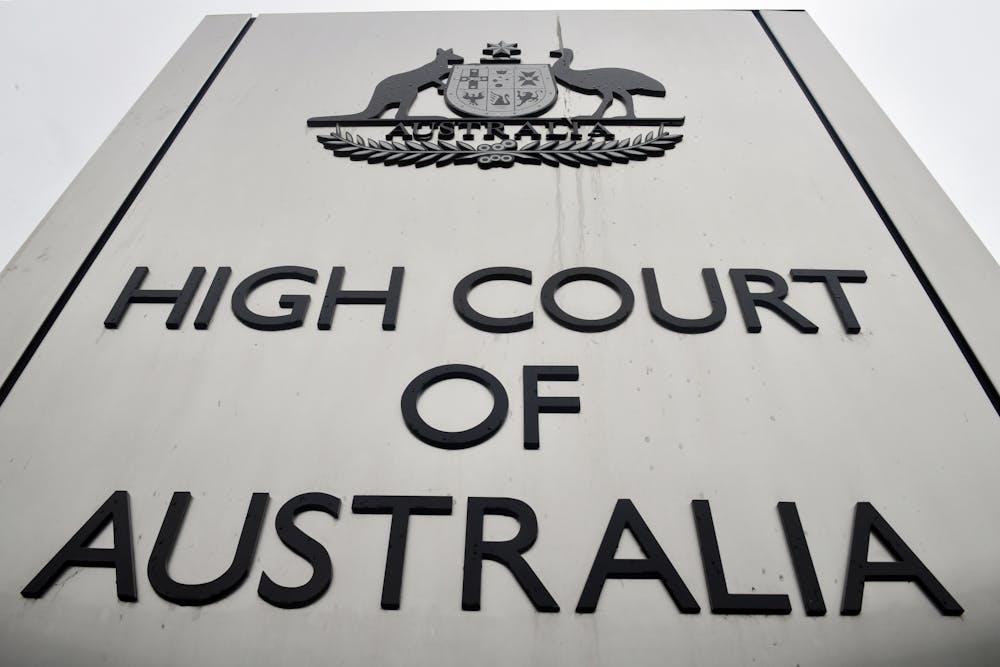
This week the Australian High Court ordered[4] the immediate release of the stateless refugee, known as “NZYQ”, from immigration detention.
He’d been held there for more than five years.
The Court found that because there was no real prospect of his removal from Australia “becoming practicable in the reasonably foreseeable future”, his detention was unlawful.
This decision is highly significant, overturning almost twenty years of legal precedent established in 2004.[5]
In that case, the High Court upheld the ability of the Australian government to detain people for an unlimited period.
That looked to be the fate of the man at the centre of this week’s case.
Having had his visa cancelled due to a criminal conviction[6] and unable to be returned to Myanmar as a stateless refugee, he faced potentially being detained for the rest of his life.
Australia’s system of mandatory indefinite detention, a bipartisan policy introduced in 1992, is unique, even when compared with countries with similar legal traditions, such as the UK.
Available government statistics[7] indicate there are currently over 1,000 people in immigration detention, 31 of whom are stateless.
The average length somebody is detained in Australia is a staggering 708 days[8].
More than 100 people have been held for more than five years.
What does is mean to be stateless?
There is little understanding of statelessness in Australia, despite the fact it affects millions of people globally.
A stateless person is someone with no nationality. Legally speaking, they are recognised as “belonging” to no country in the world.
While the causes of statelessness[9] vary, the dominant root cause is usually discrimination of one kind or another, including on the grounds of gender, race or religion.
The legal definition of statelessness does not do justice to the lived reality.
Read more: A migration review could close some disability discrimination loopholes – but not for people already waiting or refused visas[10]
Statelessness has the potential to impact almost every aspect of a person’s day-to-day life.
It can inhibit freedom of movement, access to education, housing, employment and medical care.
In Australia, these challenges are compounded by an often overwhelming sense of uncertainty about the future and the ever-present threat of detention.
The lived reality of statelessness is perhaps better understood in the words of Amir[11], a stateless father living in Australia:
Being stateless has been a huge source of sadness for me in my life. At times it has made me question my very existence and made me wonder why my parents chose to bring me into this world. I’ve never felt like I have a future. Wherever I’ve gone, I have no rights.
We must never forget that behind legal judgements are the lives of real people. Many stateless families we work with in the Stateless Legal Clinic[12] have spent years in immigration detention, including Australian-born children who marked their first birthdays[13] behind the wire.
The ongoing health impacts of detention, especially on children, have been well documented[14].
A lack of legal protections means an uncertain future
Along with the harmful effects of detention is the gap in legal protections stateless people experience in the Australian community.
Australia doesn’t have a distinct visa category for stateless people or pathway to permanent residency.
Many live with crippling prohibitions on their ability to build a secure life for themselves and their children. Access to some of the basic rights many of us take for granted – such as education - can be challenging. In the words of stateless mother Nur:[15]
Being stateless makes things challenging for us here. My children feel Australian – yet we are often reminded they are not […] our eldest child, Iman started kindergarten this year. It was so difficult trying to enrol him – they asked about his passport, his visa, his status. I felt embarrassed having to explain he has no passport – no identity. No certainty of his future.
Australian law does not adequately protect the rights of stateless people in this country.
Read more: Why the government's plan to overhaul the asylum system is a smart use of resources – and might just work[16]
This week’s High Court decision is a critical first step in protecting stateless people from being indefinitely deprived of their liberty. What happens next is just as important.
In the absence of being recognised as citizens of any country in the world, Australia can – and must – do more to offer stateless children and adults a life of certainty in this country.
References
- ^ overturning the legality (www.abc.net.au)
- ^ Rohingya refugee (www.abc.net.au)
- ^ Government must use trauma-informed approach to end uncertainty on refugee visa applications (theconversation.com)
- ^ ordered (www.austlii.edu.au)
- ^ 2004. (eresources.hcourt.gov.au)
- ^ criminal conviction (www.theguardian.com)
- ^ government statistics (www.homeaffairs.gov.au)
- ^ 708 days (www.homeaffairs.gov.au)
- ^ causes of statelessness (law.unimelb.edu.au)
- ^ A migration review could close some disability discrimination loopholes – but not for people already waiting or refused visas (theconversation.com)
- ^ words of Amir (law.unimelb.edu.au)
- ^ Stateless Legal Clinic (law.unimelb.edu.au)
- ^ first birthdays (firstdogonthemoon.com.au)
- ^ well documented (humanrights.gov.au)
- ^ words of stateless mother Nur: (law.unimelb.edu.au)
- ^ Why the government's plan to overhaul the asylum system is a smart use of resources – and might just work (theconversation.com)
Authors: Katie Robertson, Director - Stateless Legal Clinic, The University of Melbourne