Our children are victims of road violence. We need to talk about the deadly norms of car use
- Written by: Hulya Gilbert, Lecturer in Planning and Human Geography, La Trobe University
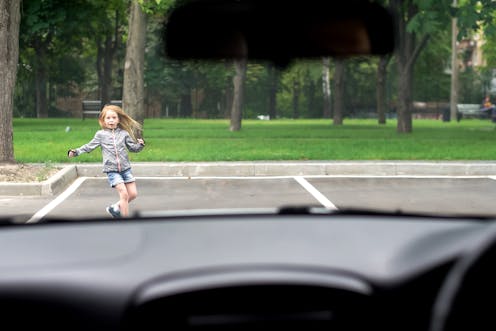
The deaths and injuries caused by car drivers are an everyday occurrence. This road violence has become normalised. We take it for granted as the price we have to pay to use our cars.
Globally, car crashes are the world’s leading cause of death[1] for people aged five to 25. In Australia, road deaths included 293 people in this age group[2] in 2022, a rise from 281 in 2019 and 276 in 2018.
These deaths are stark reminders of the structural problem with a deeply entrenched, car-dominated culture. The huge numbers of deaths and injuries on our roads are a result of choosing to build our society around cars. This degree of harm does not seem to draw the same level of outrage as any other form of violence would.
As we argue in a newly published paper[3], these tragedies will continue unless we recognise the consequences of our ongoing misguided choices. We must act with the urgency this situation deserves.
Read more: Despite lockdowns, 1,142 Australians, including 66 kids, died on our roads in the past year. Here's what we need to do[4]
Lives lost and lives blighted
These figures represent real people and real lives.
In March 2023, a truck hit two 16-year-olds[5] who were crossing at pedestrian lights in front of their inner-city Adelaide school. Both were rushed to hospital with serious injuries.
Three months later, a four-wheel-drive hit a 38-year-old woman and her six-year-old daughter[6] who were crossing the street next to their school in the Adelaide CBD. The woman was pinned under the car. The six-year-old was also dragged under the car and pulled out by another parent.
In September 2023, a car hit an eight-year-old boy[7] who was playing soccer with his three-year-old brother in a suburban Melbourne laneway. He was trapped between two vehicles for about 20 minutes. He had life-threatening injuries.
Not some isolated accidents
The underlying causes[8] of car crashes and their link to planning and transport policies continue to be ignored.
These policies have promoted car-based infrastructure[9] and urban sprawl[10]. Public transport and active transport such as walking and cycling have been neglected[11].
Read more: Urban sprawl is 'not a dirty word'? If the priority is to meet all kids' needs, it should be[12]
Children are the victims of our obsession with allowing heavy, fast-moving vehicles in our everyday spaces, including around schools.
The freedom of car drivers comes at the expense of the freedom of all others. At the same time, the environment and society bear most of the costs of this car culture.
Read more: Japan's Old Enough and Australia's Bluey remind us our kids are no longer ‘free range’ – but we can remake our neighbourhoods[13]
A form of victim-blaming
In the Adelaide inner-city crash in March, responses included pruning a tree, so it didn’t obscure a traffic light, and auditing pedestrian crossings[14]. Red-and-white-striped wrapping was added to the traffic light poles, along with signs telling pedestrians to “stop, look and listen” before stepping on a street.
These inconsequential modifications mostly target the potential victims, which highlights our state of denial[15] of the role of cars. It reinforces the privileged position of cars and their drivers –children are the ones who need to be disciplined and reminded to be more alert and careful around cars.
It’s essentially a form of victim blaming[16]. Instead of reducing the source of violence, we tell everybody to be more careful around it.
Normalisation of crashes must stop
Neglecting the root causes of these crashes stops us taking more effective action.
We could, for instance, reduce the space allocated to cars by creating car-free or no-parking zones. We could reduce the speed limits for cars to be closer to the average speeds of walking (6 kilometres per hour — the accepted speed in most holiday parks) or cycling (15-20km/h). And we could create disincentives such as higher registration[18] and parking fees[19] to discourage the use of increasingly large vehicles, which multiply the collision risks for those outside them.
Read more: Busted: 5 myths about 30km/h speed limits in Australia[20]
Car crashes are also normalised through the way in which they are brought to public attention[21]. We stop hearing about these crashes a few days after they occur, and we rarely hear about their long-term and far-reaching effects[22].
In the crash involving a woman and her six-year-old, the girl was reported to be lucky to avoid severe injuries. Similarly, it was reported the younger brother of the boy trapped between two cars escaped serious injury.
These reports do not capture the trauma of a six-year-old who heard her mother’s screams while both were forced under a moving two-tonne metal object. They overlook the impact on a three-year-old who sees his brother’s body being crushed between two cars.
These reports also rarely capture the trauma other family members and friends endure, probably for the rest of their lives. And don’t forget the severe impacts on the lives of the driver, first responders and bystanders.
The rippling impacts of these crashes remain largely hidden from the public. As does their systemic nature.
To end this violence we must rethink our priorities
We should refuse to accept that vehicles hitting children are “accidents[23]” or unavoidable outcomes of our essential lifestyles.
We can choose to reclaim the status we give to cars in our everyday spaces. The price we pay, both social and environmental, is too high to sustain. We have plenty of better and safer travel choices, such as active and public transport.
We need to recognise that the car threatens children’s safety and their right to independently roam public spaces[24]. This directly threatens their long-term health and wellbeing[25].
Car drivers’ rights are not more important than children’s rights to be safe on our streets. The interests of those who oppose measures such as reduced car parking or lower speed limits should not be more important than our children’s wellbeing. No benefit of a pro-car policy can be greater than the benefit of children’s active presence in public spaces, where they have a right to be imperfect and distracted.
As a society, a public conversation about reassessing our priorities is well overdue. Only then can we challenge the unquestioned status of the car and our tendency to take the violence that it generates for granted.
References
- ^ leading cause of death (www.who.int)
- ^ 293 people in this age group (www.bitre.gov.au)
- ^ newly published paper (www.tandfonline.com)
- ^ Despite lockdowns, 1,142 Australians, including 66 kids, died on our roads in the past year. Here's what we need to do (theconversation.com)
- ^ a truck hit two 16-year-olds (www.abc.net.au)
- ^ a four-wheel-drive hit a 38-year-old woman and her six-year-old daughter (www.abc.net.au)
- ^ a car hit an eight-year-old boy (www.theage.com.au)
- ^ underlying causes (mitpress.mit.edu)
- ^ car-based infrastructure (theconversation.com)
- ^ urban sprawl (theconversation.com)
- ^ been neglected (theconversation.com)
- ^ Urban sprawl is 'not a dirty word'? If the priority is to meet all kids' needs, it should be (theconversation.com)
- ^ Japan's Old Enough and Australia's Bluey remind us our kids are no longer ‘free range’ – but we can remake our neighbourhoods (theconversation.com)
- ^ auditing pedestrian crossings (www.adelaidenow.com.au)
- ^ state of denial (darajapress.com)
- ^ victim blaming (darajapress.com)
- ^ Shutterstock (www.shutterstock.com)
- ^ registration (www.bloomberg.com)
- ^ parking fees (www.drive.com.au)
- ^ Busted: 5 myths about 30km/h speed limits in Australia (theconversation.com)
- ^ way in which they are brought to public attention (scribepublications.com.au)
- ^ long-term and far-reaching effects (www.sciencedirect.com)
- ^ accidents (www.roadpeace.org)
- ^ independently roam public spaces (www.tandfonline.com)
- ^ long-term health and wellbeing (www.sciencedirect.com)
Authors: Hulya Gilbert, Lecturer in Planning and Human Geography, La Trobe University