remote community's High Court win is good news for renters everywhere
- Written by: Chris Martin, Senior Research Fellow, City Futures Research Centre, UNSW Sydney
It took seven years, but a tiny remote community in the Northern Territory had a major legal win yesterday.
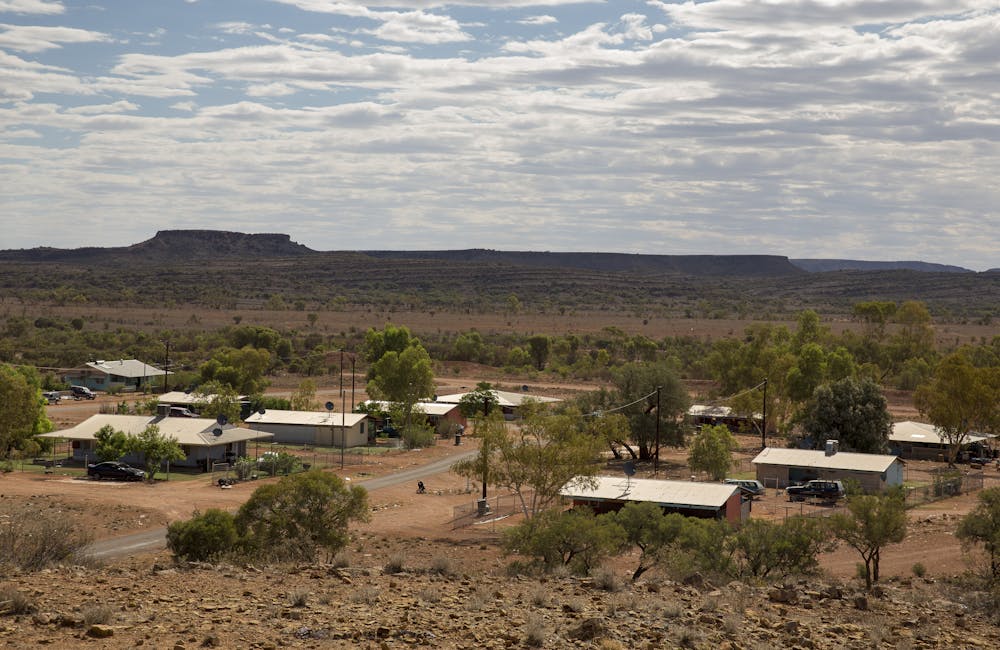
People in the town of Santa Teresa, southeast of Alice Springs, won the right to compensation for the substandard housing they’re forced to live in.
For more than five years, one resident lived without a back door.
The High Court ruled[1] their landlord, the Northern Territory government, must pay them for the “distress and disappointment” they endured as a result.
So what does this mean, not just for the Aboriginal community leading the charge, but for tenants’ rights more broadly?
Read more: Aboriginal housing policies must be based on community needs — not what non-Indigenous people think they need[2]
A long path to legal victory
The fight for better housing conditions in Santa Teresa has been making its way through the courts for years.
In 2016, a group of residents launched a class action[3] against the NT government for not providing habitable homes.
Three years later, some of the residents in the action were successful in the NT Civil and Administrative Tribunal in their efforts to sue.
But the government has fought every step of the way.
It appealed to the Supreme Court, which then sided with the tenants by awarding them further compensation[4].
The NT government appealed that, too. The Court of Appeal found the government was in breach, but held the tenants were not entitled to all the compensation ordered.
So the tenants appealed, bringing the matter to the High Court.
In a majority ruling[5], the court found the government had breached the Residential Tenancies Act by not providing one of the residents with a back door.
But that part isn’t surprising. The new part is that the court decided the government was liable for compensation.
What was the case around compensation?
Here’s where some common law principles come into play.
The NT government argued that while it breached the tenancy act, it didn’t owe compensation as a result.
The devil is in the detail, namely the words “disappointment or distress”.
Those are non-economic losses. That means they didn’t directly cost the residents money.
Under common law, there’s no entitlement to compensation for most non-economic losses.
There are some exceptions, though: if the disappointment comes from being physically inconvenienced, or from being expressly promised enjoyment, compensation may be required.
Read more: We need to design housing for Indigenous communities that can withstand the impacts of climate change[6]
An example of this is when people sue cruise companies for being disappointed by their holiday[7].
In this case, the High Court has decided that those restrictive principles don’t apply to compensation for breaches of tenancy rights under residential tenancies legislation.
It found when it looked at the overall intent of the territory’s Residential Tenancy Act[8], including its compensation provisions, the residents were entitled to compensation.
So the Supreme Court’s previous compensation order is restored.
Read more: Think private renting is hard? First Nations people can be excluded from the start[9]
But two High Court judges wrote a minority judgement.
Interestingly, they agreed the tenants should be compensated, but for a different reason.
They thought a tenancy promised enjoyment, so compensation for “disappointment and distress” would be allowed by those common law principles.
What does this mean for renters nationally?
The case has been referred to as a landmark one[10], and in many ways it is.
A group of Aboriginal public housing tenants organised, fought for their rights, and won. They changed the law.
There are many barriers to tenants fighting for what they’re entitled to, so it’s a remarkable result.
The two leaders of the litigation died before the High Court handed down its decision. It is a memorial to them.
The High Court’s decision refers specifically to the NT’s residential tenancies legislation. It did not decide whether those restrictive common law principles about compensation are excluded from tenancy laws in other states and the ACT.
That question will have to be answered by the tribunals and courts in each other state and territory.
Given the legislation across the country are on a broadly common model, it seems likely the result would be similar, but that’s up to the courts to decide.
At any rate, the case has demonstrated that remote communities in the Northern Territory are legally entitled to safe, habitable living conditions, and the government is liable if it fails to provide them.
And tenants around Australia can take heart from the example of the Santa Teresa tenants.
References
- ^ ruled (eresources.hcourt.gov.au)
- ^ Aboriginal housing policies must be based on community needs — not what non-Indigenous people think they need (theconversation.com)
- ^ class action (www.abc.net.au)
- ^ further compensation (www.abc.net.au)
- ^ majority ruling (eresources.hcourt.gov.au)
- ^ We need to design housing for Indigenous communities that can withstand the impacts of climate change (theconversation.com)
- ^ their holiday (www.australiancontractlaw.info)
- ^ Residential Tenancy Act (legislation.nt.gov.au)
- ^ Think private renting is hard? First Nations people can be excluded from the start (theconversation.com)
- ^ landmark one (www.abc.net.au)
Authors: Chris Martin, Senior Research Fellow, City Futures Research Centre, UNSW Sydney