Many Australian kids abused in sport won't ever speak up. It's time we break the silence
- Written by: Mary Woessner, Lecturer in Clinical Exercise and Research Fellow, Institute for Health and Sport (iHeS), Victoria University, Victoria University
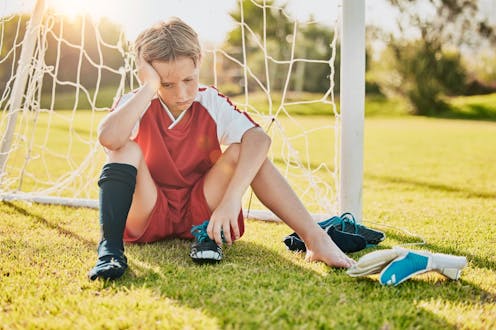
Sport is supposed to be a safe place for kids to learn and play.
Too often, however, sporting clubs can be places where children are abused[1] psychologically, physically or sexually.
Imagine, then, a child in your life had been abused, but never told an adult about it.
Our new research[2] shows that’s the case for many children who’ve experienced abuse in a community sport club.
Here’s what we found about how children talk about – or don’t talk about – their experiences of abuse in sport.
Survey shows abuse goes undisclosed
Our research[3] is the first to explore how often children tell adults about abuse in community sport.
Before this, we knew very little about how children spoke about their experiences of abuse.
Read more: What the David Beckham documentary tells us – and what it doesn't – about controlling parents in sport[4]
This data builds on our previous study[5], focusing on the responses of the 800 adults who had all experienced abuse in community sport as children.
In our new study, our survey tool asked about childhood experiences of abuse in sport. These ranged from psychological violence (excessive criticism and humiliation), physical abuse (throwing equipment, striking someone), sexual violence (sexualised comments or acts) and neglect (ignoring a child after a poor performance).
We found more than half said they never spoke to an adult about it.
Three in four children never spoke to an adult about abuse from a coach.
Rates of disclosure were even lower when the abuse was from a parent, with eight in nine children not speaking to another adult about their experiences.
We also found boys disclose peer abuse in sport less frequently than girls, while girls had lower rates of disclosing to an adult within the sport club (coach/club manager) than boys.
The evidence shows delayed disclosures of abuse (or never disclosing) can have severe and long-lasting impacts[6] on a child’s mental health.
This makes these findings highly concerning.
Having a policy is important, but not enough
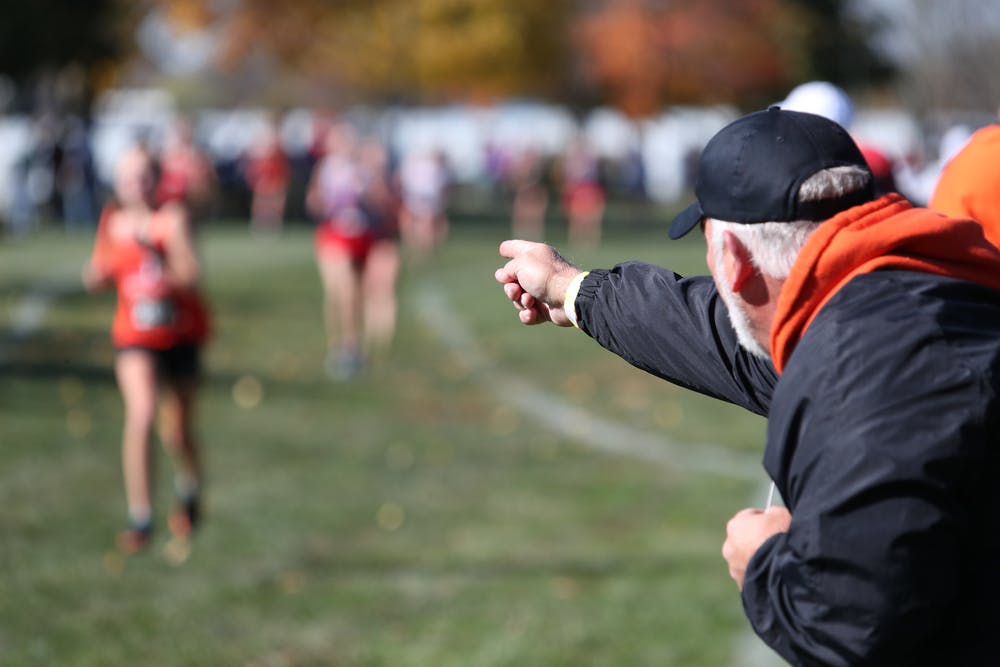
Clubs often try to stamp out abuse by having policies aimed at protecting children.
But we found while policies can provide guidance on who to report abuse to, even getting that far can be difficult.
First, a child victim/survivor (and adults around them) needs to recognise their experience as abuse. In community sporting clubs, a child would then need to talk to an adult (a club member protection officer, for example). Finally, the adult/child would need to formally report the abuse for the policy to be enacted.
In an environment where abuse has become so normalised[8], children may not even realise they’re experiencing it.
The response system relies on reports of abuse[9], but participants are often afraid to come forward, or aren’t believed when they do.
Even when children are aware and able to say something is wrong, we found they think twice before speaking to an adult.
The children often questioned whether their experiences were bad enough, especially when they saw other kids going through the same things.
One participant shared bullying was so widespread that:
[…] it’s [violence] a cultural thing in the sport. And so you just learn to live with it, ignore it.
Read more: Why taking a trauma- and violence-informed approach can make sport safer and more equitable[10]
How we respond to children matters
Often children will not have the words to say “I am experiencing abuse”.
In our study[11] children would simply tell their parents they weren’t enjoying sport.
They often didn’t even think they were talking about abuse. One of the people we spoke to said:
I didn’t know I was disclosing […] I just thought I was reiterating what happened during the day.
In most instances, the responses from adults normalised or rationalised the child’s experience of abuse.
A participant shared her parents’ response was:
Sorry you’re experiencing this, but time to just be resilient. Like, just don’t think about it.
Sometimes, the adult offered a supportive and empathetic response, but this was rarely followed up with long-term support or lodging an official report of abuse.
This leaves the experiences of abuse undocumented and unaddressed.
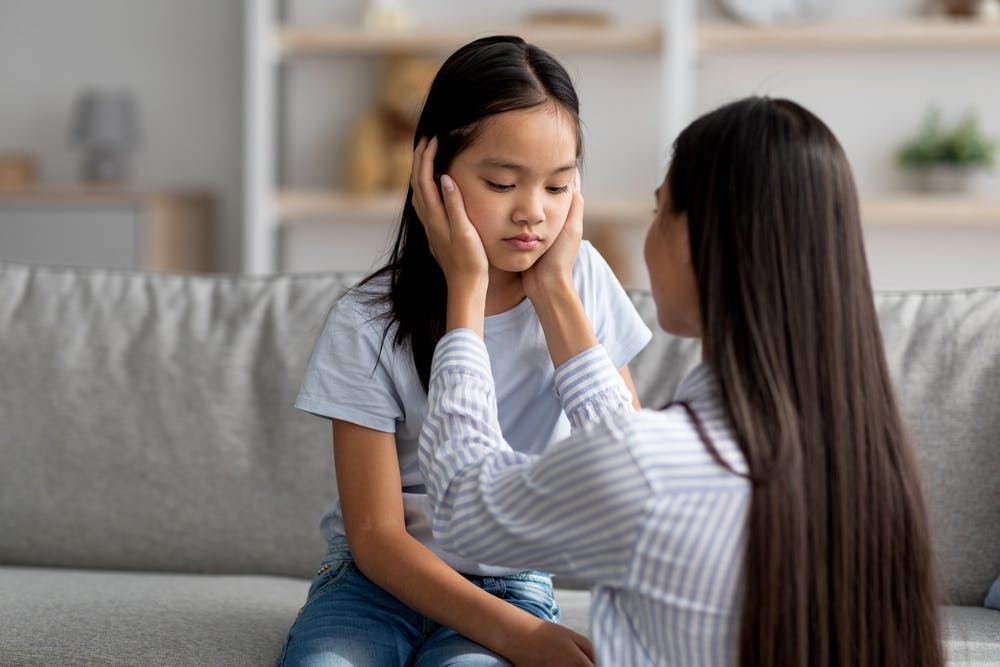 Believe children when they say they are uncomfortable, not enjoying sport or feel unsafe, and ask them how you can help.
Shutterstock[12]
Believe children when they say they are uncomfortable, not enjoying sport or feel unsafe, and ask them how you can help.
Shutterstock[12]
Taking action against abuse in sport
We need to talk more about abuse in sport.
The issue is gaining some traction, with the launch of international and national campaigns.
Start To Talk[13] encourages people to have conversations about poor behaviours and improving safety in sport.
Our team in Australia is running workshops on abuse with community sporting organisations.
Read more: In sport, abuse is often dismissed as 'good coaching'[14]
We have passionate volunteers who want to change the culture, but need support to do so.
Abuse thrives in the shadows, and it is time for more significant action to realise real change. Here is what you can do to help[15]:
listen to children, really listen to what they say
believe them when they say they are uncomfortable, not enjoying sport or feel unsafe, and ask them how you can help
seek support[16] for them and yourself
when it’s safe to do so, call out poor behaviours.
Sport has so much power for good, but we all must play our part in ensuring it is first and foremost, a safe environment.
If this article has raised issues for you or if you’re concerned about someone you know, call Lifeline on 13 11 14, or Kids Helpline on 1800 55 1800.
References
- ^ abused (journals.sagepub.com)
- ^ new research (www.tandfonline.com)
- ^ research (www.tandfonline.com)
- ^ What the David Beckham documentary tells us – and what it doesn't – about controlling parents in sport (theconversation.com)
- ^ previous study (theconversation.com)
- ^ long-lasting impacts (www.sciencedirect.com)
- ^ Shutterstock (www.shutterstock.com)
- ^ normalised (theconversation.com)
- ^ relies on reports of abuse (www.frontiersin.org)
- ^ Why taking a trauma- and violence-informed approach can make sport safer and more equitable (theconversation.com)
- ^ our study (www.tandfonline.com)
- ^ Shutterstock (www.shutterstock.com)
- ^ Start To Talk (www.playbytherules.net.au)
- ^ In sport, abuse is often dismissed as 'good coaching' (theconversation.com)
- ^ Here is what you can do to help (www.athletehelpline.org)
- ^ seek support (www.beyondblue.org.au)
Authors: Mary Woessner, Lecturer in Clinical Exercise and Research Fellow, Institute for Health and Sport (iHeS), Victoria University, Victoria University