Google AI

Weekend Times


The Times

Business News

50 years ago when the Middle East was at war, oil prices skyrocketed. But it probably won't happen this time.

  • Written by: Jamie Cross, Assistant Professor of Econometrics & Statistics, Melbourne Business School
50 years ago when the Middle East was at war, oil prices skyrocketed. But it probably won't happen this time.

Global oil prices jumped after Israel declared war on Hamas in response to its unexpected attack on Israel on Saturday, the eve of the 50th anniversary of the 1973 Arab-Israeli War.

Back then, between late 1973 and early 1974, the world oil price almost quadrupled[1] after the United States offered financial support to Israel in the Arab–Israeli War. The Organisation of Arab Petroleum Exporting Countries cut off oil exports to nations including the US, the United Kingdom, Canada and Japan.

Could it happen again? Although it has been said that history doesn’t repeat, but it rhymes[2], the answer is almost certainly no.

While there are uncanny similarities between the events of 1973 and today, there are more important differences.

This time it’s different

The 1973 war pitted Israel against two oil-producing nations: Egypt and Syria.

When the US offered support to Israel, the Organisation of Arab Petroleum Exporting Countries instituted an oil embargo, followed by a series of production cuts that pushed up world price of oil.

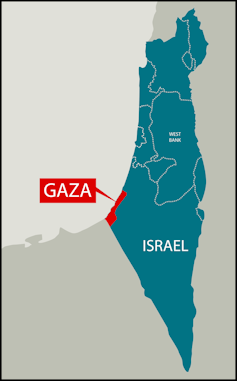
This 2023 war pits Israel against Hamas, the Islamist group that controls the tiny Gaza Strip[3], hemmed in by Israel, Egypt and the Mediterranean Sea.

Shutterstock Neither Gaza nor Israel produces much oil[4]. The price increase has been short-lived It is possible that the oil-rich nation of Iran could become involved in the conflict. It is rumoured to have helped plan the Hamas attack, although its Supreme Leader, Ayatollah Ali Khamenei has denied Iran’s involvement[5]. It is also possible that petroleum-exporting nations might cut supplies in a show of support for Hamas. But there is no current reason to believe this will happen, and there has been relatively little movement in the petroleum price. When Russia invaded Ukraine in 2022, the price of Brent crude[6] jumped 15% from around US$95 per barrel to US$110. Russia had been the world’s third-biggest[7] oil producer, pumping out about 10% of the world’s supply. In contrast, the Brent crude price closed on Friday (before the Hamas attack) at around US$84. It climbed to US$88 on Monday, then fell back to US$86 – well below even last month’s peak of US$94. Why was there an increase at all? Not every spike in oil prices is due to a shortage of supply. My research shows how jumps in demand[8] can also play a role. These can be further categorised as “precautionary demand” and “speculative demand”. Precautionary demand is the demand for extra oil to hold in reserve, in case supply tightens. Speculative demand comes from investors expecting to profit from further price rises. Both push up the oil price. The good news is that both effects should be relatively short-lived, unless the unexpected happens. In this case, the effects so far have been small. Read more: No hike yet, but what happens on Melbourne Cup Day depends on petrol[9] What would happen if prices did take off? As a relatively small and open economy, Australia would suffer from higher import prices if the price of oil surged. But research[10] suggests the type of price hikes we’ve seen so far would have only a small impact, even if the price rises were sustained. The Hamas-Israel war pushed up oil prices by less than 5%, for about a day. If the 5% increase had been sustained, the research suggests Australia’s inflation rate would have been (at most) 0.3 percentage points higher, Australia’s GDP would have been about 1% lower and Australia’s real exchange rate would have been 2% lower. This means Australia’s Reserve Bank will be watching oil prices closely, but if the price remains stable (or at least no more unstable than it has been) the war is unlikely to prompt the bank to move interest rates. References^ almost quadrupled (www.federalreservehistory.org)^ history doesn’t repeat, but it rhymes (quoteinvestigator.com)^ Gaza Strip (www.abc.net.au)^ produces much oil (www.cnbc.com)^ denied Iran’s involvement (www.nytimes.com)^ Brent crude (www.investopedia.com)^ third-biggest (markets.businessinsider.com)^ jumps in demand (onlinelibrary.wiley.com)^ No hike yet, but what happens on Melbourne Cup Day depends on petrol (theconversation.com)^ research (onlinelibrary.wiley.com)Authors: Jamie Cross, Assistant Professor of Econometrics & Statistics, Melbourne Business School

Read more https://theconversation.com/50-years-ago-when-the-middle-east-was-at-war-oil-prices-skyrocketed-but-it-probably-wont-happen-this-time-215523

The Weekend Times Magazine

Understanding the Power of Smart Home Automation in Modern Living

Technology is no longer confined to our pockets and workplaces—it has made a confident entrance into our homes. Among the most impactful technological trends reshaping domestic life is smart home...

The Vital Role of Indemnity Insurance in Nursing

In modern healthcare, nurses operate within an increasingly complex professional environment that exposes them to a wide range of risks. Their responsibilities extend from direct patient care to managing complex...

The Importance of Quality Paint Protection for Brisbane Drivers

Shielding Your Vehicle with the Right Protection Every car owner appreciates that fresh showroom finish—the gleam of the paintwork, the smoothness of brand new panels. But once you drive out of...

Stylish and Sustainable Comfort with Ceiling Fans Adelaide

For Adelaide homeowners, finding the right balance between comfort, style, and energy efficiency is always a priority. With hot, dry summers and mild winters, it’s important to have cooling solutions...

CHECK.CHECK.CHECK. The new ‘Slip, Slop, Slap,’ for a night out campaign

CHECK.CHECK.CHECK. The new ‘Slip, Slop, Slap,’ for a night out launched by the Night Time Industries Association A new campaign Check. Check. Check. encouraging punters to do their...

The Aussie Man Launches Debut Range of Men’s Grooming Products

Brand new Australian made men’s skincare company The Aussie Man has today announced the launch of their new range of organic skincare.  The Aussie Man uses hero natural ingredients such as...

Prime Minister Press Conference Australian Parliament House

PRIME MINISTER: Good afternoon everyone. Today's meeting of the National Cabinet came during a week of what I'd describe of increased hope. This was a week of hope. We were...

Dentists in Sydney: Your Guide to Dental Care

Sydney, Australia is home to the absolute best dental experts in the country. With a different range of services and specialties, dental specialists in Sydney take care of different needs...

Who Can Install A Private Power Pole?

Private power poles provide property owners with the freedom to choose where electricity will enter the building. It also offers protection from hazards associated with being directly connected to the...