it's on the cards but just not yet
- Written by: Flavio Macau, Associate Dean - School of Business and Law, Edith Cowan University
From the food replicator in Star Trek to Dumbledore summoning food in Hogwarts’ banquet hall, we love the idea of instant food on demand.
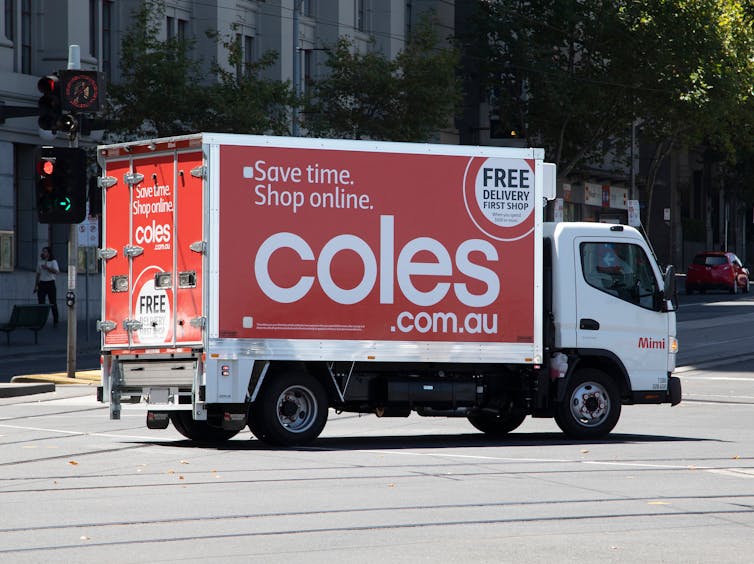
This week, Australian supermarket giant Coles appealed to that love by announcing a pick-and-collect service that takes less than 60 minutes[1], shaving 30 minutes off its existing promise.
You’ll be able to order up to 40 items from a list of more than 20,000 products online, then drive to one of 400 Coles supermarkets offering the “Rapid Click & Collect” scheme to collect your groceries within the hour.
Some news reports have given the impression this is a home delivery service. It’s not. Coles will not deliver groceries to your door in such a short time.
But could such a service be on the cards?
It’s possible. But the “last kilometre” of the grocery supply chain – from the store to your home – remains the most complicated in terms of logistics, as well as environmental and social costs.
Customers want convenience and speed
Rapid delivery services particularly for food have boomed during the pandemic. It’s a trend that will continue as consumers demand more convenience and speed[2].
With life busier than ever, people want everything from laundry soap to roast chicken delivered. They don’t want to spend time going around shelves looking for products or queuing at the checkout.
In business speak, these new services are part of what is called an omnichannel[3] – combining “clicks and bricks” to give customers the choice about what, when and where to buy.
In a not-so-distant past, the only way to get to your groceries was to go to the supermarket. Now you can install an app, access the website, click on your smartwatch or let your hi-tech fridge[4] place orders automatically.
Last-kilometre delivery is complicated
For shoppers, at least, fast delivery services simplify things.
You can use an app to store preferred orders, making your purchase with a few clicks. You have more choice because you are not limited to what you see on the shelves. You can compare prices between providers easily.
But the “last kilometre delivery” – from a store or warehouse to your doorstep – is the most complicated and most expensive[5] part of the journey for any product.
The cost to deliver[6] your preferred Italian-made pasta sauce from the local supermarket to your doorstep, for example, is similar to the cost of shipping the same bottle from a port in Milan to a port in Sydney.
Delivery times are subject to driver availability and traffic. You may not be there to receive the order. Returning a product can be a hassle[7].
The need for speed also creates gruelling conditions[8] for the workers who do the picking and packing. It puts extra pressure on those doing the delivery – particularly when done by a “partner” platform using gig workers.
Read more: 'A weird dinging sound that everyone dreads': what rapid deliveries mean for supermarket workers[9]
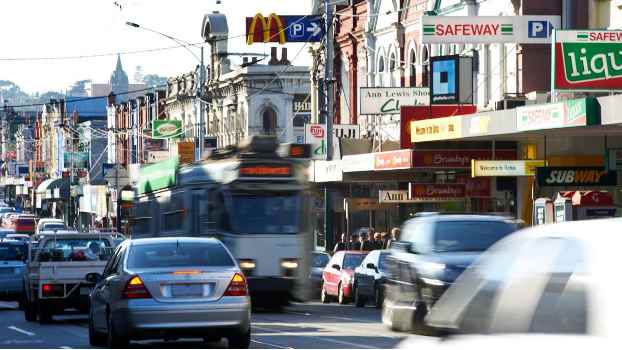
With more delivery trucks making more trips, there is an additional burden[10] on roads with increased travel times, delays, reduced average speed and more carbon emissions. Extra packaging is needed[11] and recycling is not guaranteed – contributing to landfill problems.
What about the future?
Pick-and-collect services that leave the “last kilometre” to you allow businesses to avoid the complexity, costs and risks associated with rapid home delivery services.
It’s a wise choice for Coles. As an emerging sector, competition is fierce and margins are slim for fast delivery services. Even during COVID, when food delivery peaked, companies such as Deliveroo could not make a profit[12]. The Albanese government’s promise to improve conditions for gig workers will inevitably impact costs while resetting the rules.
Read more: Deliveroo's exit from Australia shows why gig workers need more protection[13]
But what happens in the future is anyone’s guess. Where there is demand, a will to provide emerges. Drones[14] may come massively into play. Train stations and community centres may become convenient places to pick up parcels and groceries. Since 2015, Amazon has delivered to your car trunk[15] wherever you are parked in the United States.
Anything short of food magically appearing on your table is on the cards. The one thing that will not change is that consumers will continue to look for convenience and speed.
References
- ^ less than 60 minutes (www.afr.com)
- ^ convenience and speed (www.retailcustomerexperience.com)
- ^ omnichannel (hbr.org)
- ^ hi-tech fridge (www.theverge.com)
- ^ most expensive (www.forbes.com)
- ^ cost to deliver (www.insiderintelligence.com)
- ^ can be a hassle (www.choice.com.au)
- ^ gruelling conditions (www.theguardian.com)
- ^ 'A weird dinging sound that everyone dreads': what rapid deliveries mean for supermarket workers (theconversation.com)
- ^ additional burden (www.tandfonline.com)
- ^ packaging is needed (whiplash.com)
- ^ could not make a profit (www.businessleader.co.uk)
- ^ Deliveroo's exit from Australia shows why gig workers need more protection (theconversation.com)
- ^ Drones (www.cnbc.com)
- ^ delivered to your car trunk (www.usatoday.com)
Authors: Flavio Macau, Associate Dean - School of Business and Law, Edith Cowan University