Google AI

Weekend Times


The Times

Business News

a case study in what not to do

  • Written by: Libby (Elizabeth) Sander, MBA Director & Assistant Professor of Organisational Behaviour, Bond Business School, Bond University
a case study in what not to do

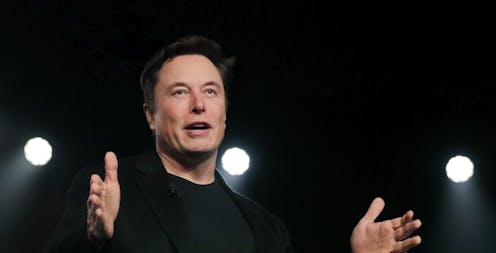
As a case study in how to implement organisational change, Elon Musk’s actions at Twitter will go down as the gold standard in what not to do.

Among other things, the evidence shows[1] successful organisational change requires: a clear, compelling vision that is communicated effectively; employee participation; and fairness in the way change is implemented. Trust in leaders is also crucial[2].

Musk, the world’s richest man, appears in a hurry to make Twitter into a money-spinner. But it takes time to understand the requirements for successful organisational change. Two in three[3] such efforts fail, resulting in significant costs, a stressed workforce[4] and loss of key talent.

Change management never quite goes to plan. It’s hard to figure out whether Musk even has a plan at all.

Musk’s ‘extremely hardcore’ style

Since taking over Twitter on October 27, Musk has stopped employees working from home, cancelled employee lunches, and laid off[5] about 3,700 employees – roughly half of Twitter’s workforce. Many realised they had been sacked when they could no longer access their laptops[6].

Just days later it emerged[7] that Musk had a team of snoopers comb through employees’ private messages on Slack, firing those[8] who had criticised him.

Then, on Wednesday last week, Musk sent an ultimatum to staff to pledge commitment to a new “extremely hardcore” Twitter that “will mean working long hours at a high intensity”. Employees had until 5pm the next day to accept, or take a severance package.

About 500 staff reportedly wrote farewell messages[9].

Tweet from Twitter employee Leah Culver:
Twitter, CC BY[10] Musk appears not to have anticipated this reaction. As the “hardcore” deadline approached, he started bringing key staff into meetings, trying to convince them to stay. He also walked back his working-from-home ban, emailing staff[11] that “all that is required for approval is that your manager takes responsibility for ensuring that you are making an excellent contribution”. It was unsuccessful. So many employees decided to leave that on Friday Twitter locked all staff[12] out of its office until Monday amid confusion as to who actually still worked there and should have access. Twitter has lost more than half its workforce in less than a month.
Twitter has lost more than half its workforce in less than a month. Jeff Chiu/AP

Layoffs and restructuring are common in organisational change. But the way they are managed has significant effects[13] on those who are leaving, as well as those who remain. If you want employees to be committed and to respond to a crisis, telling them they are lazy and threatening them won’t help.

Read more: Thinking of breaking up with Twitter? Here’s the right way to do it[14]

Choice matters

But what about SpaceX and Tesla – the companies on which Musk has built his fame and fortune? Doesn’t their success prove he is a good leader?

Not so fast. There is a big difference between a mission-driven company like SpaceX and a platform like Twitter.

When there is a common mission to achieve something extraordinary or which hasn’t been done before, employees[15] will often willingly work extremely long hours in difficult situations.

They will choose to go above and beyond and work long hours if they feel aligned with the organisation’s purpose or that their work matters. But the key point here is that they choose.

As one Twitter employee[16] tweeted after Musk’s “hardcore” email:

I didn’t want to work for someone who threatened us over email multiple times about only ‘exceptional tweeps should work here’ when I was already working 60-70 hours weekly.

Musk ignores the fundamentals

Both Tesla and SpaceX have many unhappy employees[17], with lawsuits filed over working conditions and Musk’s management style.

He has been commended for his thinking[18] on iterative design and solving engineering problems. Challenging old models that may no longer be useful is important. But the fundamentals[19] of leadership and organisational change are still essential – and on these, Musk falls woefully short.

Read more: What Elon Musk's destruction of Twitter tells us about the future of social media[20]

While his employees – real people who aren’t billionaires and who have rent or mortgages to pay – were grappling with what being “hardcore” even means, and how that might impact their ability to have a life outside work, Musk was tweeting about his poll on whether former US president Donald Trump should be allowed back on the platform.

Then, after Trump declined to return, Musk tweeted the following:

The idea of any other chief executive sending such a message on social media almost defies belief. Read more: Twitter and Elon Musk: why free speech absolutism threatens human rights[21] Some have suggested this whole debacle is an ego trip for Musk – a theory lent credence by his attempt to get out of the deal[22]. His actions pose a significant risk to the business even if there are still enough employees around to keep it working. Twitter’s former head of trust and safety, Yoel Roth, who resigned on November 10, wrote last week[23]: Almost immediately upon the acquisition’s close, a wave of racist and antisemitic trolling emerged on Twitter. Wary marketers, including those at General Mills, Audi and Pfizer, slowed down or paused ad spending on the platform, kicking off a crisis within the company to protect precious ad revenue. But even more powerful than the advertisers, Roth noted, are the digital storefronts of Apple and Google: Failure to adhere to Apple’s and Google’s guidelines would be catastrophic, risking Twitter’s expulsion from their app stores and making it more difficult for billions of potential users to get Twitter’s services. Organisations are complex, interdependent systems, underpinned by a web of behavioural processes. Creating successful change[24] requires aligning individual, work group and organisational goals. Even if the little blue bird is still flying for now, the people-led systems that keep it aloft are under significant threat. References^ the evidence shows (journals.aom.org)^ also crucial (journals.aom.org)^ Two in three (journals.aom.org)^ stressed workforce (pubsonline.informs.org)^ laid off (www.nytimes.com)^ access their laptops (www.theguardian.com)^ emerged (www.nytimes.com)^ firing those (www.nytimes.com)^ wrote farewell messages (www.reuters.com)^ CC BY (creativecommons.org)^ emailing staff (www.bloomberg.com)^ locked all staff (www.bloomberg.com)^ effects (psycnet.apa.org)^ Thinking of breaking up with Twitter? Here’s the right way to do it (theconversation.com)^ employees (www.sciencedirect.com)^ Twitter employee (www.bbc.com)^ many unhappy employees (muse.jhu.edu)^ thinking (modelthinkers.com)^ fundamentals (journals.aom.org)^ What Elon Musk's destruction of Twitter tells us about the future of social media (theconversation.com)^ Twitter and Elon Musk: why free speech absolutism threatens human rights (theconversation.com)^ get out of the deal (edition.cnn.com)^ wrote last week (www.nytimes.com)^ successful change (journals.aom.org)Authors: Libby (Elizabeth) Sander, MBA Director & Assistant Professor of Organisational Behaviour, Bond Business School, Bond University

Read more https://theconversation.com/elon-musks-hardcore-management-style-a-case-study-in-what-not-to-do-194999

The Weekend Times Magazine

Do we really want our kids drinking alcohol — when we’re told no amount is safe?

For generations, alcohol has occupied a strange, almost sacred place in Australian culture. It marks celebrations, lubricates social gatherings, and — whether we admit it or not — often serves...

Who Can Install A Private Power Pole?

Private power poles provide property owners with the freedom to choose where electricity will enter the building. It also offers protection from hazards associated with being directly connected to the...

Australia’s top economists oppose the next increases in compulsory super: new poll

The five consecutive consecutive hikes in compulsory super contributions due to start next July should be deferred or abandoned in the view of the overwhelming majority of the leading Australian...

When AEC IT breaks, It Rarely Looks Like IT

AEC businesses rarely lose time to one dramatic outage. What hurts more are the small, repeat delays that show up right when pressure is highest. The drawing set stalls, the...

oOh!media puts Neon up in lights

oOh!media has transformed its high-impact Panorama sites across the country for a campaign to mark the merger of Neon and Lightbox under the Neon brand. Sky’s ‘Get it on Neon’ campaign...

Property app Instarent

Property self-management soars during COVID lockdown The innovative PropTech app, Instarent, has seen exponential growth during the COVID -19 lockdown, reporting a 400 per cent increase in users during...

Republicans have used a ‘law and order’ message to win elections before. This is why Trump could do it again

In 1991, Donald Trump’s mother, Mary, was mugged on a New York street. As Trump’s niece recounts in her new book, the young assailant slammed Mary’s head into her Rolls...

Could You Furnish and Equip a Whole House with IKEA Products?

IKEA has long been known as the global giant of affordable, ready-to-assemble furniture. From minimalist Scandinavian sofas to clever kitchen gadgets, the Swedish retailer has built its reputation on making...

Swimming with whales: you must know the risks and when it’s best to keep your distance

Three people were injured last month in separate humpback whale encounters off the Western Australia coast. The incidents happened during snorkelling tours on Ningaloo Reef when swimmers came too close to...