Cheaper gas and electricity prices are within Australia's grasp – here's what to do
- Written by: Rod Sims, Professor in the practice of public policy and antitrust, Crawford School of Public Policy, Australian National University

Virtually every country in the world is facing a crisis in energy costs, yet while other countries can’t do much about it, Australia can.
Australia could get its east coast gas producers to supply the domestic gas market for less than A$10 a gigajoule. Earlier this year, prices were more than $40 a gigajoule, and now sit at $25-30 a gigajoule.
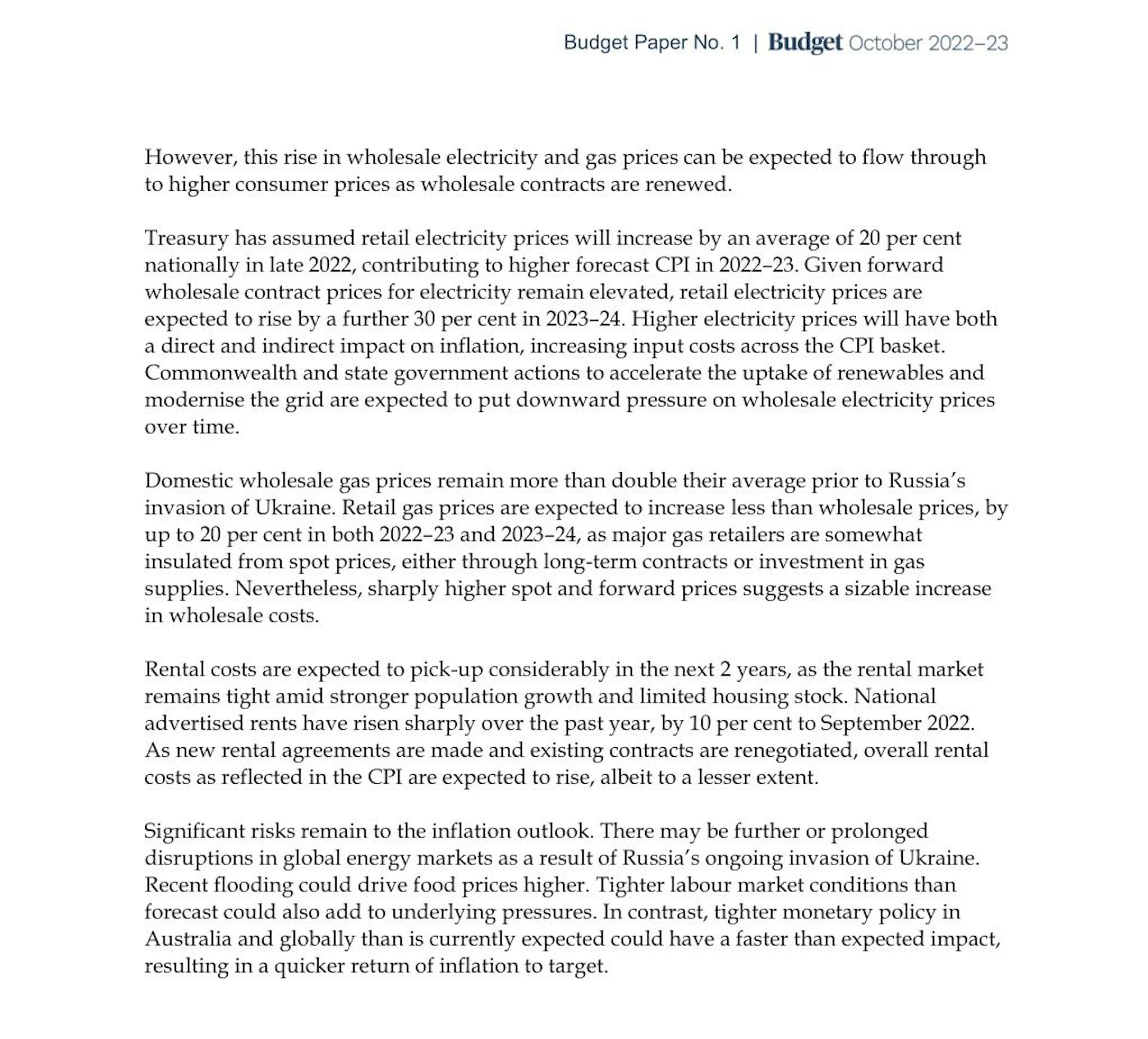
Tuesday’s budget factored in retail electricity price rises of more than 50%[1] over two years. The increases in retail gas prices exceeded 40%.
Outlining the budget on Tuesday, Treasurer Jim Chalmers said any responsible government facing these kinds of price hikes needed to “consider a broader suite of regulatory interventions[2]” than in the past.
Chalmers had “more work to do” and would work with the states.
Here is the key step I think should be taken.
To restrain electricity prices, cut gas prices
The quickest way to get electricity prices down is to significantly lower the cost of gas. Gas generators come online after cheaper forms of generation have already been pressed into service, and so help set the final price charged.
Getting gas prices below $10 a gigajoule would also help households that are facing crippling gas bills, as well as industries that rely on sensibly priced energy for their existence including Australia’s glass, paper and fertiliser industries.
Once those industries close, they are unlikely to return.
Here’s what’s been done so far.
The Turnbull, Morrison and recently the Albanese governments have each reached agreements with the three liquid natural gas producers operating out of Gladstone in Queensland that together control around 90% of east coast reserves.
‘Sufficient supply’ isn’t affordable supply
The agreements require the supply of sufficient gas to meet the needs of east coast gas consumers.
For a while they worked to reduce then-high domestic prices to sensible levels, because international prices were low. But now international prices have climbed to multiples of usual levels, agreements to supply without specific reference to prices are no longer enough.
An agreement to supply “sufficient” quantities of gas at $25-40 per gigajoule is an agreement to not supply much. After industries close, supply will be “sufficient” for the remaining users who can afford it, but it won’t be what we want.
Read more: Politics with Michelle Grattan: Rod Sims on the gas price crisis[3]
We need to get the east coast liquefied natural gas (LNG) producers to supply sufficient gas to the east coast at prices below $10 a gigajoule. They would continue to make a profit at those prices, albeit much less than otherwise.
As it happens, the Commonwealth has the power to get such commitments, because it has the power to stop exports. That power gives it complete leverage.
We need to be clear on two points.
First, there is no suggestion here that the LNG producers’ long-term contracts are at risk. Asian buyers need not be concerned. All three LNG projects were underwritten by long-term contracts at fixed prices.
Read more: Grattan on Friday: We must find a way to get gas prices down, but how?[4]
What we are talking about is the gas the three producers have available beyond their need to service these long contracts. This gas can either be exported to the spot, or short-term, market at very high prices or sold domestically.
They should be told they can only export gas to the currently lucrative international spot market if they sell sufficient gas domestically to get prices clearly below $10 a gigajoule.
Other exporters reserve gas
Second, what I am suggesting is akin to what all other gas exporting countries do.
Australia has by far the highest domestic gas prices of any gas exporting country. No other country would tolerate its gas being exported while its domestic market is paying the same high prices as international customers.
The gas companies need to come to the party, either to earn their “licence to operate” or to avoid the threat of export controls.
If they know the threat of export controls is real, I believe they will do what’s necessary without the need to actually control exports.
A final point: there can be no argument about “sovereign risk[5]”, the idea that foreign companies will no longer do business with Australia if it changes the rules.
The long-term gas exporting contracts would remain intact. Australia would simply be aligning itself with all other gas exporting nations – and, by the way, with Western Australia[6], which has long looked after its residents and businesses by reserving gas to ensure reasonable domestic prices.
References
- ^ more than 50% (images.theconversation.com)
- ^ broader suite of regulatory interventions (ministers.treasury.gov.au)
- ^ Politics with Michelle Grattan: Rod Sims on the gas price crisis (theconversation.com)
- ^ Grattan on Friday: We must find a way to get gas prices down, but how? (theconversation.com)
- ^ sovereign risk (sersolutions.com.au)
- ^ Western Australia (www.wa.gov.au)
Authors: Rod Sims, Professor in the practice of public policy and antitrust, Crawford School of Public Policy, Australian National University