WeekendTimes.com.au


Men's Weekly

.

What Russia's war means for Australian petrol prices: $2.10 a litre

  • Written by Vlado Vivoda, Senior Lecturer in Strategic Studies (Australian War College), Deakin University
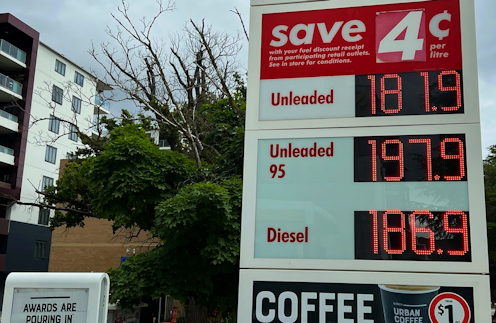
What Russia's war means for Australian petrol prices: $2.10 a litre

Global crude oil prices have already reached their highest levels since 2014 in response to Russia’s military incursion into Ukraine.

With Russia being the world’s second-largest exporter of crude oil and refined petrol, as well the world’s largest exporter of natural gas, we can expect prices to go even higher as the conflict deepens.

Read more: How Russia’s recognition of breakaway parts of Ukraine breached international law – and set the stage for invasion[1]

Skittish global energy markets are now factoring in disruptions to Russia’s supply through Western sanctions as well as Russia cutting off to supplies to Europe, its main market[2] for both oil and gas.

Australians will feel these market anxieties too, with changes in retail prices largely determined by international price benchmarks for refined petrol.

It typically takes more than a week[3] for changes in international prices to flow through to retail prices in Australian cities, and longer in regional areas.

But based on what is happening internationally we can expect petrol prices in Australia to soon reach an average of $2.10 a litre.

How are petrol prices set?

Australia meets its petrol needs through either refining crude oil[4] locally or (increasingly) importing refined petrol.

Two decades ago, eight local refineries were able to supply most of Australia’s petrol demand. Now there are just two[5], producing less than 10% of Australia’s petrol needs. This means 90% of refined petrol is imported – principally from Korea, Singapore, Japan, Malaysia and China.

As in other importing countries, the price Australians pay at the petrol pump therefore has three main components:

  • the international price of refined petrol
  • government taxes
  • other transportation, marketing and retail costs, including a profit margin.

The Australian Competition & Consumer Commission, which closely scrutinises[6] petrol prices, says the international price is the main determinant of price changes.

The following chart shows the relationship between average retail prices in Australian cities and the benchmark price for 95-octane unleaded petroleum in Singapore, the largest oil trading exchange in our region. (The fuel is called Singapore Mogas 95 – “mogas” meaning motor gasoline.)

Monthly average retail petrol prices in the 5 largest cities and Mogas 95 prices in real terms: October 2001 to November 2021
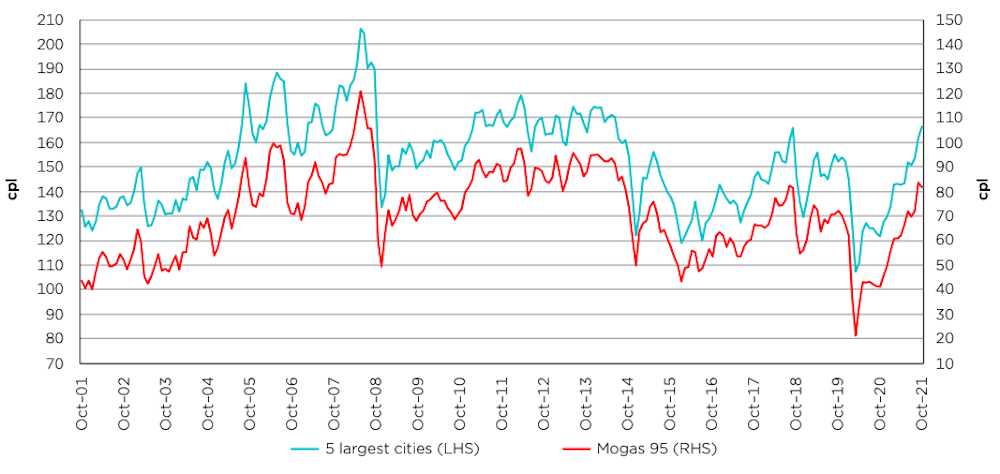
Movements in monthly average retail petrol prices in the 5 largest cities and Mogas 95 prices in Australian cents per litre
ACCC[7] Taxes are the second-biggest component. These consist of an excise and the goods and services tax. GST is 10% of the retail price (or 1/11 of the total price paid). As of February 2022[8], the excise was fixed at 44.2 cents a litre, so it doesn’t change with the retail price. Assuming a petrol price of $1.90/litre, taxes would comprise about a third of the cost. The tax Australians pay on petrol is among the lowest[9] in the OECD group of advanced economies. The remainder of the retail price includes supply chain costs and profit margins for refiners, wholesalers, distributors and retailers. The amount motorists pay as profit is less than 10 cents a litre. Global ripples Australia may not import crude oil or petrol from Russia. But the world oil market behaves as one great pool, where changes in market conditions in one area quickly affect other geographic areas. More than half of Russia’s oil exports and most of its natural gas exports go to Europe. Russia provides about 30% of Europe’s crude oil and refined petrol imports and 40% of it natural gas imports. In response to Russia’s actions against Ukraine, Germany has already moved to halt[10] a new gas pipeline being laid in the Baltic Sea between Russia and Germany. Market watchers worry the Russian gas that flows across Ukraine to Europe could also be shut off. This would lead to severe shortages in some countries and drive up the price of gas as well as other fuels, such as oil. There is also considerable pressure to ensure economic sanctions imposed on Russia are not undermined by Moscow continuing to profit from its oil and gas trade. Analysts from the Brookings Institution[11], for example, have argued for sanctions on Russian energy exports. Read more: Why Vladimir Putin is so confident in his Ukraine strategy – he has a trump card in China[12] What we can expect Two weeks ago, when the global benchmark oil price was just above US$90 a barrel, JP Morgan predicted the price would reach US$125 a barrel[13]. This week Goldman Sachs analysts tipped that “outright conflict” coupled with “punitive sanctions” will increase oil prices by 13%[14]. The five-city average Australian petrol price was near A$1.70[15] per litre when the benchhmark oil price was US$90 per barrel. This suggests an increase to US$125 a barrel would lift average Australian city prices to as much as $2.10 per litre. References^ How Russia’s recognition of breakaway parts of Ukraine breached international law – and set the stage for invasion (theconversation.com)^ main market (www.eia.gov)^ more than a week (www.accc.gov.au)^ crude oil (theconversation.com)^ are just two (www.abc.net.au)^ closely scrutinises (www.accc.gov.au)^ ACCC (www.accc.gov.au)^ As of February 2022 (www.accc.gov.au)^ the lowest (www.aip.com.au)^ halt (www.latimes.com)^ Brookings Institution (www.brookings.edu)^ Why Vladimir Putin is so confident in his Ukraine strategy – he has a trump card in China (theconversation.com)^ US$125 a barrel (www.cnbc.com)^ 13% (fortune.com)^ A$1.70 (www.aip.com.au)Authors: Vlado Vivoda, Senior Lecturer in Strategic Studies (Australian War College), Deakin University

Read more https://theconversation.com/what-russias-war-means-for-australian-petrol-prices-2-10-a-litre-177719


The Weekend Times Magazine

Swimming with whales: you must know the risks and when it’s best to keep your distance

Three people were injured last month in separate humpback whale encounters off the Western Australia coast. The incidents happened during snorkelling tours on Ningaloo Reef when swimmers came too close to...

The Importance of Commercial Fencing: Enhancing Security and Aesthetics

In the world of business, the first impression often sets the tone for what’s to come. When it comes to properties, one of the first things people notice is the...

Diamonds & Why They Are The Popular Choice For Any Occasion Here In Australia

Diamonds have been an incredibly popular gem for many years now and they continue to be so even now in 2024. It seems like the perfect jewel to choose for...

Making these five clever moving mistakes will cost you both money and time

Moving to a new location can be a thrilling adventure, but it can also be costly and stressful. Because so much packing, planning, and logistics are involved, it is easy...

The Best Camera Smartphones for 2021

Everyone is a photographer these days, and it is no surprise, given that the top camera phones on the market are capable of fighting head-on with luxury compact cameras and...

What To Look For In a Robot Pool Cleaner

Robotic pool cleaners are a stunning feat of modern technology, allowing you to keep your pools clean with minimal effort on your part. Pool cleaning and maintenance has always remained...

Dark Mode Emails: How to Design for Visibility and Impact

Image by DC Studio on Freepik With dark mode rolling out on various devices and email service providers, the need for emails to render correctly and legibly is vital. Dark mode...

Heating and Cooling Services That Keep Your Home Comfortable Year-Round

Australia’s climate is unpredictable. Sweltering summers and chilly winters can make indoor life uncomfortable without the right temperature control. That’s why professional heating and cooling services are no longer a luxury...

Camplify Research Reveals 2020 is the Year of the Local Road Trip

Camplify has today released a research report highlighting that 2020 is no doubt the year of the local road trip. With COVID-19 restricting international travel, Australians have hit the roads...