NZ's second 'Well-being Budget' must deliver for the families that sacrificed most during the pandemic
- Written by: Kate C. Prickett, Director of the Roy McKenzie Centre for the Study of Families and Children, Te Herenga Waka — Victoria University of Wellington
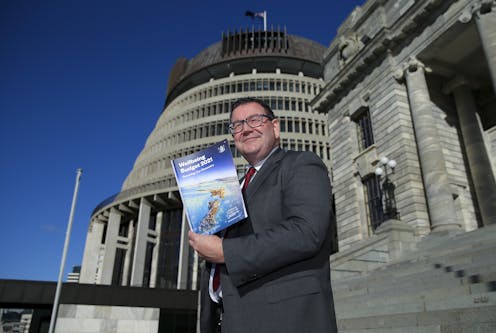
Finance Minister Grant Robertson’s promise of a “recovery and well-being budget[1]” is an apt recognition of the current social and economic reality.
Although life feels relatively normal in New Zealand compared with the havoc COVID-19 continues to wreak internationally, the cost of our policy response and the impact of the pandemic recession haven’t been shared equally.
While detail is still scarce, Robertson has made it clear[2] child well-being will be a key focus of this year’s budget. Indeed, it will be a priority for the new Implementation Unit[3] being established to oversee government-wide delivery of key initiatives.
The emphasis on children and their families is well placed: child poverty levels barely budged in the year prior to the pandemic. Moreover, the first Child and Youth Well-being Strategy Annual Report[4], released last week, highlighted[5] the lack of well-being experienced by a large group of children.
And we know the pandemic hasn’t been kind to families. Research[6] we conducted last year showed families with children – particularly low-income families[7] – were more likely to have lost jobs or income during the nationwide lockdown in March-April 2020 compared with homes without children.
Majority of low-income working families yet to recover
Following our lockdown data collection, we went back to our survey respondents in March this year to see how people were doing a year on from lockdown.
What we found was predictable, but no less striking. Only 45% of those low-income families with children (pre-pandemic household incomes of NZ$50,000 or less per year) with at least one parent working prior to lockdown had those same parents still employed and bringing home the same or greater weekly pay one year later.
Read more: Why NZ’s public sector wage freeze ignores the lessons of history[8]
More than 20% of those families had a parent who was employed pre-pandemic but looking for a job in March 2021, while 8% percent had a working parent drop out of the labour market altogether.
A further 26% were still working but bringing home less pay — either from a wage cut, taking on a lower-paid job, or working fewer hours.
While income loss was still prevalent across the income spectrum, higher-income families were far more likely to report all the working parents in the home had either maintained or increased their income. They were also far less likely to have previously employed parents still looking for work.
Mothers hit hardest
Although New Zealand’s pandemic policy response likely saved working mothers from the more severe impacts on women’s employment seen internationally[9], the recovery has been slower for Kiwi mothers.
Of those in our sample who were employed prior to the lockdown, only 65% of all mothers, and 60% of single mothers, reported stable or increased weekly take-home pay a year later. This compares to 71% of fathers.
Read more: NZ Budget 2021: we need the arts to live, but artists need to earn a living[10]
Close to 20% of single mothers who were working pre-pandemic reported being unemployed and searching for a job one year on (compared to 7.5% of mothers and 4.3% of fathers generally). And 10% of pre-pandemic employed mothers with partners said they were no longer working or looking for work at all.
The fact no single mothers who were employed pre-pandemic were classified as “not in the labour force” by March 2021 is probably related to our survey’s smaller sample size. But the finding is indicative of the precarious position single mothers hold: not working is not an option.
Economic recovery and well-being
Economic recovery and the population’s well-being go hand in hand: economic and financial precariousness and stress affect our health and well-being.
Parents in our sample who were unemployed a year on from lockdown were two to four times more likely to report feeling depressed throughout the day and much less likely to report positive feelings of enjoyment and happiness.
Unsurprisingly, those parents who were employed in March 2021, and had similar or better incomes, were the least likely to report feeling depressed or worried.
Recovery should recognise those who sacrificed most
Budget 2021 is a chance to recognise and rectify the unequal burden the COVID-19 pandemic has placed on families with children, and low-income families specifically.
Policies and programs that redistribute money to low-income families and increase their bottom line will be essential. This should include indexing Working For Families[11] payments to wage growth and disentangling tax credits from work and benefits. That way, all low-income families will receive the financial support they need.
Also essential will be combating those expenses – notably housing and childcare – that eat away at family incomes and make New Zealand one of the least affordable[12] places to live.
Read more: If New Zealand can radically reform its health system, why not do the same for welfare?[13]
Policies that support working mothers, such as diversifying “shovel ready” state-supported jobs and further shoring up the early childcare sector[14], are essential for helping women back to work.
And while low-income working families have experienced a slower economic recovery, it’s worse still for those unable to work and relying on welfare. They are unlikely to have a fair shot at joining in the recovery.
Indeed, the delay in enacting the expert recommendations[15] for welfare reform prolongs devastating hardship for many of our children.
When New Zealand went into lockdown the same rules applied to everyone. But we knew the economic shock wouldn’t be distributed equally. Here’s hoping Budget 2021 delivers a recovery that recognises families and whānau who’ve sacrificed the most.
References
- ^ recovery and well-being budget (www.rnz.co.nz)
- ^ made it clear (www.newsroom.co.nz)
- ^ Implementation Unit (www.theguardian.com)
- ^ Child and Youth Well-being Strategy Annual Report (childyouthwellbeing.govt.nz)
- ^ highlighted (www.stuff.co.nz)
- ^ Research (www.wgtn.ac.nz)
- ^ particularly low-income families (theconversation.com)
- ^ Why NZ’s public sector wage freeze ignores the lessons of history (theconversation.com)
- ^ seen internationally (www.brookings.edu)
- ^ NZ Budget 2021: we need the arts to live, but artists need to earn a living (theconversation.com)
- ^ Working For Families (www.ird.govt.nz)
- ^ least affordable (www.bloomberg.com)
- ^ If New Zealand can radically reform its health system, why not do the same for welfare? (theconversation.com)
- ^ early childcare sector (www.education.govt.nz)
- ^ expert recommendations (www.weag.govt.nz)
Authors: Kate C. Prickett, Director of the Roy McKenzie Centre for the Study of Families and Children, Te Herenga Waka — Victoria University of Wellington