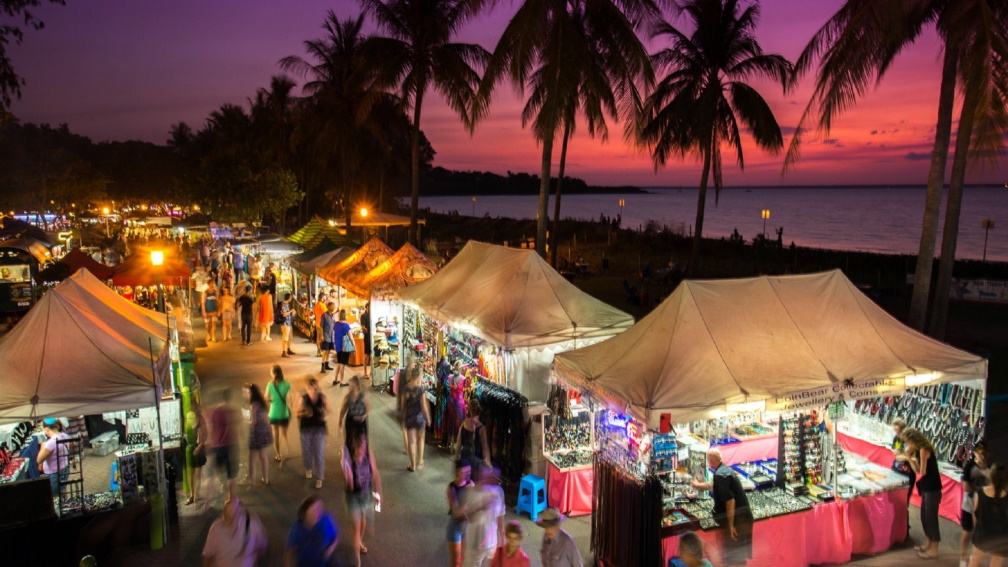
Pacific tourism is desperate for a vaccine and travel freedoms, but the industry must learn from this crisis
- Written by: Apisalome Movono, Senior Lecturer in Development Studies, Massey University
News of successful COVID-19 vaccine trials[1] has raised hopes in the Pacific that the hard-hit tourism industry will begin to re-open in 2021.
Even before the vaccine announcements, there was excitement in the Cook Islands over a recent New Zealand government delegation[2] to survey the country’s borders and discuss a potential travel bubble.
Cook Islands Private Sector Taskforce chairperson Fletcher Melvin spoke for many[3] when he said:
The New Zealand officials are here, and that has been the biggest breakthrough for many, many months. We are hopeful they will get here and see we are prepared and confirm that we are COVID-free and we are ready to welcome Kiwis back to our shores.
At the same time, New Zealand Prime Minister Jacinda Ardern dampened hopes[4] of a trans-Tasman bubble before Christmas due to different tolerances for community transmission in New Zealand and Australia.
Beyond the ongoing uncertainty, though, the possibility of a Cook Islands-New Zealand bubble raises further questions about how Pacific tourism can and should be revived in general.
Culture and commerce
Our research[5] examines these questions and provides interesting insights into how Pacific peoples are re-imagining the place of tourism in their lives.
The global pandemic has effectively closed Pacific state borders to international tourists for eight months. With thousands of jobs gone and economies undermined, many people in Fiji, Vanuatu, Samoa, Cook Islands and beyond have had to make huge adjustments.
Read more: Traditional skills help people on the tourism-deprived Pacific Islands survive the pandemic[6]
In many cases, they have adapted to the lack of tourism income by drawing on their natural, cultural and spiritual resources. From this we can appreciate the strengths of Pacific cultures and how they might adapt to future uncertainties, including those associated with climate change.
Those affected by the pandemic now report wanting more time for family (including caring for the vulnerable), planting food and fishing, sharing surplus harvests, attending to cultural and religious obligations, relearning traditional skills and strengthening food systems.
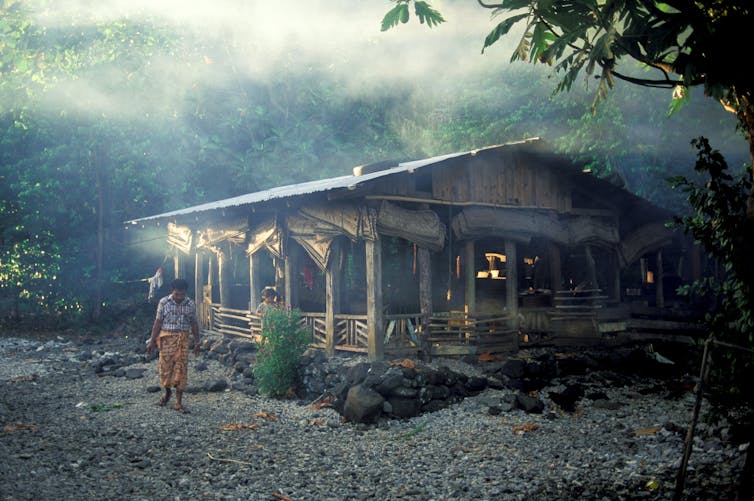 Beyond the resort (Upolu, Samoa): Pacific communities have been resilient and adaptable.
GettyImages
Beyond the resort (Upolu, Samoa): Pacific communities have been resilient and adaptable.
GettyImages
Old ways should change
The crisis, while difficult, has allowed people to consider a more regenerative approach to tourism based on well-being and better work-life balance. As one Fijian elder put it:
Tourism must complement our way of life, rather than taking over.
The “old” tourism model is now seen by some as compromising their family’s well-being. Working long hours while commuting daily from a village to a hotel, or spending six weeks away from home at an island resort before getting one week off, is not ideal for parents of young children.
Many are on casual contracts and earn just above the minimum wage: FJ$2.68 (NZ$1.84) per hour in Fiji and NZ$7.60 per hour in Cook Islands.
Most tourism employees want tourism to return, but they hope for better terms, wages and working conditions. While a few called for caps on numbers in heavily touristed areas, others urged governments to open up new locations and promote off-season tourism.
People would also like to see greater local ownership and control of tourism enterprises, including joint ventures, building on existing strengths such as cultural or tropical garden tours and agri-tourism.
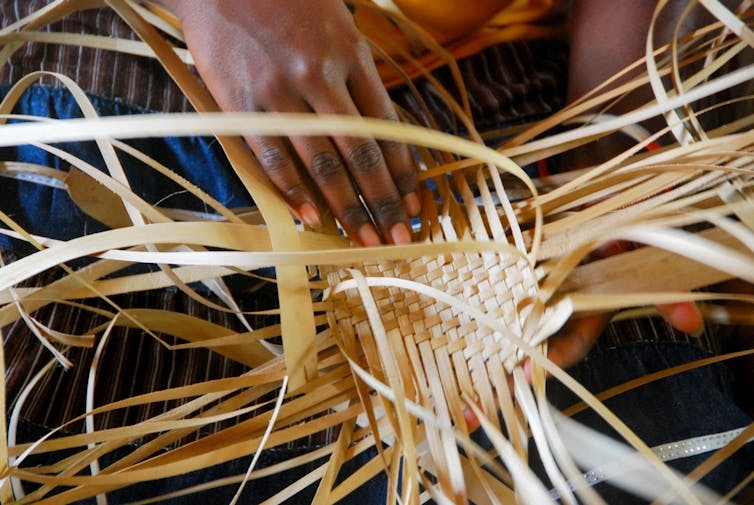 More local control of tourism ventures is called for, building on traditional skills and strengths.
Pedram Pirnia, Author provided
More local control of tourism ventures is called for, building on traditional skills and strengths.
Pedram Pirnia, Author provided
Life beyond tourism
Despite 73% of those surveyed[7] living in households that experienced a major decline in income due to COVID-19, 38% were unsure about staying in tourism, or would prefer to find jobs in other areas.
Read more: Sun, sand and uncertainty: the promise and peril of a Pacific tourism bubble[8]
Those interviewed sought more opportunities to pursue higher education, training in IT and trades, and wanted greater government support for creative industries.
This need for economic diversification is acknowledged across the Pacific region. But there has been little progress or policy development by governments to diversify economies in meaningful ways during the pandemic.
Perhaps understandably, given the severe economic pressures, many governments have focused on returning to the way things were. Fiji has enthusiastically urged tourists to return, opening “blue lanes[9]” for yachties and a “bula bubble” for wealthy travellers[10].
Towards a new model
In this context the pandemic is being seen as an interruption, albeit welcome in some ways, to business as usual. As one Cook Islands elder expressed it:
This time to me is about restoring and renewing things, relationships, and giving our environment time to restore and breathe again before it gets busy, because I’m optimistic we will come out of this. People want to travel.
However, the pandemic should also provide an opportunity for Pacific countries to reset and chart a new way forward. When travel bubbles do open, they should do so in a way that benefits Pacific peoples, complements their way of life, and builds resilience in the process.
Read more: Why NZ's tough coronavirus travel rules are crucial to protecting lives at home and across the Pacific[11]
If and when Pacific travel is allowed again, the clear calls for culture and well-being to play a more central role in the lives of communities must be heard. One woman, a former resort employee in Fiji, put it well:
This break has given us a new breath of life. We have since analysed and pondered on what are the most important things in life apart from money. We have strengthened our relationships with friends and family, worked together, laughed and enjoyed each other’s company. We have strengthened our spiritual life and have never felt better after moving back to the village.
References
- ^ vaccine trials (www.politico.eu)
- ^ delegation (www.theguardian.com)
- ^ spoke for many (www.newshub.co.nz)
- ^ dampened hopes (www.theguardian.com)
- ^ research (www.reimaginingsouthpacifictourism.com)
- ^ Traditional skills help people on the tourism-deprived Pacific Islands survive the pandemic (theconversation.com)
- ^ 73% of those surveyed (hdl.handle.net)
- ^ Sun, sand and uncertainty: the promise and peril of a Pacific tourism bubble (theconversation.com)
- ^ blue lanes (www.rnz.co.nz)
- ^ wealthy travellers (edition.cnn.com)
- ^ Why NZ's tough coronavirus travel rules are crucial to protecting lives at home and across the Pacific (theconversation.com)
Authors: Apisalome Movono, Senior Lecturer in Development Studies, Massey University