Five reasons why Victoria’s new proactive homelessness plan is worth trying
- Written by: Weekend Times
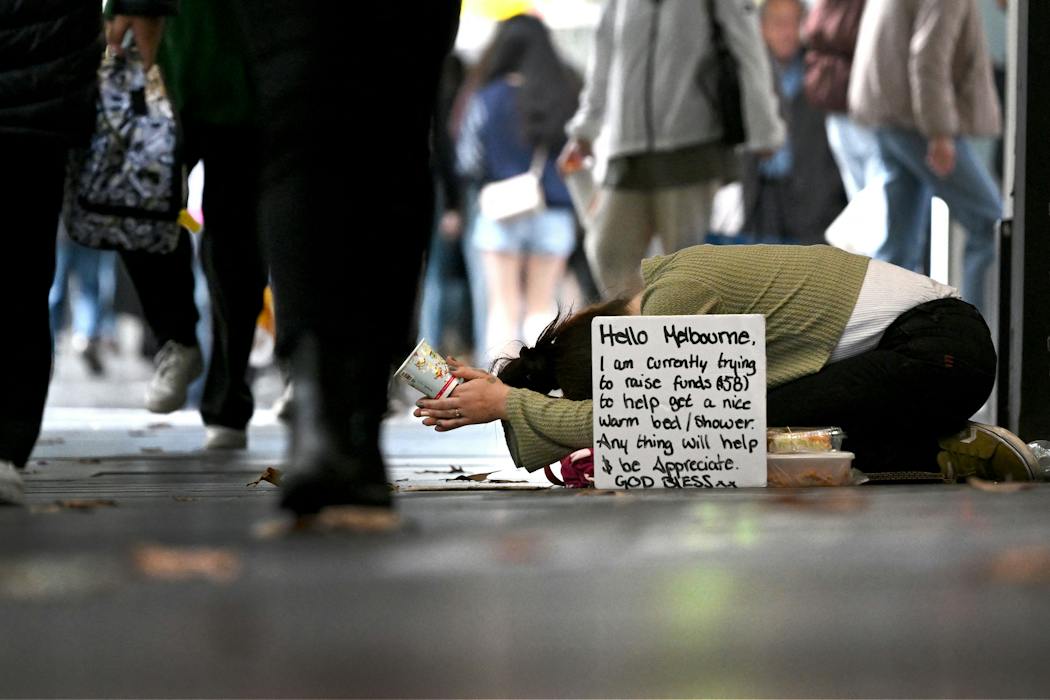
We should be pleased the Victorian government has committed to a plan that aims to reduce the extent of rough sleeping in the state.
In a
country where homelessness continues to be an escalating issue, it is encouraging to see a state government recognise that ending rough sleeping is possible.
There are five reasons to be optimistic about this plan – although it’s unlikely to be a panacea for Victoria’s homelessness issues.
Victoria’s plan, and why it’s needed
According to the Australian Institute of Health and Welfare, more Victorians seek specialist homeless services than people in any other state or territory in Australia.
The crux of Victoria’s newly announced $27.8 million plan is assertive street outreach linked to social housing.
This means support workers will be able to engage with rough sleepers directly rather than waiting for them to request help via support services.
The devil will be in the detail, but the expectation is social housing will also be made available to those who need it, and tenants can then also choose to access health and psychosocial support services.
This is crucial, because Australia’s policy and funding landscape means it is difficult to make available the integrated and ongoing housing and support services some tenants need. Research shows when tenants who exit rough sleeping are able to access the support services they need, they are likely to keep their housing and avoid returning to homelessness.
In its ideal form, outreach workers will go out onto the streets, identify people sleeping rough, assess their individual needs and then actively support their access into social housing.
This assertive outreach model with very close links to social housing is based on the acknowledgement there are significant barriers in the operation of mainstream systems that prevent people sleeping rough getting off the streets.
Why the plan is worth trying
There are at least five reasons for optimism.
First, the human impacts. Rough sleeping harms people through poor health, exposure to violence, shame and accelerated ageing. So any initiative to reduce rough sleeping should be applauded, as it can boost the physical and mental health of some of our most vulnerable people.
Second, there is considerable evidence that demonstrates assertive street outreach approaches linked to social, affordable or supportive housing are successful.
It is absolutely critical though that assertive outreach workers can access social housing. When there is a coherent and planned link between assertive outreach and affordable housing, it can help end people’s rough sleeping.
Third, it can make financial sense. When people sleep rough, compared with living safely with dignity in permanent supportive housing, governments and organisations respond with police, ambulances, hospitals, courts and homeless supportive services. These are not cheap.
Read more: How much does it cost to end rough sleeping? An Australian-first study may have just found out
Fourth, the presence of rough sleeping harms society. It can undermine social cohesion and the expectation that we owe each other a shared dignity and opportunity to live well together. In fact, when people sleep rough in public parks or prominent parts of neighbourhoods, others often feel anger towards the victims of unjust systems rather than toward the actual systems.
Fifth, this new Victorian plan diverges from the punitive measures we are witnessing in some parts of Australia.
Whereas the Victorian plan aims to reduce rough sleeping with housing, some parts of Australia are trying to reduce rough sleeping with move-on orders. Moving people on from public space, when there is no affordable housing, fails to address the problem and can only serve to exacerbate it by pushing people into more hidden spaces where services are inaccessible.
But, there’s a ‘but’
A word of caution to moderate our excitement. In the 17 years since the publication of the Australian government’s white paper on homelessness, plenty of jurisdictions across Australia have and still do fund assertive outreach and commit to reduce rough sleeping. Yet, homelessness is still a concern across many parts of the country.
It is worth repeating what the research continues to show: when assertive outreach workers are able to offer rough sleepers safe, secure and affordable housing, people typically accept the housing.
But assertive outreach without access to long-term housing does not work. Assertive outreach without access to housing is often just hassling people.
Ethically, we can only assertively engage with those sleeping rough and collect their data when we can use these tools to provide them access to housing.
Considering the many compelling reasons to end rough sleeping with assertive outreach approaches linked to social housing models, the most pertinent question may be: what is the moral, scientific and social justification for not doing it?
Cameron Parsell receives funding from The Australian Research Council Centre of Excellence for Children and Families over the Life Course (Ref: CE200100025) and an Industry Fellowship (Ref: IM230100850).