The UN is facing a crisis of trust and possible bankruptcy. Its new leader will have an enormous challenge
- Written by: Weekend Times
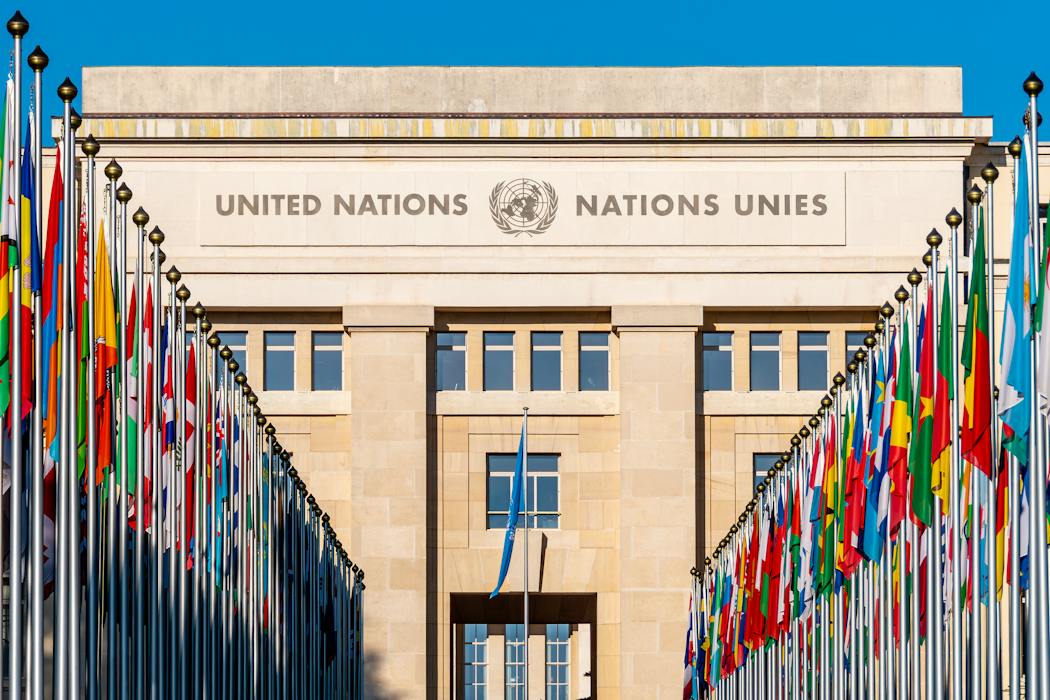
The United Nations is deep into the process of looking for its next Secretary General as Portugal’s Antonio Guterres steps down in December after a decade.
The leadership
change comes as the 81-year-old organisation faces many serious challenges. Who will step in and tackle them with the skills and courage they demand remains an open question.
There is no legislated date for UN member countries to decide on the new Secretary General; it depends on when the Security Council agrees on its preferred candidate. Ultimately, the decision has to be made before December 31.
Turbulent times at the UN
The campaign to take over from Guterres is unfolding against the background of a crisis of trust in the international system generally, and in the UN in particular.
International cooperation between some countries is in the process of unravelling. Many are turning away from international dialogue, despite cyclical conflict in hot spots in Africa and the Middle East continuing, and global threats like climate change, health pandemics and competition in newly contested areas like the Arctic, cyberspace, outer space and the oceans.
The UN reports many countries are alarmingly disrespecting international law and withdrawing from international treaties. The rules of war are being shredded by combatants with virtually no accountability in Ukraine, Gaza and elsewhere.
Beset by faltering economies, growing social welfare costs, rising military expenditures and right-wing populism, countries are defending their sovereignty against what they see as the threat of invasive multilateral bodies.
The United States has been a particularly staunch critic. According to US Secretary of State Marco Rubio: “the post-war global order is not just obsolete, it is now a weapon being used against us”. President Donald Trump said the UN’s response to global conflicts is little more than to “write a really strongly worded letter, and then never follow that letter up”.
Ukrainian President Volodymyr Zelensky would seem to agree. In 2025 he observed:
Nations can speak about their pain from stages like this but even during bloodshed, there isn’t a single international institution that can truly stop it. That’s how weak these institutions have become.
One flow-on from these developments is the UN’s funding crisis. Guterres has talked ominously of bankruptcy looming and predicted the UN would likely need to cut US$500 million from its 2026 regular budget and lose 20% of its staff.
The budget crisis has been driven partly by the US’ highly publicised cutbacks in its funding of UN bodies, traditionally the organisation’s major donor.
The US is not alone. Many states, including Germany, France and the United Kingdom, are cutting back on foreign aid as priority is accorded to defence spending.
This could have major ramifications. Australia’s Foreign Minister Penny Wong gloomily predicted the slashing of UN agency programs could lead to “shell” or “zombie” agencies, doomed to fail because they can’t deliver basic functions.
The challenges don’t end there
Against this background, some are arguing a major overhaul of the UN as we know it is overdue.
The UN was created when the world was coming out of the second world war, colonialism was rife and many countries lacked the capacity and the governance structures to go it alone.
It is a new world order now. Some of the more strident critics argue the UN needs a much more limited, less interventionist mandate.
The UN is not perfect. It is beset by serious structural problems, not least of which is the power still in the hands of five countries (the US, UK, Russia, France and China) to veto decisions of its main peace body, the Security Council. Its bureaucracy has grown exponentially over the years, with a proliferation of mandates, agencies, funds and programs.
But it is the only truly global organisation where all countries – big and wealthy, tiny and struggling – can meet and exercise a voice, with decision-making capacity more-or-less on par. There is no obvious better alternative.
It also administers diverse programs in health, water and sanitation, weather, food, the environment, cultural preservation, trade, telecommunications, atomic energy, drugs, crime and human rights and refugees.
We need the UN for all of this. And we need its advocacy and monitoring and accountability mechanisms. As Wong put it:
We do not want a dysfunctional UN that can be manipulated by those who mean to dismantle it or to take it over for their own national or often autocratic, aspirations.
Who will step up?
There are currently seven candidates formally in contention for the Secretary General position. The process is complicated and drawn out and does not preclude last-minute additions.
There is a principle of geographic rotation that alternates the position among five geographic regional blocs. This time it favours the Latin American and Caribbean bloc. There are five candidates from the Latin American region, four of whom are women (there has never been a woman Secretary General):
Maria Fernanda Espinosa, from Ecuador, a past president of the General Assembly
Ecuadorian diplomat Ivonne A-Baki
the former foreign minister of Guyana, Caroyn Rodrigues-Birkett
Rebeca Grynspan, former vice-president of Costa Rica and currently the Secretary General of UNCTAD (the UN’s Conference on Trade and Development)
the sole male candidate from the region is Rafael Grossi from Argentina, director of the International Atomic Energy Agency.
Each candidate has identified restoring trust in the multilateral system and returning peacekeeping to the forefront of the UN’s activities as priorities.
A massive challenge awaits
The Secretary General is chief administrator of an organisation with thousands of staff, many very disgruntled about recent cuts, a budget in the billions and multiple different organs and agencies as part of its structure.
She or he must also play simultaneously the roles of global mediator, defender of the rights of people around the world, and generally be chief advocate for the principles on which the UN is built: the pursuit of peace, human security and rule of law.
This is a big ask at the best of times, which today is not.
Erika has worked for the United Nations for 26 years, including for seven years as the assistant High Commissioner for Protection, holding the rank of Assistant Secretary General at the United Nations High Commissioner of Refugees (UNHCR). The High Commissioner at the time was Antonio Guterres, currently the UN Secretary General. Erika was part of his senior management team of four.