Russia’s volunteer soldiers may face tougher job prospects after returning from Ukraine: study
- Written by: Weekend Times
One line on a Russian résumé should have worked
like a medal:
Completed voluntary contract during the ‘special military operation’, 2022–2023.
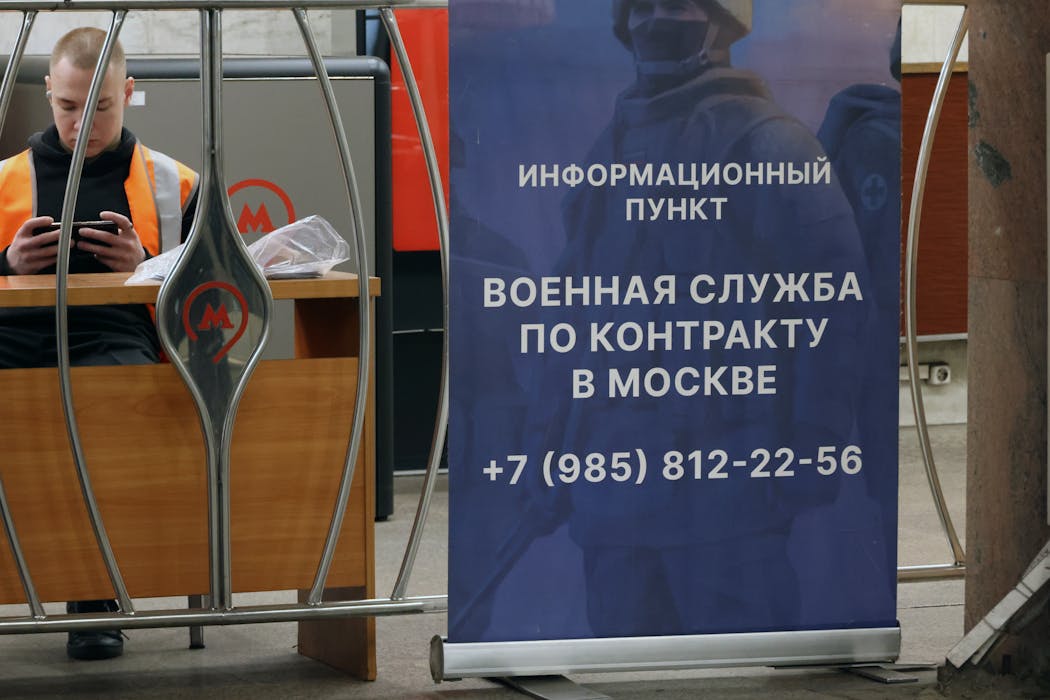
The Kremlin presents men who fought in Ukraine as patriots, heroes and even a future governing elite.
Yet when I placed that line on ordinary job applications, Russian employers became less likely to respond.
In fact, applications listing voluntary war service received roughly one-third fewer callbacks.
What I did and what I found
For my new study in the Journal of Peace Research, I applied in pairs to 60 real vacancies on Russia’s two largest online job platforms, HeadHunter and SuperJob.
I sent each of the employers who had listed these job vacancies two invented applications from men aged 25 to 35.
The applicants had matching education, work histories and experience. Both listed the rank of private and similar duties, such as logistics support or vehicle maintenance. Names and contact details were switched at random.
Only one detail changed.
One résumé listed routine compulsory military service. The other listed voluntary contract service in Russia’s war against Ukraine.
In effect, I was asking not whether military experience would help a candidate land a job, but whether choosing this particular war would carry an extra price.
Researchers use this kind of experiment to reveal unequal treatment by observing decisions, not asking opinions.
I based the templates on 150 public résumés, had three Russian recruiters check a sample, and stopped the fieldwork under rules set in advance once the evidence was strong enough.
What I found was striking. Applicants listing conscription received positive responses in 33 of 60 cases, or 55%. Those listing voluntary war service received 22, or 36.7%.
That is a gap of 18.3 percentage points. For every ten callbacks a conscript could expect, the war volunteer received about seven.
Voluntary enlistment differs from conscription
Russia’s military categories are easy to blur, but they carry different meanings. Official rhetoric gives the volunteer more prestige: he chose the campaign the state celebrates, while the conscript merely fulfilled a legal duty.
Conscription is compulsory. Russian men aged 18 to 30 are generally liable for one year of service (though many try to defer or avoid it).
Russian authorities say conscripts are not sent to fight in Ukraine, though rights groups report pressure to sign contracts, and conscripts have been killed or captured in Russia’s border regions.
Contract service is formally voluntary. Since 2022, however, Russia has recruited for the war with large signing bonuses, high pay and benefits for soldiers and families.
A third group – the 300,000 reservists mobilised in 2022 – was called up rather than volunteering. My experiment did not test that group.
There is no trustworthy public count of how many conscripts and volunteers have actually fought. The figures overlap, official definitions shift, and conscripts can be pressed to become contract soldiers.
Russia plans to conscript 261,000 men for ordinary service in 2026. Officials say 422,704 people signed military contracts in 2025, after about 450,000 in 2024, although independent analysis of state spending has produced lower estimates.
Nor can we calculate a credible casualty rate for conscripts versus volunteers because the number who served in each category is unknown.
But what we do know is grim. By July 31 2026, the BBC Russian service and Russian media outlet Mediazona had confirmed 236,000 Russian military deaths by name. Their tracking shows that, by late 2024, volunteers had become the largest category among identified Russian deaths.
The employment challenge is already visible. Independent reporting suggests at least 400,000 Russian soldiers may have returned from the front, though even the government lacks a clear count.
Russian officials reported, in 2025, only 57% of veterans who had left military service were working.
The state has started responding. It created the Defenders of the Fatherland foundation to provide medical, legal, psychological and employment support.
Its Time of Heroes program trains a small, selected group of veterans for jobs in government.
These programs make the official promise visible. Ordinary hiring tests whether that promise survives outside institutions the state controls.
Why this matters
My study cannot explain why employers reacted as they did. They gave no systematic feedback.
It’s possible some worry about trauma or adjustment to civilian workplaces. Some may fear discipline problems or reputational risk.
Some may associate voluntary enlistment with large signing bonuses and high military pay, greater exposure to violence or trauma, or stronger political identification with the war. Others may be quietly distancing themselves from the war. My experiment cannot choose among these explanations, and it does not measure opposition to the war.
What it does show is narrower, but important. When employers faced a concrete choice – whether to invite a candidate to an interview or ask for more information – they were less likely to move forward with the man who said he had volunteered for the war.
For returning soldiers, work is one of the first routes back into civilian life. A penalty at the callback stage may push some veterans to hide their service or make it hard to reintegrate. My study cannot tell us how long the effect lasts or whether it exists beyond these two job platforms. But it suggests the heroic status promised in official speeches may stop at the workplace door.
For the Russian state, it exposes a weakness in the bargain offered to volunteers. Russia has used high pay, benefits and public honour to attract contract soldiers.
The experiment did not test enlistment decisions, so it cannot show that this finding will deter future recruits. But if prospective recruits come to expect a job-market cost after voluntary war service, attracting volunteers could become harder or more expensive for the Russian state. Russia could also face a larger reintegration problem as more veterans return.
Russia can publicly declare its fighters heroes. It cannot make every employer pick up the phone.
Sergey Alexeev does not work for, consult, own shares in or receive funding from any company or organisation that would benefit from this article, and has disclosed no relevant affiliations beyond their academic appointment.